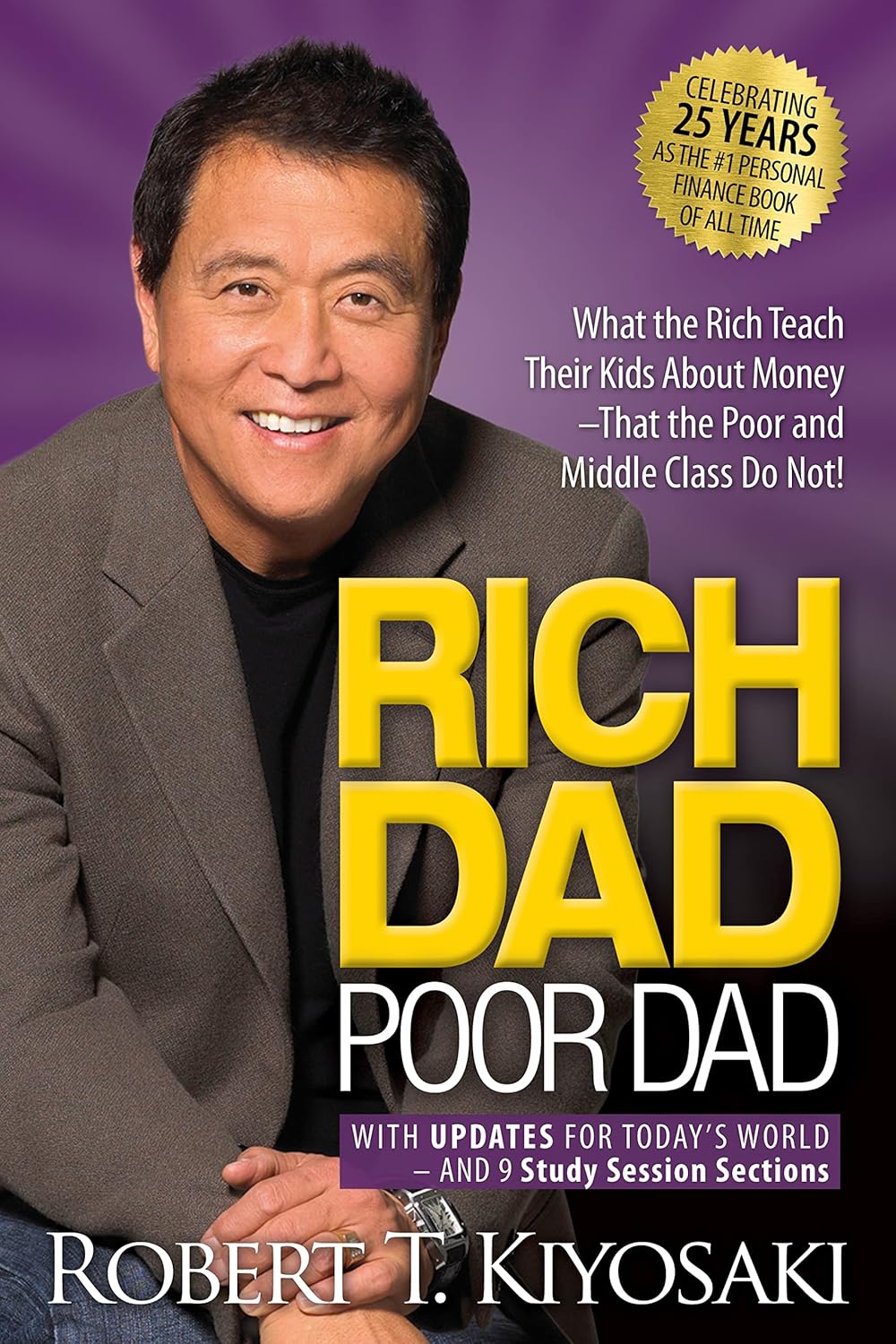
Rich Dad Poor Dad: ReadSprint summary highlights
ReadSprint paraphrases for review. These highlights are not verbatim quotations from the book or its author. Check the original edition for exact wording and context.
Rich Dad Poor Dad
by Robert T. Kiyosaki
Robert Kiyosaki contrasts his two "dads" to show that the poor and middle-class work for money while the rich make money work for them.
ReadSprint paraphrase · Not a quotation from the author.
Robert Kiyosaki contrasts his two "dads" to show that the poor and middle-class work for money while the rich make money work for them.
Fear and desire drive people to work for money instead of learning how money works.
Share with the ReadSprint source so others can read the context.
Rich Dad Poor Dad
by Robert T. Kiyosaki
He emphasizes changing mindset from earning a paycheck to seeking financial intelligence and opportunities.
ReadSprint paraphrase · Not a quotation from the author.
He emphasizes changing mindset from earning a paycheck to seeking financial intelligence and opportunities.
The rich focus on acquiring assets that produce income rather than working for salary alone.
Share with the ReadSprint source so others can read the context.
Rich Dad Poor Dad
by Robert T. Kiyosaki
Kiyosaki argues that without financial literacy people confuse liabilities for assets and never build true wealth.
ReadSprint paraphrase · Not a quotation from the author.
Kiyosaki argues that without financial literacy people confuse liabilities for assets and never build true wealth.
Financial education teaches you to recognize opportunities and manage risk.
Share with the ReadSprint source so others can read the context.
Rich Dad Poor Dad
by Robert T. Kiyosaki
He presents simple accounting concepts—assets vs.
ReadSprint paraphrase · Not a quotation from the author.
He presents simple accounting concepts—assets vs.
Learn to let money generate passive income so you are not dependent on a job.
Share with the ReadSprint source so others can read the context.
Rich Dad Poor Dad
by Robert T. Kiyosaki
liabilities and cash flow—as essential tools for making smarter financial decisions.
ReadSprint paraphrase · Not a quotation from the author.
liabilities and cash flow—as essential tools for making smarter financial decisions.
Shift your focus from earning a bigger paycheck to acquiring or creating income-producing assets.
Share with the ReadSprint source so others can read the context.
Rich Dad Poor Dad
by Robert T. Kiyosaki
Kiyosaki advises readers to focus on building their own asset column—businesses, investments, and intellectual property—rather than solely advancing someone else’s business.
ReadSprint paraphrase · Not a quotation from the author.
Kiyosaki advises readers to focus on building their own asset column—businesses, investments, and intellectual property—rather than solely advancing someone else’s business.
Mindset and financial education are foundational: how you think about money determines your actions and long-term outcomes. This is directly relevant to anyone aiming to build wealth beyond employment.
Share with the ReadSprint source so others can read the context.
Rich Dad Poor Dad
by Robert T. Kiyosaki
He recommends treating your career earnings as capital to create and buy assets that work for you.
ReadSprint paraphrase · Not a quotation from the author.
He recommends treating your career earnings as capital to create and buy assets that work for you.
Robert Kiyosaki contrasts his two "dads" to show that the poor and middle-class work for money while the rich make money work for them. He emphasizes changing mindset from earning a paycheck to seeking financial intelligence and opportunities.
Share with the ReadSprint source so others can read the context.
Rich Dad Poor Dad
by Robert T. Kiyosaki
Kiyosaki explains how the tax system evolved to tax individuals heavily while corporations gained advantages, and how the wealthy use corporations and legal structures to protect and grow wealth.
ReadSprint paraphrase · Not a quotation from the author.
Kiyosaki explains how the tax system evolved to tax individuals heavily while corporations gained advantages, and how the wealthy use corporations and legal structures to protect and grow wealth.
Know the difference: assets put money in your pocket, liabilities take money out.
Share with the ReadSprint source so others can read the context.
Rich Dad Poor Dad
by Robert T. Kiyosaki
He highlights that understanding tax law and corporate structures is a form of financial intelligence.
ReadSprint paraphrase · Not a quotation from the author.
He highlights that understanding tax law and corporate structures is a form of financial intelligence.
Building a strong asset column (investments, businesses, real estate) is essential for cash flow and independence.
Share with the ReadSprint source so others can read the context.
Rich Dad Poor Dad
by Robert T. Kiyosaki
Kiyosaki asserts that financial creativity—combining knowledge, courage, and opportunity—allows the wealthy to "invent" money by seeing value where others do not.
ReadSprint paraphrase · Not a quotation from the author.
Kiyosaki asserts that financial creativity—combining knowledge, courage, and opportunity—allows the wealthy to "invent" money by seeing value where others do not.
Cash flow, not income or net worth alone, determines financial health.
Share with the ReadSprint source so others can read the context.