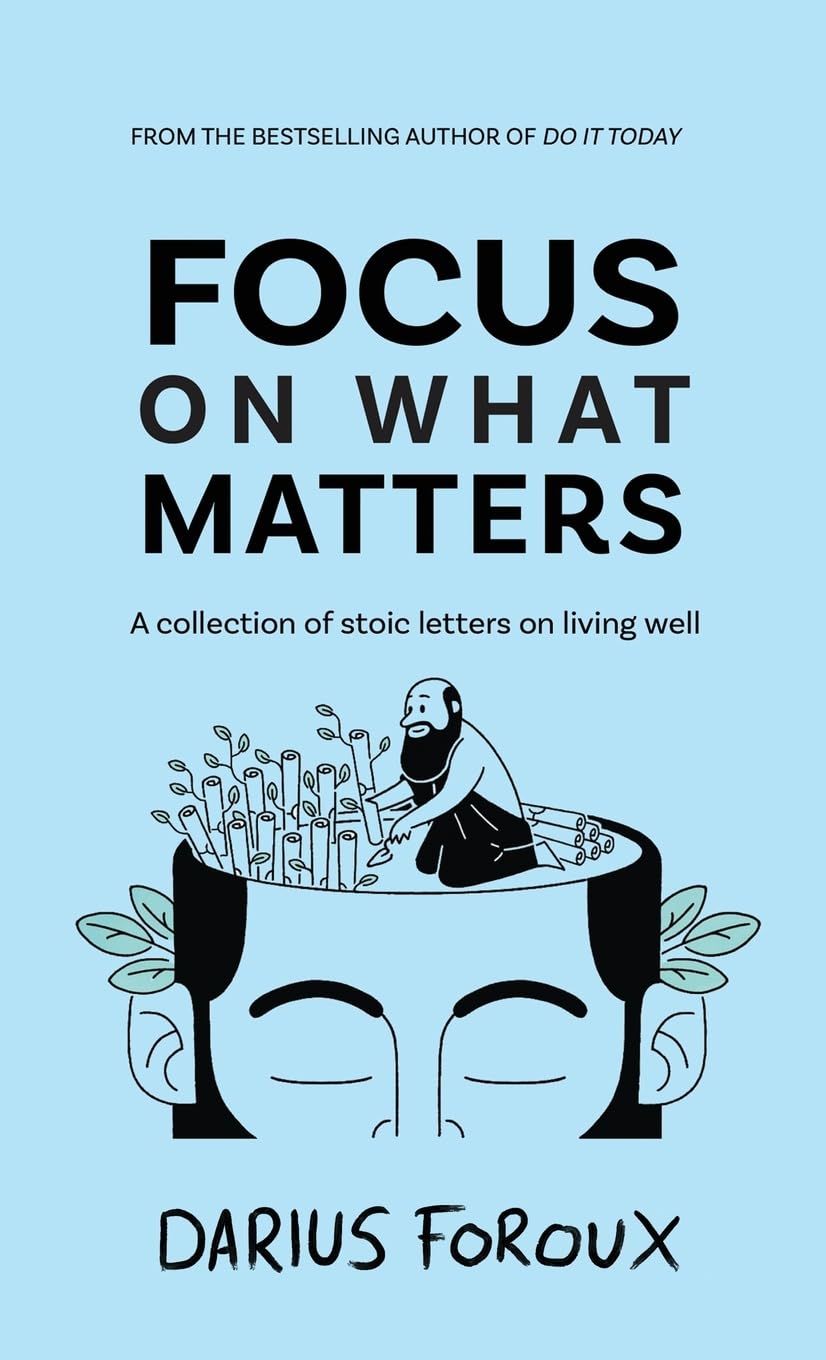
ReadSprintBooksFocus on What MattersFocus on What Matters Questions, Quiz, and Active Recall Prompts
Focus on What Matters
Focus on What Matters Questions, Quiz, and Active Recall Prompts

Focus on What Matters Questions, Quiz, and Active Recall Prompts

by Darius Foroux

Test your understanding of Focus on What Matters by Darius Foroux with quiz questions, active recall prompts, and related learning resources.

Reading without retrieval fades fast. Use these Focus on What Matters questions and active recall prompts to pressure-test what you understood and keep the book usable later.

Built for retention

ReadSprint combines concise summaries, quizzes, active recall, and related reading paths so the useful part of the book is easier to keep.

Open full summary

12

Chapter summaries

5

Quiz questions

12

Key takeaways

6

Related books

Quiz questions

Question 1

According to the book, what is the first step to ensure your efforts produce meaningful results?

  • Clarify your values, goals, and priorities so attention is intentionally allocated
  • Increase productivity by multitasking across more projects
  • Say yes to as many opportunities as possible to avoid missing out
  • Accumulate tools and techniques to optimize every minute
Question 2

Which practice is recommended to free up time and mental bandwidth after choosing priorities?

  • Ruthlessly prune tasks, commitments, and possessions that don't add value
  • Add more low-effort tasks to feel productive
  • Delegate every important decision to others
  • Keep all commitments but work faster to fit them in
Question 3

Which combination of techniques does the book recommend to strengthen concentration?

  • Use external timers and never meditate
  • Practice mindfulness, single‑tasking, and attention training
  • Rely primarily on willpower and caffeine
  • Switch frequently between tasks to build cognitive flexibility
Question 4

What design choices support a focus-friendly environment and digital minimalism?

  • Filling your workspace with reminders of unfinished tasks
  • Minimizing interruptions, managing notifications, and simplifying digital tools
  • Keeping all devices visible and notifications enabled for quick responses
  • Using as many apps and tabs as possible to stay informed
Question 5

Which system best helps allocate attention deliberately across deep work, routine tasks, and recovery?

  • Work continuously on one project until burnout, then rest extensively
  • Rely only on a long, unstructured to-do list
  • Use time blocking and structured daily routines that balance deep work, shallow tasks, and recovery
  • Schedule every minute of the day with no flexibility

Active recall prompts

According to the book, what is the first step to ensure your efforts produce meaningful results?

Which practice is recommended to free up time and mental bandwidth after choosing priorities?

Which combination of techniques does the book recommend to strengthen concentration?

What design choices support a focus-friendly environment and digital minimalism?

What is the main idea of "Introduction: Why Focus Matters", and how would you explain it without looking back?

What is the main idea of "Decide What Truly Matters", and how would you explain it without looking back?

What is the main idea of "Eliminate the Unnecessary", and how would you explain it without looking back?

What is the main idea of "Master Your Attention", and how would you explain it without looking back?

Quiz checkpoints

Question 1

According to the book, what is the first step to ensure your efforts produce meaningful results?

Question 2

Which practice is recommended to free up time and mental bandwidth after choosing priorities?

Question 3

Which combination of techniques does the book recommend to strengthen concentration?

Practice retrieval

Key concepts

Introduction: Why Focus Matters

The chapter frames focus as both a personal skill and an environmental design problem relevant to productivity, creativity, and mental health. It establishes why readers should prioritize building focus in modern, distr…

Decide What Truly Matters

Deciding what matters reduces noise and provides a compass for allocating scarce attention across projects and life domains. This clarity helps resist short-term temptations and resource sapping commitments.

Eliminate the Unnecessary

Elimination is a practical complement to selection: fewer commitments create space for deeper work and better decision-making. Removing clutter—physical, digital, and social—supports sustained focus in a busy life.

Open concept map

Similar themes and topic pages

Use topic hubs and category pages to keep reading depth aligned with what this book is actually about.

Turn Reading Into Recall

Keep Focus on What Matters review-ready instead of letting it fade.

This page is strongest when it becomes part of a review habit: save the summary, revisit the key takeaways, and use recall prompts before the next meeting, study block, or decision.

Save one strong takeaway instead of over-highlighting.
Use the questions page to test what actually stuck.
Return when the book becomes relevant again, not just when motivation is high.
See pricing
Get Book Review Notes

Get practical notes on remembering and reusing ideas from nonfiction books without building an overly heavy note system.

Retention workflow

Turn this page into a repeatable study loop

Move from summary to takeaways, test yourself with questions, revisit the concept map, and then continue into related books. That keeps Focus on What Mattersconnected instead of turning into a one-time skim.

Frequently asked questions

Why use quiz questions for Focus on What Matters?

Quiz-style recall is more durable than passive rereading because it forces you to retrieve the idea instead of merely recognizing it.

How should I answer active recall prompts?

Answer from memory first, then review the relevant chapter summary only after you have tried to explain the idea on your own.

What if I miss several questions about Focus on What Matters?

That usually means the book needs a shorter review loop. Revisit the chapter summaries, keep only a few high-value takeaways, and test yourself again later.