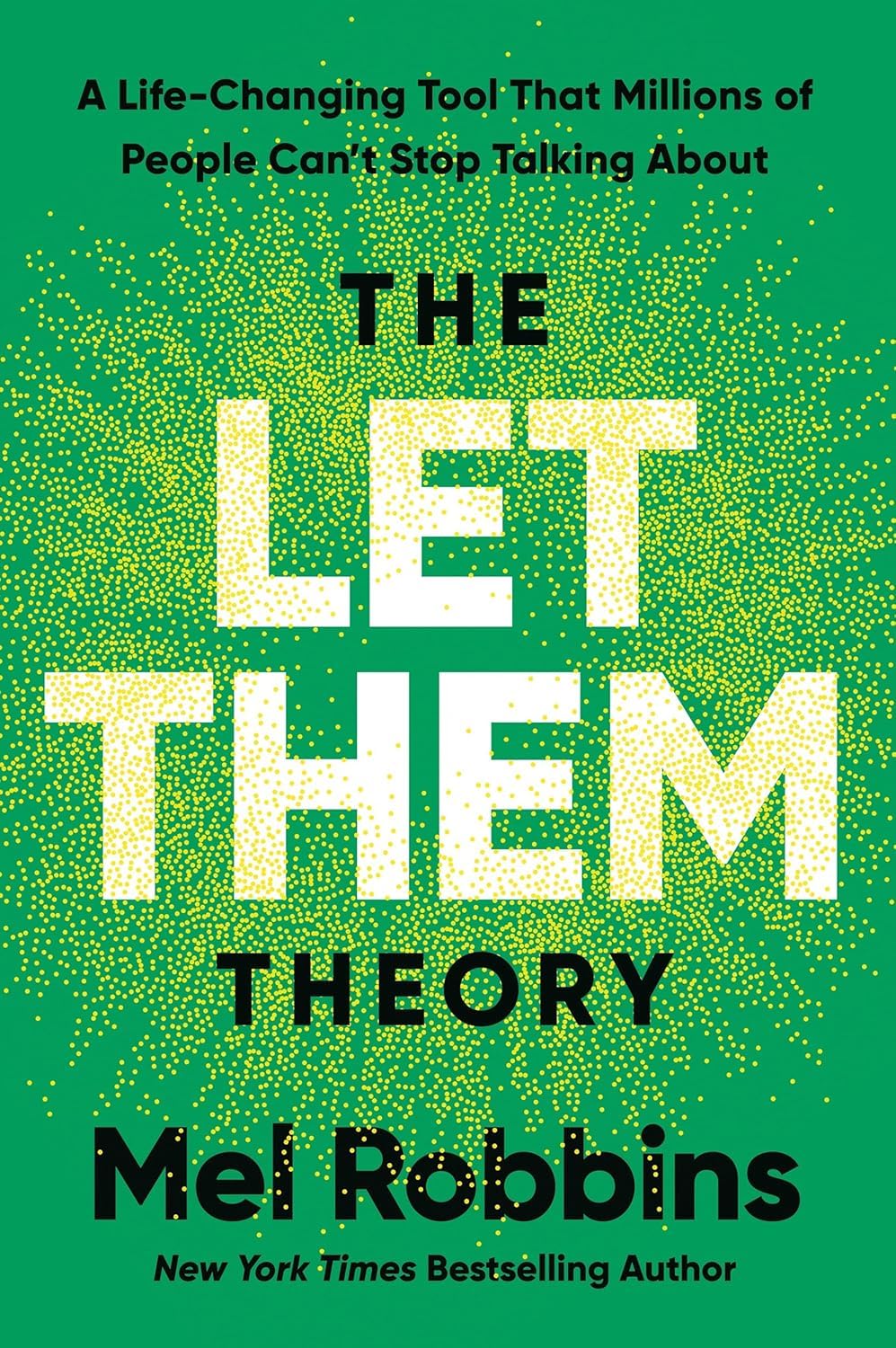
The Let Them Theory
Book ecosystem page

The Let Them Theory Summary, Takeaways, Quiz, and Chapter Guide

by Mel Robbins and Sawyer Robbins

ReadSprint’s The Let Them Theory by Mel Robbins and Sawyer Robbins page combines summary, takeaways, quizzes, active recall, and related books to help you learn faster and retain more.

The Introduction presents the core premise of The Let Them Theory: that healthy relationships and personal growth stem from allowing people and circumstances to be as they are rather than forcing control. It outlines the book's structure and the practical mindset shifts readers will explore across subsequent chapters.

Built for retention

ReadSprint combines concise summaries, quizzes, active recall, and related reading paths so the useful part of the book is easier to keep.

Open full summary

12

Chapter summaries

5

Quiz questions

12

Key takeaways

0

Related books

Book overview

The Introduction presents the core premise of The Let Them Theory: that healthy relationships and personal growth stem from allowing people and circumstances to be as they are rather than forcing control. It outlines the book's structure and the practical mindset shifts readers will explore across subsequent chapters.

This page is built to be a compact learning hub for The Let Them Theory. You can move from the high-level summary into takeaways, quiz prompts, chapter review, and related books without breaking the reading flow.

Best takeaways to keep

Defines the central concept of "let them" as a balance between nonattachment and responsible engagement.

Frames control, fear, and expectations as primary barriers to freedom and connection.

Introduces practical aims: clearer boundaries, increased trust, and adaptive acceptance.

Begin by noticing one area today where you try to control outcomes and experiment with softening your grip.

The introduction situates the theory in everyday contexts—work, family, and self-care—highlighting its relevance to modern stress and interpersonal conflicts. It prepares readers to practice letting go as a skill rather than a passive stance.

The Introduction presents the core premise of The Let Them Theory: that healthy relationships and personal growth stem from allowing people and circumstances to be as they are rather than forcing control. It outlines the book's structure and the practical mindset shifts readers will explore across subsequent chapters.

Open all takeaways

Retrieval practice

What is the main concept of the Let Them Theory?

What is a key benefit of acceptance according to the book?

How can one identify personal triggers?

What is the focus of Chapter 4?

Open questions and quiz

Quiz preview

What is the main concept of the Let Them Theory?

  • Control over others
  • Letting go of control
  • Building rigid boundaries

What is a key benefit of acceptance according to the book?

  • Increased anxiety
  • Emotional well-being
  • Loss of control

How can one identify personal triggers?

  • By ignoring them
  • Through mindfulness
  • By avoiding situations

What is the focus of Chapter 4?

  • Letting go of control
  • Building healthy boundaries
  • Embracing change

Chapter map

Chapter 1

Introduction

The Introduction presents the core premise of The Let Them Theory: that healthy relationships and personal growth stem from allowing people and circumstances to be as they are rather than forcing control. It outlines the book's structure and the practical mindset shifts readers will explore across subsequent chapters.

Chapter 2

Chapter 1: The Power of Letting Go

This chapter explores how releasing excessive control reduces anxiety and opens space for creativity and resilience. It presents psychological and practical reasons why letting go often leads to better results than micromanagement.

Chapter 3

Chapter 2: Understanding Your Limits

Chapter 2 examines personal limits—time, energy, competence—and how acknowledging them is a prerequisite for effective letting go. It argues that acceptance of limits enables clearer priorities and healthier boundaries.

Chapter 4

Chapter 3: The Art of Acceptance

This chapter defines acceptance as an active practice distinct from resignation, teaching how to recognize reality without surrendering agency. It offers techniques to shift from resistance to adaptive response.

Chapter 5

Chapter 4: Embracing Change

Chapter 4 focuses on change as a constant and describes mindsets and rituals that help people move through transitions with less fear. It highlights how letting go is often the gateway to embracing new opportunities.

Open chapter summaries

Next best step

Move next into the questions page if you want better retention, or into the takeaways page if you want the shortest useful review loop for this book.

Quiz checkpoints

Question 1

What is the main concept of the Let Them Theory?

Question 2

What is a key benefit of acceptance according to the book?

Question 3

How can one identify personal triggers?

Practice retrieval

Key concepts

Defines The Central Concept Of "let Them" As A Balance Between Nonattachment And Responsible Engagement

The introduction situates the theory in everyday contexts—work, family, and self-care—highlighting its relevance to modern stress and interpersonal conflicts. It prepares readers to practice letting go as a skill rather…

The Power of Letting Go

The theme centers on trade-offs between control and freedom, showing relevance for leaders, parents, and individuals seeking balance. The chapter links letting go to improved wellbeing and system adaptability.

Understanding Your Limits

The chapter emphasizes self-knowledge and realistic appraisal as foundations for sustainable relationships and work performance. Knowing limits reframes vulnerability as strategic, not weak.

Open concept map

Author relationship system

Move from this author into connected writers, nearby themes, and any other books already in the ReadSprint library.

Similar themes and topic pages

Use topic hubs and category pages to keep reading depth aligned with what this book is actually about.

Turn Reading Into Recall

Keep The Let Them Theory review-ready instead of letting it fade.

This page is strongest when it becomes part of a review habit: save the summary, revisit the key takeaways, and use recall prompts before the next meeting, study block, or decision.

Save one strong takeaway instead of over-highlighting.
Use the questions page to test what actually stuck.
Return when the book becomes relevant again, not just when motivation is high.
See pricing
Get Book Review Notes

Get practical notes on remembering and reusing ideas from nonfiction books without building an overly heavy note system.

Retention workflow

Turn this page into a repeatable study loop

Move from summary to takeaways, test yourself with questions, revisit the concept map, and then continue into related books. That keeps The Let Them Theoryconnected instead of turning into a one-time skim.

Frequently asked questions

What is The Let Them Theory about?

This page summarizes the book’s core argument, chapter flow, takeaways, and review prompts so you can understand it faster and revisit the useful parts later.

How does ReadSprint make The Let Them Theory easier to remember?

By pairing concise summaries with quizzes, active recall prompts, and related reading paths instead of stopping at a generic summary page.

What should I read after The Let Them Theory?

Use the related books, books-like pages, and topical reading links here to move into a stronger next step instead of guessing what to read next.