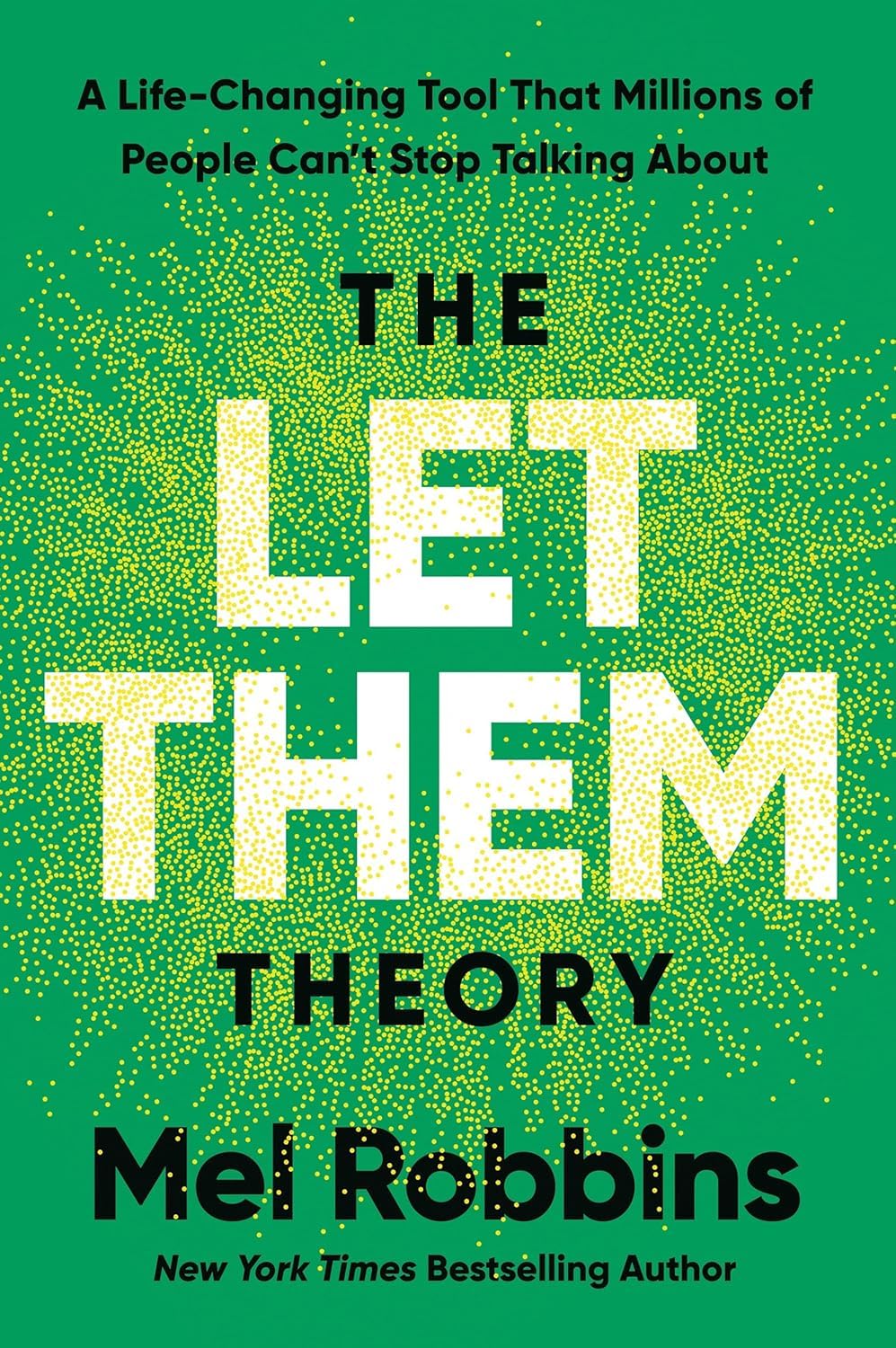
Introduction
Summary:
The Introduction presents the core premise of The Let Them Theory: that healthy relationships and personal growth stem from allowing people and circumstances to be as they are rather than forcing control. It outlines the book's structure and the practical mindset shifts readers will explore across subsequent chapters.
Key points:
- Defines the central concept of "let them" as a balance between nonattachment and responsible engagement.
- Frames control, fear, and expectations as primary barriers to freedom and connection.
- Introduces practical aims: clearer boundaries, increased trust, and adaptive acceptance.
Themes & relevance:
The introduction situates the theory in everyday contexts—work, family, and self-care—highlighting its relevance to modern stress and interpersonal conflicts. It prepares readers to practice letting go as a skill rather than a passive stance.
Takeaway / How to use:
Begin by noticing one area today where you try to control outcomes and experiment with softening your grip.
Key points
- Defines the central concept of "let them" as a balance between nonattachment and responsible engagement.
- Frames control, fear, and expectations as primary barriers to freedom and connection.
- Introduces practical aims: clearer boundaries, increased trust, and adaptive acceptance.
Chapter 1: The Power of Letting Go
Summary:
This chapter explores how releasing excessive control reduces anxiety and opens space for creativity and resilience. It presents psychological and practical reasons why letting go often leads to better results than micromanagement.
Key points:
- Letting go reduces cognitive load and emotional reactivity.
- It creates opportunities for others to contribute and learn, strengthening relationships.
- Surrendering control can accelerate problem-solving by revealing alternative solutions.
Themes & relevance:
The theme centers on trade-offs between control and freedom, showing relevance for leaders, parents, and individuals seeking balance. The chapter links letting go to improved wellbeing and system adaptability.
Takeaway / How to use:
Identify one task you usually control and delegate it with clear boundaries today.
Key points
- Letting go reduces cognitive load and emotional reactivity.
- It creates opportunities for others to contribute and learn, strengthening relationships.
- Surrendering control can accelerate problem-solving by revealing alternative solutions.
Chapter 2: Understanding Your Limits
Summary:
Chapter 2 examines personal limits—time, energy, competence—and how acknowledging them is a prerequisite for effective letting go. It argues that acceptance of limits enables clearer priorities and healthier boundaries.
Key points:
- Recognizing finite resources prevents burnout and resentment.
- Clear limits help communicate realistic expectations to others.
- Limits guide where to invest effort versus where to release control.
Themes & relevance:
The chapter emphasizes self-knowledge and realistic appraisal as foundations for sustainable relationships and work performance. Knowing limits reframes vulnerability as strategic, not weak.
Takeaway / How to use:
Map your top three limits this week and state one boundary aloud to someone relevant.
Key points
- Recognizing finite resources prevents burnout and resentment.
- Clear limits help communicate realistic expectations to others.
- Limits guide where to invest effort versus where to release control.
Chapter 3: The Art of Acceptance
Summary:
This chapter defines acceptance as an active practice distinct from resignation, teaching how to recognize reality without surrendering agency. It offers techniques to shift from resistance to adaptive response.
Key points:
- Acceptance is noticing facts without layering judgment or immediate corrective impulses.
- Emotional regulation practices support accepting uncomfortable truths.
- Acceptance clarifies when to act and when to conserve energy.
Themes & relevance:
Acceptance is presented as a pragmatic skill that improves decision-making and reduces wasted effort, relevant in conflict resolution and personal growth. The chapter links acceptance to increased mental clarity and compassion.
Takeaway / How to use:
Practice labeling emotions and facts in a stressful situation before choosing a response.
Key points
- Acceptance is noticing facts without layering judgment or immediate corrective impulses.
- Emotional regulation practices support accepting uncomfortable truths.
- Acceptance clarifies when to act and when to conserve energy.
Chapter 4: Embracing Change
Summary:
Chapter 4 focuses on change as a constant and describes mindsets and rituals that help people move through transitions with less fear. It highlights how letting go is often the gateway to embracing new opportunities.
Key points:
- Reframing change as information rather than threat reduces resistance.
- Small experiments and iterative adjustments make change manageable.
- Rituals and routines can anchor stability during periods of flux.
Themes & relevance:
The theme is resilience: developing flexible systems and habits to thrive amid uncertainty, applicable to careers, relationships, and personal habits. Embracing change is linked to long-term growth and innovation.
Takeaway / How to use:
Commit to one small experiment this week that nudges you toward a change you’ve been avoiding.
Key points
- Reframing change as information rather than threat reduces resistance.
- Small experiments and iterative adjustments make change manageable.
- Rituals and routines can anchor stability during periods of flux.
Chapter 5: The Role of Trust
Summary:
This chapter argues that trust—both in others and in life’s processes—is essential for effective letting go, and it explains how trust is built and eroded. It offers practical steps for cultivating trust without ignoring red flags.
Key points:
- Trust reduces the need for constant oversight and control.
- Transparency, consistent behavior, and accountability are trust-builders.
- Trust requires risk; assessing that risk thoughtfully allows prudent letting go.
Themes & relevance:
Trust is framed as a social and internal resource that enables cooperation and reduces stress in relationships and organizations. The chapter helps readers balance openness with discernment.
Takeaway / How to use:
Choose one relationship where you can extend a small, measurable trust gesture this week.
Key points
- Trust reduces the need for constant oversight and control.
- Transparency, consistent behavior, and accountability are trust-builders.
- Trust requires risk; assessing that risk thoughtfully allows prudent letting go.
Chapter 6: Letting Others In
Summary:
This chapter explores vulnerability and intimacy as necessary companions to letting go, showing how inviting others in creates mutual support and shared responsibility. It also addresses boundaries to prevent overdependence.
Key points:
- Vulnerability fosters authentic connection and reciprocal problem-solving.
- Clear boundaries ensure that letting others in does not become self-abandonment.
- Effective communication skills enable safer sharing of needs and limits.
Themes & relevance:
The chapter ties interpersonal openness to healthier teams and deeper personal relationships, emphasizing that mutual dependence can be a strength rather than a liability. It offers guidance on balancing closeness with autonomy.
Takeaway / How to use:
Share one honest concern with a trusted person and ask for specific support.
Key points
- Vulnerability fosters authentic connection and reciprocal problem-solving.
- Clear boundaries ensure that letting others in does not become self-abandonment.
- Effective communication skills enable safer sharing of needs and limits.
Chapter 7: The Freedom of Choice
Summary:
Chapter 7 reframes letting go as a series of conscious choices rather than passive surrender, highlighting agency in deciding what to hold and what to release. It encourages deliberate selection of commitments aligned with values.
Key points:
- Letting go increases freedom to choose by clearing obligations that don’t serve you.
- Values-based decision-making helps prioritize where to invest attention and care.
- Regular reviews of commitments prevent accumulation of unnecessary burdens.
Themes & relevance:
The theme centers on empowered autonomy: true freedom comes from intentional choices about attachments and responsibilities. The chapter connects choice to long-term satisfaction and focus.
Takeaway / How to use:
Run a quick values check and drop one commitment that doesn’t align with your top priorities.
Key points
- Letting go increases freedom to choose by clearing obligations that don’t serve you.
- Values-based decision-making helps prioritize where to invest attention and care.
- Regular reviews of commitments prevent accumulation of unnecessary burdens.
Chapter 8: Building Resilience
Summary:
Building resilience is framed as a skill that combines mindset, routines, and social supports to recover from setbacks and persist toward goals. The chapter outlines practical strategies to strengthen emotional endurance and adapt to change.
Key points:
- Resilience can be developed through deliberate habits like reframing setbacks and practicing self-compassion.
- Routine practices (sleep, movement, reflection) provide a physiological base for coping under stress.
- Social connections and asking for help are vital buffers against prolonged distress.
- Exposure to manageable challenges strengthens capacity for future adversity.
Themes & relevance:
The chapter ties personal resilience to long-term well-being and sustainable effort, showing relevance for work, relationships, and creative projects.
Takeaway / How to use:
Start a simple daily resilience routine: prioritize sleep, reflect briefly on one lesson from the day, and reach out to one supportive person when stressed.
Key points
- Resilience can be developed through deliberate habits like reframing setbacks and practicing self-compassion.
- Routine practices (sleep, movement, reflection) provide a physiological base for coping under stress.
- Social connections and asking for help are vital buffers against prolonged distress.
- Exposure to manageable challenges strengthens capacity for future adversity.
Chapter 9: The Impact of Forgiveness
Summary:
This chapter examines forgiveness as a practical tool for releasing resentment and freeing attention for constructive action. It distinguishes forgiveness from condoning harm and offers steps to move toward reconciliation or personal closure.
Key points:
- Forgiveness reduces the emotional burden of past hurts without requiring forgetting or excusing behavior.
- Processing emotions (acknowledge, name, express) precedes authentic forgiveness.
- Forgiveness can improve health outcomes by lowering stress and rumination.
- Practical steps include setting intentions, expressing boundaries, and choosing compassion when appropriate.
Themes & relevance:
Forgiveness is presented as a pragmatic strategy that enhances mental clarity and interpersonal functioning, relevant to both private healing and community repair.
Takeaway / How to use:
Practice one forgiveness exercise: write a short letter expressing feelings and either deliver it or safely discard it to symbolize letting go.
Key points
- Forgiveness reduces the emotional burden of past hurts without requiring forgetting or excusing behavior.
- Processing emotions (acknowledge, name, express) precedes authentic forgiveness.
- Forgiveness can improve health outcomes by lowering stress and rumination.
- Practical steps include setting intentions, expressing boundaries, and choosing compassion when appropriate.
Chapter 10: Creating Healthy Boundaries
Summary:
The chapter defines healthy boundaries as clear limits that protect energy, values, and priorities, enabling focused action and respectful relationships. It offers concrete language and routines for setting and maintaining boundaries in common life situations.
Key points:
- Boundaries clarify what we will accept and what we will not, reducing resentment and burnout.
- Effective boundaries are communicated calmly, specifically, and consistently.
- Saying "no" is a skill that preserves capacity for meaningful commitments.
- Boundary-setting includes internal limits (self-care) and external limits (requests to others).
Themes & relevance:
Clear boundaries support autonomy and trustworthy relationships, making them essential for productivity and emotional health in personal and professional contexts.
Takeaway / How to use:
Identify one small boundary to implement this week and practice a brief, specific script to communicate it.
Key points
- Boundaries clarify what we will accept and what we will not, reducing resentment and burnout.
- Effective boundaries are communicated calmly, specifically, and consistently.
- Saying "no" is a skill that preserves capacity for meaningful commitments.
- Boundary-setting includes internal limits (self-care) and external limits (requests to others).
Chapter 11: Living Authentically
Summary:
Living authentically is presented as aligning daily choices with core values and admitting uncertainty rather than performing expected roles. The chapter encourages experiments in honest expression and small acts that reveal genuine preferences.
Key points:
- Authenticity requires understanding your values and testing them through action.
- Vulnerability and selective disclosure help deepen relationships and reduce performative stress.
- Authentic living balances self-honesty with compassion for others and context-awareness.
- Small, consistent acts of truth-telling rebuild integrity and confidence over time.
Themes & relevance:
Authenticity is linked to sustained motivation and meaningful connection, relevant to leadership, creativity, and personal fulfillment.
Takeaway / How to use:
Choose one area where you often perform for others and experiment this week by making one choice that reflects your true preference.
Key points
- Authenticity requires understanding your values and testing them through action.
- Vulnerability and selective disclosure help deepen relationships and reduce performative stress.
- Authentic living balances self-honesty with compassion for others and context-awareness.
- Small, consistent acts of truth-telling rebuild integrity and confidence over time.