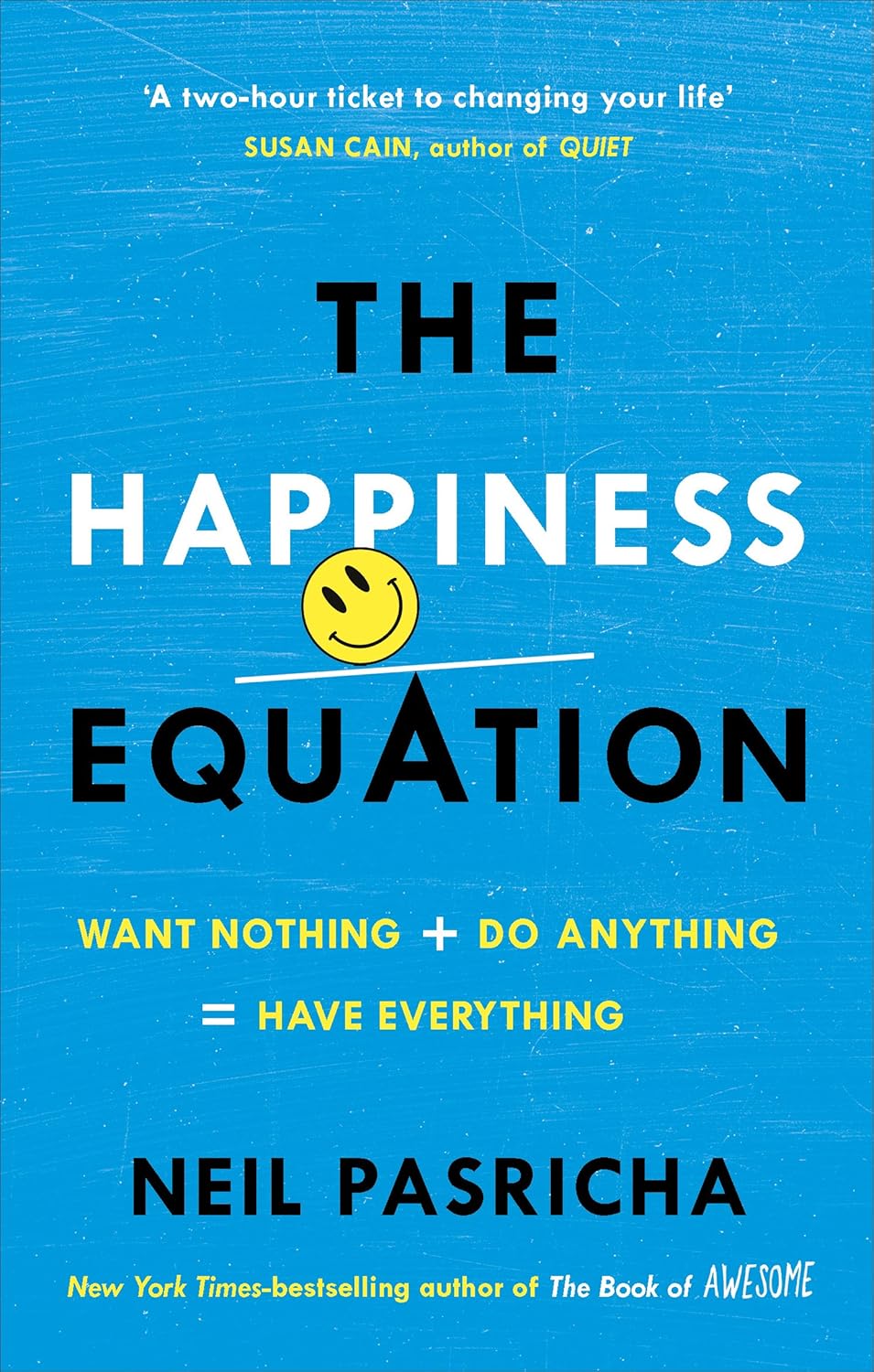
ReadSprintBooksThe Happiness EquationThe Happiness Equation Key Concepts and Core Ideas
The Happiness Equation
The Happiness Equation Key Concepts and Core Ideas

The Happiness Equation Key Concepts and Core Ideas

by Neil Pasricha

Understand the core concepts in The Happiness Equation by Neil Pasricha, with explanations, recall prompts, related books, and connected learning paths.

This page isolates the core concepts carrying The Happiness Equation. Use it when you want to understand the book’s mental models, not just skim the chapter sequence.

Built for retention

ReadSprint combines concise summaries, quizzes, active recall, and related reading paths so the useful part of the book is easier to keep.

Open full summary

12

Chapter summaries

5

Quiz questions

12

Key takeaways

0

Related books

Concept map

These are the ideas doing most of the work inside The Happiness Equation. Study them as reusable mental models, then jump back into chapters or questions when you want more context.

Concept 1

Introduction: The Happiness Equation

The introduction lays out the central premise: happiness can be approached as an equation built from clear choices and practices rather than a mysterious state that happens by chance. The author frames the book around three hands-on principles — wanting less, doing more, and shaping life to have what matters — and promises practical, research informed tools.

Why it matters: This introduction connects psychological research and real-world examples to make happiness actionable for readers seeking immediate, practical change. It sets expectations: the following chapters translate science into…

Supporting points

  • Happiness is a skill and a set of decisions, not just good fortune.
  • The book is organized around frameworks to decrease desire, increase agency, and create meaningful results.
  • Small, repeatable habits and mindset shifts compound into measurable gains in well
Active recall prompt

How does introduction: the happiness equation change the way you would explain or apply The Happiness Equation?

Related chapter

Introduction: The Happiness Equation

Concept 2

Part I – Want Nothing: Rethinking Desire

Part I examines how reducing unnecessary desire and reorienting goals toward sufficiency improves contentment. It argues that learning what "enough" means and resisting comparison are foundational steps toward stable happiness.

Why it matters: This section highlights inner recalibration — shifting from accumulation to appreciation — as essential for well-being in a consumer and comparison heavy culture. It’s relevant for anyone feeling anxious or restless des…

Supporting points

  • Desire is often self
  • perpetuating; deciding limits breaks the cycle.
  • Gratitude and clarity about values reduce the pull of external markers of success.
Active recall prompt

How does part i – want nothing: rethinking desire change the way you would explain or apply The Happiness Equation?

Related chapter

Part I – Want Nothing: Rethinking Desire

Concept 3

1. Enough Is a Decision

This chapter argues that recognizing and declaring "enough" is a deliberate choice that reduces endless striving and anxiety. By choosing a clear threshold for money, status, or possessions, people free cognitive energy for meaningful pursuits.

Why it matters: The chapter reframes contentment as an active decision, useful for readers stuck in perpetual goal-chasing or struggling with burnout. It ties decision making to emotional outcomes, providing a practical lever for chang…

Supporting points

  • "Enough" must be defined personally rather than assumed from external cues.
  • Establishing limits prevents chasing diminishing returns on happiness.
  • Consciously choosing sufficiency increases freedom and reduces stress.
Active recall prompt

How does 1. enough is a decision change the way you would explain or apply The Happiness Equation?

Related chapter

1. Enough Is a Decision

Concept 4

2. The Comparison Trap

This chapter explores how comparing ourselves to others undermines happiness by shifting focus from internal values to external validation. It explains psychological mechanisms of envy and offers strategies to minimize comparison's power.

Why it matters: Addressing the comparison trap is especially relevant in the era of social media and constant visibility; reducing comparison restores attention to personal growth and relationships. The chapter provides concrete behavi…

Supporting points

  • Social comparison skews perception—people compare their behind
  • the-scenes to others' highlight reels.
  • Digital media amplifies comparison by presenting curated versions of other lives.
Active recall prompt

How does 2. the comparison trap change the way you would explain or apply The Happiness Equation?

Related chapter

2. The Comparison Trap

Concept 5

Part II – Do Anything: Take Control

Part II shifts from changing desires to increasing agency: how to take purposeful action, design habits, and use failure productively. It emphasizes ownership, experimentation, and sustained effort as pathways to meaning and progress.

Why it matters: This section connects mindset with practical systems, showing readers how to translate motivation into reliable behavior change. It’s relevant for anyone who wants to move from passive wishing to active improvement.

Supporting points

  • Control and deliberate practice convert intentions into results.
  • Reframing failure as feedback accelerates learning.
  • Small, consistent actions compound into major life changes.
Active recall prompt

How does part ii – do anything: take control change the way you would explain or apply The Happiness Equation?

Related chapter

Part II – Do Anything: Take Control

Concept 6

3. Make Failure Work for You

The chapter reframes failure as essential data rather than a final verdict, encouraging readers to iterate, extract lessons, and reduce fear of risk. It promotes a mindset of experimentation with small bets to learn quickly and pivot when necessary.

Why it matters: By normalizing failure, the chapter makes risk-taking accessible and reduces paralysis from perfectionism; this is relevant for anyone hesitating to act because of fear of being wrong. It links psychological safety to p…

Supporting points

  • Failure provides feedback that guides refinement and better decisions.
  • Adopt a "fail fast, learn fast" approach by making low
  • cost experiments.
Active recall prompt

How does 3. make failure work for you change the way you would explain or apply The Happiness Equation?

Related chapter

3. Make Failure Work for You

Concept 7

4. The Power of Small Habits

This chapter shows how tiny, repeatable habits produce large long-term benefits through compounding effect and environment design. It stresses systems over goals, focusing on identity shaping routines rather than one-off resolutions.

Why it matters: Emphasizing small, manageable changes provides an accessible roadmap for readers overwhelmed by big ambitions; this approach aligns with behavior-change science and long term habit formation. It makes self-improvement r…

Supporting points

  • Incremental improvements accumulate into substantial change over time.
  • Design your environment to make desired behaviors easier and undesired ones harder.
  • Focus on identity
Active recall prompt

How does 4. the power of small habits change the way you would explain or apply The Happiness Equation?

Related chapter

4. The Power of Small Habits

Concept 8

5. Choose Courage Over Comfort

This chapter encourages prioritizing courageous actions that induce growth over immediate comfort that preserves the status quo. It argues that deliberate discomfort—calibrated risk, vulnerability, and new challenges—expands capability and meaning.

Why it matters: The chapter frames discomfort as a resource for development, relevant to readers seeking progress but avoiding risk or hard decisions. It provides motivation and tactics to step outside comfort zones thoughtfully.

Supporting points

  • Comfort maintains current functioning; courage yields growth and deeper satisfaction.
  • Controlled exposure to discomfort builds confidence and resilience.
  • Purposeful choices often require short
Active recall prompt

How does 5. choose courage over comfort change the way you would explain or apply The Happiness Equation?

Related chapter

5. Choose Courage Over Comfort

Quiz checkpoints

Question 1

According to the book's introduction, happiness is best approached as:

Question 2

What does the chapter "Enough Is a Decision" recommend as a path to greater contentment?

Question 3

How does the book describe the "comparison trap" and its effect on happiness?

Practice retrieval

Key concepts

Introduction: The Happiness Equation

This introduction connects psychological research and real-world examples to make happiness actionable for readers seeking immediate, practical change. It sets expectations: the following chapters translate science into…

Part I – Want Nothing: Rethinking Desire

This section highlights inner recalibration — shifting from accumulation to appreciation — as essential for well-being in a consumer and comparison heavy culture. It’s relevant for anyone feeling anxious or restless des…

1. Enough Is a Decision

The chapter reframes contentment as an active decision, useful for readers stuck in perpetual goal-chasing or struggling with burnout. It ties decision making to emotional outcomes, providing a practical lever for chang…

Open concept map

Author relationship system

Move from this author into connected writers, nearby themes, and any other books already in the ReadSprint library.

Similar themes and topic pages

Use topic hubs and category pages to keep reading depth aligned with what this book is actually about.

Turn Reading Into Recall

Keep The Happiness Equation review-ready instead of letting it fade.

This page is strongest when it becomes part of a review habit: save the summary, revisit the key takeaways, and use recall prompts before the next meeting, study block, or decision.

Save one strong takeaway instead of over-highlighting.
Use the questions page to test what actually stuck.
Return when the book becomes relevant again, not just when motivation is high.
See pricing
Get Book Review Notes

Get practical notes on remembering and reusing ideas from nonfiction books without building an overly heavy note system.

Retention workflow

Turn this page into a repeatable study loop

Move from summary to takeaways, test yourself with questions, revisit the concept map, and then continue into related books. That keeps The Happiness Equationconnected instead of turning into a one-time skim.

Frequently asked questions

What are the key concepts in The Happiness Equation?

The key concepts here are distilled from the chapter summaries, major themes, and action-oriented takeaways so you can quickly see the ideas carrying the whole book.

How should I study these The Happiness Equation concepts?

Start by explaining each concept from memory, connect it to a chapter or example, and then test yourself with one active recall prompt before moving on.

How are the concepts connected to other books?

Use the related books and topic links on this page to find books that reinforce, challenge, or extend the same ideas from a different angle.