Book overview
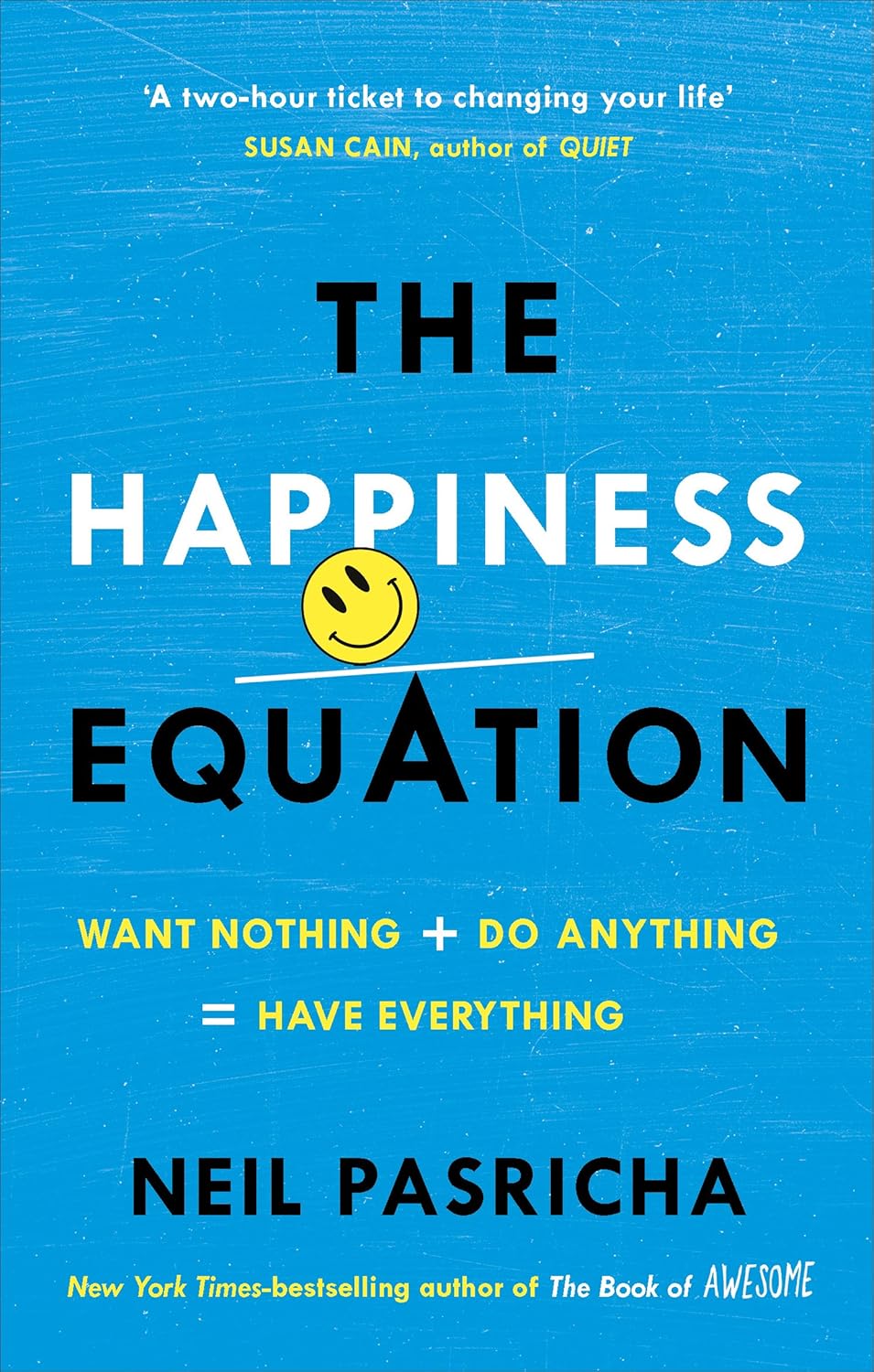
The introduction lays out the central premise: happiness can be approached as an equation built from clear choices and practices rather than a mysterious state that happens by chance. The author frames the book around three hands-on principles — wanting less, doing more, and shaping life to have what matters — and promises practical, research informed tools.
This page is built to be a compact learning hub for The Happiness Equation. You can move from the high-level summary into takeaways, quiz prompts, chapter review, and related books without breaking the reading flow.
Best takeaways to keep
Happiness is a skill and a set of decisions, not just good fortune.
The book is organized around frameworks to decrease desire, increase agency, and create meaningful results.
Small, repeatable habits and mindset shifts compound into measurable gains in well
being.
Treat happiness as a process you can influence by making deliberate choices each day.
This introduction connects psychological research and real-world examples to make happiness actionable for readers seeking immediate, practical change. It sets expectations: the following chapters translate science into specific behaviors anyone can try.
Retrieval practice
According to the book's introduction, happiness is best approached as:
What does the chapter "Enough Is a Decision" recommend as a path to greater contentment?
How does the book describe the "comparison trap" and its effect on happiness?
Which approach to failure and action is recommended in Part II?
Quiz preview
According to the book's introduction, happiness is best approached as:
- A mysterious, spontaneous state beyond control
- An equation built from clear choices and repeatable practices
- A trait fixed by genetics
What does the chapter "Enough Is a Decision" recommend as a path to greater contentment?
- Continuously pursuing more without limits
- Deliberately choosing a threshold of "enough" to reduce striving and free mental energy
- Following society's standards for success
How does the book describe the "comparison trap" and its effect on happiness?
- It primarily motivates healthy self-improvement
- It has little impact on well-being
- It undermines happiness by shifting focus to external validation and fostering envy
Which approach to failure and action is recommended in Part II?
- Avoid failure at all costs to preserve self-image
- Treat failure as a final verdict on your abilities
- Use failure as data: run small experiments, iterate, build habits, and take ownership
Chapter map
Introduction: The Happiness Equation
The introduction lays out the central premise: happiness can be approached as an equation built from clear choices and practices rather than a mysterious state that happens by chance. The author frames the book around three hands-on principles — wanting less, doing more, and shaping life to have what matters — and promises practical, research informed tools.
Part I – Want Nothing: Rethinking Desire
Part I examines how reducing unnecessary desire and reorienting goals toward sufficiency improves contentment. It argues that learning what "enough" means and resisting comparison are foundational steps toward stable happiness.
1. Enough Is a Decision
This chapter argues that recognizing and declaring "enough" is a deliberate choice that reduces endless striving and anxiety. By choosing a clear threshold for money, status, or possessions, people free cognitive energy for meaningful pursuits.
2. The Comparison Trap
This chapter explores how comparing ourselves to others undermines happiness by shifting focus from internal values to external validation. It explains psychological mechanisms of envy and offers strategies to minimize comparison's power.
Part II – Do Anything: Take Control
Part II shifts from changing desires to increasing agency: how to take purposeful action, design habits, and use failure productively. It emphasizes ownership, experimentation, and sustained effort as pathways to meaning and progress.
Next best step
Move next into the questions page if you want better retention, or into the takeaways page if you want the shortest useful review loop for this book.