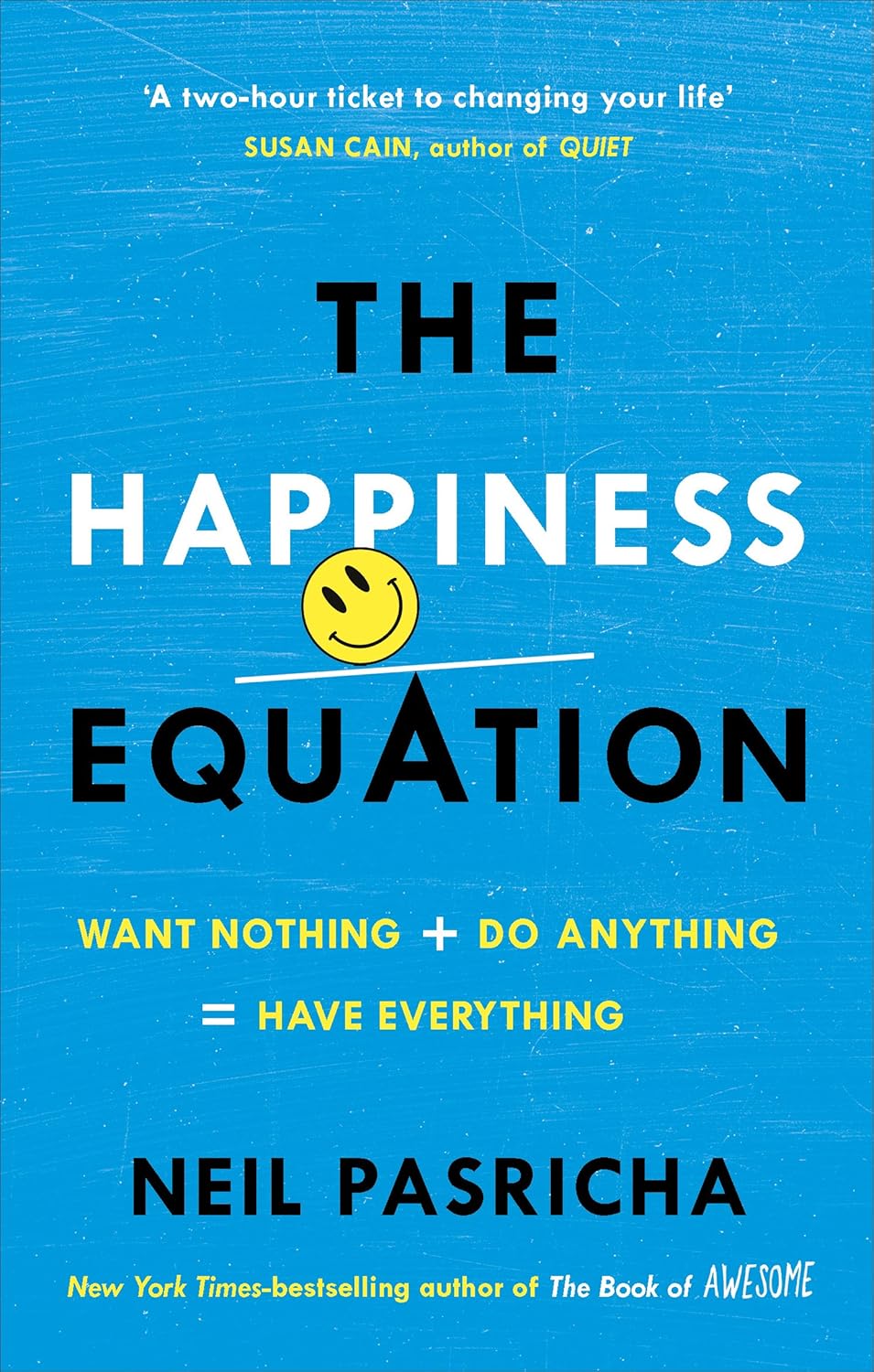
Introduction: The Happiness Equation
Summary:
The introduction lays out the central premise: happiness can be approached as an equation built from clear choices and practices rather than a mysterious state that happens by chance. The author frames the book around three hands-on principles — wanting less, doing more, and shaping life to have what matters — and promises practical, research
- informed tools.
Key points:
- Happiness is a skill and a set of decisions, not just good fortune.
- The book is organized around frameworks to decrease desire, increase agency, and create meaningful results.
- Small, repeatable habits and mindset shifts compound into measurable gains in well
- being.
Themes & relevance:
This introduction connects psychological research and real-world examples to make happiness actionable for readers seeking immediate, practical change. It sets expectations: the following chapters translate science into specific behaviors anyone can try.
Takeaway / How to use:
Treat happiness as a process you can influence by making deliberate choices each day.
Key points
- Happiness is a skill and a set of decisions, not just good fortune.
- The book is organized around frameworks to decrease desire, increase agency, and create meaningful results.
- Small, repeatable habits and mindset shifts compound into measurable gains in well
- being.
Part I – Want Nothing: Rethinking Desire
Summary:
Part I examines how reducing unnecessary desire and reorienting goals toward sufficiency improves contentment. It argues that learning what "enough" means and resisting comparison are foundational steps toward stable happiness.
Key points:
- Desire is often self
- perpetuating; deciding limits breaks the cycle.
- Gratitude and clarity about values reduce the pull of external markers of success.
- Social comparison distorts perception of needs and fuels chronic dissatisfaction.
Themes & relevance:
This section highlights inner recalibration — shifting from accumulation to appreciation — as essential for well-being in a consumer and comparison
- heavy culture. It’s relevant for anyone feeling anxious or restless despite objective success.
Takeaway / How to use:
Decide what "enough" looks like for you and practice gratitude to weaken urges for more.
Key points
- Desire is often self
- perpetuating; deciding limits breaks the cycle.
- Gratitude and clarity about values reduce the pull of external markers of success.
- Social comparison distorts perception of needs and fuels chronic dissatisfaction.
1. Enough Is a Decision
Summary:
This chapter argues that recognizing and declaring "enough" is a deliberate choice that reduces endless striving and anxiety. By choosing a clear threshold for money, status, or possessions, people free cognitive energy for meaningful pursuits.
Key points:
- "Enough" must be defined personally rather than assumed from external cues.
- Establishing limits prevents chasing diminishing returns on happiness.
- Consciously choosing sufficiency increases freedom and reduces stress.
Themes & relevance:
The chapter reframes contentment as an active decision, useful for readers stuck in perpetual goal-chasing or struggling with burnout. It ties decision
- making to emotional outcomes, providing a practical lever for change.
Takeaway / How to use:
Set a concrete definition of "enough" in one area of life and stop pursuing incremental gains beyond it.
Key points
- "Enough" must be defined personally rather than assumed from external cues.
- Establishing limits prevents chasing diminishing returns on happiness.
- Consciously choosing sufficiency increases freedom and reduces stress.
2. The Comparison Trap
Summary:
This chapter explores how comparing ourselves to others undermines happiness by shifting focus from internal values to external validation. It explains psychological mechanisms of envy and offers strategies to minimize comparison's power.
Key points:
- Social comparison skews perception—people compare their behind
- the-scenes to others' highlight reels.
- Digital media amplifies comparison by presenting curated versions of other lives.
- Practical antidotes include limiting exposure, redefining success metrics, and practicing gratitude.
Themes & relevance:
Addressing the comparison trap is especially relevant in the era of social media and constant visibility; reducing comparison restores attention to personal growth and relationships. The chapter provides concrete behavioral fixes to reclaim perspective.
Takeaway / How to use:
Reduce comparison by limiting social media, tracking personal metrics, and noting three daily gratitudes.
Key points
- Social comparison skews perception—people compare their behind
- the-scenes to others' highlight reels.
- Digital media amplifies comparison by presenting curated versions of other lives.
- Practical antidotes include limiting exposure, redefining success metrics, and practicing gratitude.
Part II – Do Anything: Take Control
Summary:
Part II shifts from changing desires to increasing agency: how to take purposeful action, design habits, and use failure productively. It emphasizes ownership, experimentation, and sustained effort as pathways to meaning and progress.
Key points:
- Control and deliberate practice convert intentions into results.
- Reframing failure as feedback accelerates learning.
- Small, consistent actions compound into major life changes.
Themes & relevance:
This section connects mindset with practical systems, showing readers how to translate motivation into reliable behavior change. It’s relevant for anyone who wants to move from passive wishing to active improvement.
Takeaway / How to use:
Choose one small, daily habit aligned with your values and commit to practicing it consistently.
Key points
- Control and deliberate practice convert intentions into results.
- Reframing failure as feedback accelerates learning.
- Small, consistent actions compound into major life changes.
3. Make Failure Work for You
Summary:
The chapter reframes failure as essential data rather than a final verdict, encouraging readers to iterate, extract lessons, and reduce fear of risk. It promotes a mindset of experimentation with small bets to learn quickly and pivot when necessary.
Key points:
- Failure provides feedback that guides refinement and better decisions.
- Adopt a "fail fast, learn fast" approach by making low
- cost experiments.
- Emotional resilience grows when setbacks are normalized and analyzed rather than feared.
Themes & relevance:
By normalizing failure, the chapter makes risk-taking accessible and reduces paralysis from perfectionism; this is relevant for anyone hesitating to act because of fear of being wrong. It links psychological safety to practical growth strategies.
Takeaway / How to use:
Run a small experiment this week, treat the result as data, and refine your approach.
Key points
- Failure provides feedback that guides refinement and better decisions.
- Adopt a "fail fast, learn fast" approach by making low
- cost experiments.
- Emotional resilience grows when setbacks are normalized and analyzed rather than feared.
4. The Power of Small Habits
Summary:
This chapter shows how tiny, repeatable habits produce large long-term benefits through compounding effect and environment design. It stresses systems over goals, focusing on identity
- shaping routines rather than one-off resolutions.
Key points:
- Incremental improvements accumulate into substantial change over time.
- Design your environment to make desired behaviors easier and undesired ones harder.
- Focus on identity
- based habits: act like the person you want to become.
Themes & relevance:
Emphasizing small, manageable changes provides an accessible roadmap for readers overwhelmed by big ambitions; this approach aligns with behavior-change science and long
- term habit formation. It makes self-improvement realistic and sustainable.
Takeaway / How to use:
Pick one tiny habit and attach it to an existing daily routine to build consistency.
Key points
- Incremental improvements accumulate into substantial change over time.
- Design your environment to make desired behaviors easier and undesired ones harder.
- Focus on identity
- based habits: act like the person you want to become.
5. Choose Courage Over Comfort
Summary:
This chapter encourages prioritizing courageous actions that induce growth over immediate comfort that preserves the status quo. It argues that deliberate discomfort—calibrated risk, vulnerability, and new challenges—expands capability and meaning.
Key points:
- Comfort maintains current functioning; courage yields growth and deeper satisfaction.
- Controlled exposure to discomfort builds confidence and resilience.
- Purposeful choices often require short
- term pain for long-term reward.
Themes & relevance:
The chapter frames discomfort as a resource for development, relevant to readers seeking progress but avoiding risk or hard decisions. It provides motivation and tactics to step outside comfort zones thoughtfully.
Takeaway / How to use:
Do one thing this week that scares you slightly and reflect on what you learned.
Key points
- Comfort maintains current functioning; courage yields growth and deeper satisfaction.
- Controlled exposure to discomfort builds confidence and resilience.
- Purposeful choices often require short
- term pain for long-term reward.
Part III – Have Everything: Build a Joyful Life
Summary:
Part III synthesizes earlier lessons into practical routines and mindsets for cultivating a joyful life, focusing on intentional habits, gratitude, and simplifying what matters. It emphasizes active choices over passive consumption to create sustained well-being.
Key points:
- Joy is built through consistent habits and small daily practices rather than one
- time events.
- Simplifying commitments and possessions reduces friction and increases freedom to pursue meaningful activities.
- Gratitude and reflection amplify satisfaction with what you already have.
- Designing routines and environments to support desired behavior makes happiness repeatable.
Themes & relevance:
This section ties philosophy to actionable lifestyle design, showing how small, deliberate changes yield cumulative improvements in happiness. Its relevance is practical: it translates ideas into everyday practices anyone can adopt.
Takeaway / How to use:
Pick one small habit (gratitude, decluttering, scheduled play) and practice it daily to start building lasting joy.
Key points
- Joy is built through consistent habits and small daily practices rather than one
- time events.
- Simplifying commitments and possessions reduces friction and increases freedom to pursue meaningful activities.
- Gratitude and reflection amplify satisfaction with what you already have.
- Designing routines and environments to support desired behavior makes happiness repeatable.
6. Create Purpose, Not Passive Meaning
Summary:
This chapter argues that meaning must be actively created through purpose-driven action rather than passively discovered or assigned. It recommends defining clear, personally significant goals and aligning daily choices to serve them.
Key points:
- Purpose is an intentional pursuit that gives direction; meaning without action tends to feel hollow.
- Break large purposes into specific, achievable goals so effort produces tangible progress.
- Align work, relationships, and habits to reinforce your chosen purpose.
- Reevaluate and adapt purpose as you grow—purpose is flexible, not fixed.
Themes & relevance:
The theme centers on agency: happiness comes from creating rather than awaiting meaning, making this principle highly relevant for people feeling aimless or reactive.
Takeaway / How to use:
Define one concrete goal that embodies your purpose and schedule a concrete first step this week.
Key points
- Purpose is an intentional pursuit that gives direction; meaning without action tends to feel hollow.
- Break large purposes into specific, achievable goals so effort produces tangible progress.
- Align work, relationships, and habits to reinforce your chosen purpose.
- Reevaluate and adapt purpose as you grow—purpose is flexible, not fixed.
7. The Social Equation: Relationships and Gratitude
Summary:
This chapter emphasizes relationships and gratitude as central drivers of happiness, showing that connection and appreciation compound well-being. It highlights practical ways to strengthen bonds and cultivate thankfulness in everyday life.
Key points:
- Strong social bonds are among the most reliable predictors of long
- term happiness.
- Small acts of appreciation and regular expressions of gratitude strengthen relationships.
- Investing time and attention in fewer, deeper relationships beats spreading oneself thin.
- Rituals, shared experiences, and sincere communication build durable connection.
Themes & relevance:
The chapter reinforces that happiness is social and relational, making practices that deepen connection and gratitude directly useful for improving life satisfaction.
Takeaway / How to use:
Reach out to one important person this week with a sincere expression of appreciation or a shared activity.
Key points
- Strong social bonds are among the most reliable predictors of long
- term happiness.
- Small acts of appreciation and regular expressions of gratitude strengthen relationships.
- Investing time and attention in fewer, deeper relationships beats spreading oneself thin.
- Rituals, shared experiences, and sincere communication build durable connection.
Conclusion: A Simple Formula for Lasting Happiness
Summary:
The conclusion distills the book into a concise formula combining choices, purpose, relationships, gratitude, and intentional habits to create lasting happiness. It encourages treating happiness as a practice—something you build daily—rather than a destination.
Key points:
- Happiness is the result of deliberate decisions and repeatable systems, not luck or permanent circumstances.
- Combine purpose, healthy habits, social investment, and gratitude into a consistent routine for compounding benefits.
- Regular reflection and small course corrections keep your happiness strategy aligned with changing life circumstances.
Themes & relevance:
The closing theme is pragmatic optimism: lasting happiness is achievable through simple, consistent actions, making the book's ideas actionable for readers at any stage.
Takeaway / How to use:
Write a one-sentence personal happiness formula and review it weekly to guide your choices.
Key points
- Happiness is the result of deliberate decisions and repeatable systems, not luck or permanent circumstances.
- Combine purpose, healthy habits, social investment, and gratitude into a consistent routine for compounding benefits.
- Regular reflection and small course corrections keep your happiness strategy aligned with changing life circumstances.