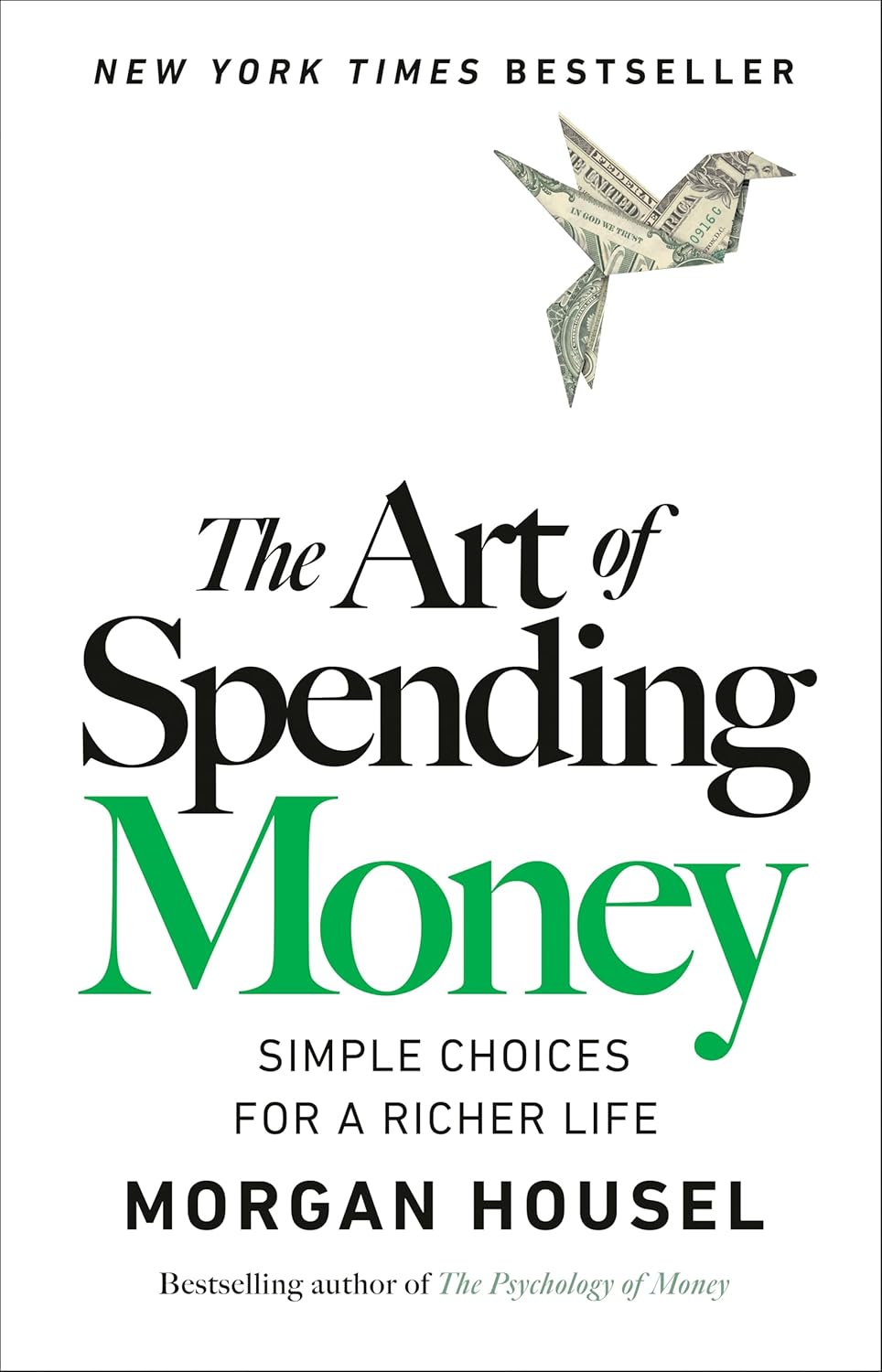
ReadSprintBooksThe Art of Spending MoneyThe Art of Spending Money Key Concepts and Core Ideas
The Art of Spending Money
The Art of Spending Money Key Concepts and Core Ideas

The Art of Spending Money Key Concepts and Core Ideas

by Morgan Housel

Understand the core concepts in The Art of Spending Money by Morgan Housel, with explanations, recall prompts, related books, and connected learning paths.

This page isolates the core concepts carrying The Art of Spending Money. Use it when you want to understand the book’s mental models, not just skim the chapter sequence.

Built for retention

ReadSprint combines concise summaries, quizzes, active recall, and related reading paths so the useful part of the book is easier to keep.

Open full summary

10

Chapter summaries

5

Quiz questions

12

Key takeaways

6

Related books

Concept map

These are the ideas doing most of the work inside The Art of Spending Money. Study them as reusable mental models, then jump back into chapters or questions when you want more context.

Concept 1

The Psychology of Spending

This chapter explores the psychological factors that influence spending habits, emphasizing the emotional and cognitive biases that lead to irrational financial decisions.

Why it matters: Understanding the psychological underpinnings of spending is crucial for making informed financial decisions. This chapter sets the stage for exploring how emotions and biases can be managed.

Supporting points

  • Emotional triggers in spending
  • Cognitive biases affecting financial choices
  • The impact of social influence on spending
Active recall prompt

How does the psychology of spending change the way you would explain or apply The Art of Spending Money?

Related chapter

The Psychology of Spending

Concept 2

The Value of Money

This chapter delves into the concept of value, discussing how personal values and societal norms shape perceptions of money and influence spending behavior.

Why it matters: Aligning spending with personal values can lead to more fulfilling financial choices. This chapter emphasizes the importance of understanding what money means to you.

Supporting points

  • Defining personal value systems
  • Societal norms and money perception
  • Aligning spending with personal values
Active recall prompt

How does the value of money change the way you would explain or apply The Art of Spending Money?

Related chapter

The Value of Money

Concept 3

Budgeting for Happiness

This chapter introduces the concept of budgeting not just for financial stability but for personal happiness, focusing on how to allocate resources to enhance well-being.

Why it matters: Budgeting is not just about saving money but about enhancing life satisfaction. This chapter provides a framework for creating a budget that supports happiness.

Supporting points

  • The relationship between money and happiness
  • Creating a budget that prioritizes joy
  • Balancing needs and wants
Active recall prompt

How does budgeting for happiness change the way you would explain or apply The Art of Spending Money?

Related chapter

Budgeting for Happiness

Concept 4

The Art of Saving

This chapter discusses the importance of saving, offering strategies to cultivate a saving habit and highlighting the long-term benefits of financial security.

Why it matters: Saving is a critical component of financial health. This chapter underscores the importance of saving as a means to achieve financial freedom and security.

Supporting points

  • The psychological benefits of saving
  • Strategies to build a saving habit
  • The impact of compound interest
Active recall prompt

How does the art of saving change the way you would explain or apply The Art of Spending Money?

Related chapter

The Art of Saving

Concept 5

Investing Wisely

This chapter provides an overview of investment principles, focusing on risk management, diversification, and the importance of informed decision-making.

Why it matters: Investing is essential for growing wealth. This chapter emphasizes the need for a strategic approach to investing, balancing risk and reward.

Supporting points

  • Understanding risk and return
  • The importance of diversification
  • Long
Active recall prompt

How does investing wisely change the way you would explain or apply The Art of Spending Money?

Related chapter

Investing Wisely

Concept 6

The Role of Debt

This chapter examines the role of debt in personal finance, discussing when it can be beneficial and how to manage it effectively to avoid financial pitfalls.

Why it matters: Understanding and managing debt is crucial for financial health. This chapter provides insights into using debt wisely to support financial goals.

Supporting points

  • Good debt vs. bad debt
  • Strategies for managing debt
  • The impact of interest rates
Active recall prompt

How does the role of debt change the way you would explain or apply The Art of Spending Money?

Related chapter

The Role of Debt

Concept 7

Financial Planning for the Future

This chapter focuses on the importance of financial planning, offering tools and strategies to set and achieve long-term financial goals.

Why it matters: Financial planning is key to achieving long-term success. This chapter highlights the need for a proactive approach to managing finances.

Supporting points

  • Setting realistic financial goals
  • Tools for effective financial planning
  • The importance of regular financial reviews
Active recall prompt

How does financial planning for the future change the way you would explain or apply The Art of Spending Money?

Related chapter

Financial Planning for the Future

Concept 8

The Impact of Lifestyle Choices

This chapter explores how lifestyle choices affect financial health, emphasizing the need to balance current desires with future financial security.

Why it matters: Lifestyle choices have a significant impact on financial well-being. This chapter encourages mindful spending to ensure long term security.

Supporting points

  • The cost of lifestyle inflation
  • Balancing lifestyle and savings
  • Making conscious spending choices
Active recall prompt

How does the impact of lifestyle choices change the way you would explain or apply The Art of Spending Money?

Related chapter

The Impact of Lifestyle Choices

Quiz checkpoints

Question 1

What is the main focus of the first chapter?

Question 2

How does the book suggest aligning spending with personal values?

Question 3

What is emphasized in the chapter on budgeting?

Practice retrieval

Key concepts

The Psychology of Spending

Understanding the psychological underpinnings of spending is crucial for making informed financial decisions. This chapter sets the stage for exploring how emotions and biases can be managed.

The Value of Money

Aligning spending with personal values can lead to more fulfilling financial choices. This chapter emphasizes the importance of understanding what money means to you.

Budgeting for Happiness

Budgeting is not just about saving money but about enhancing life satisfaction. This chapter provides a framework for creating a budget that supports happiness.

Open concept map
Turn Reading Into Recall

Keep The Art of Spending Money review-ready instead of letting it fade.

This page is strongest when it becomes part of a review habit: save the summary, revisit the key takeaways, and use recall prompts before the next meeting, study block, or decision.

Save one strong takeaway instead of over-highlighting.
Use the questions page to test what actually stuck.
Return when the book becomes relevant again, not just when motivation is high.
See pricing
Get Book Review Notes

Get practical notes on remembering and reusing ideas from nonfiction books without building an overly heavy note system.

Retention workflow

Turn this page into a repeatable study loop

Move from summary to takeaways, test yourself with questions, revisit the concept map, and then continue into related books. That keeps The Art of Spending Moneyconnected instead of turning into a one-time skim.

Frequently asked questions

What are the key concepts in The Art of Spending Money?

The key concepts here are distilled from the chapter summaries, major themes, and action-oriented takeaways so you can quickly see the ideas carrying the whole book.

How should I study these The Art of Spending Money concepts?

Start by explaining each concept from memory, connect it to a chapter or example, and then test yourself with one active recall prompt before moving on.

How are the concepts connected to other books?

Use the related books and topic links on this page to find books that reinforce, challenge, or extend the same ideas from a different angle.