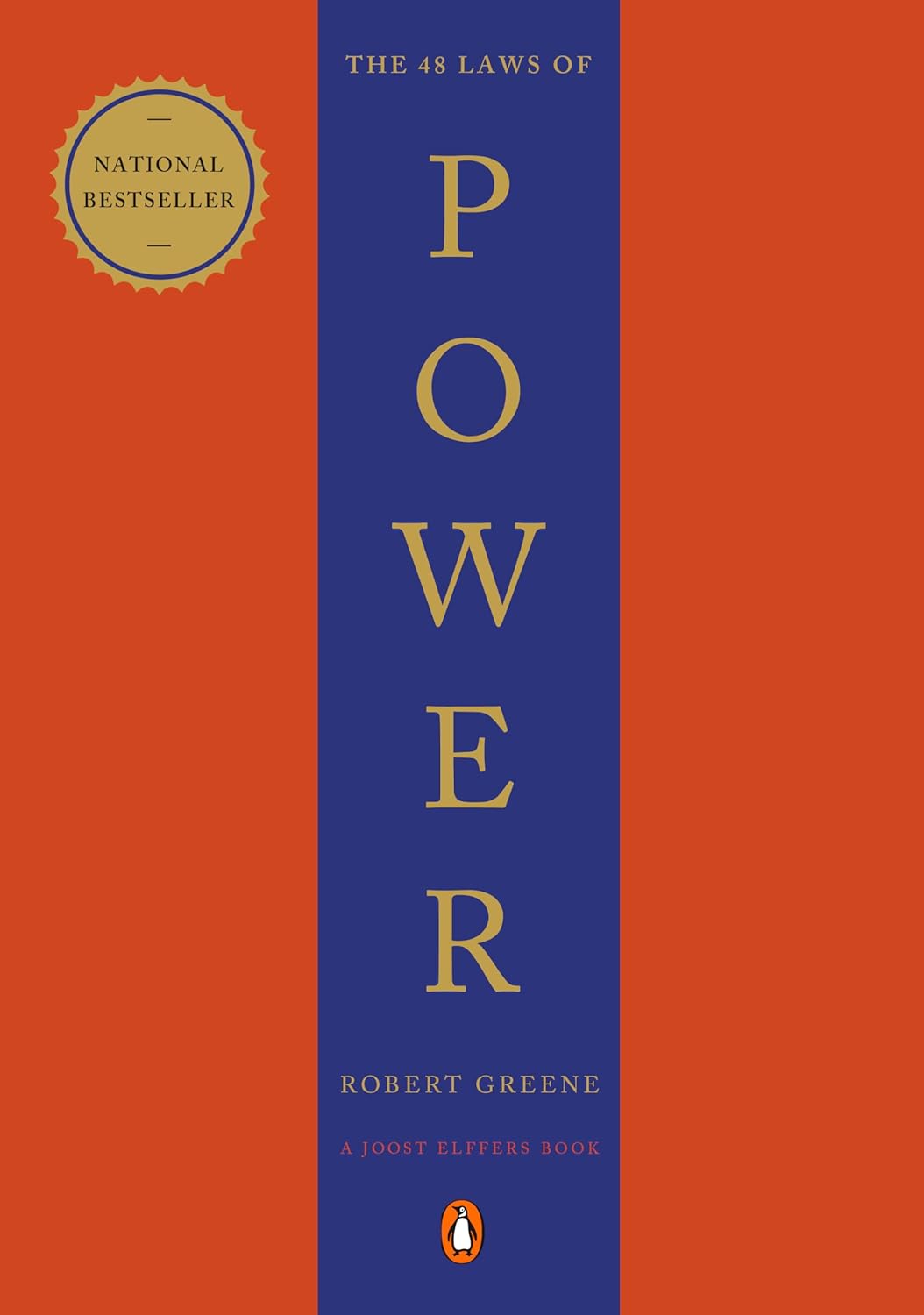
ReadSprintBooksThe 48 Laws of PowerThe 48 Laws of Power Questions, Quiz, and Active Recall Prompts
The 48 Laws of Power
The 48 Laws of Power Questions, Quiz, and Active Recall Prompts

The 48 Laws of Power Questions, Quiz, and Active Recall Prompts

by Robert Greene

Test your understanding of The 48 Laws of Power by Robert Greene with quiz questions, active recall prompts, and related learning resources.

Reading without retrieval fades fast. Use these The 48 Laws of Power questions and active recall prompts to pressure-test what you understood and keep the book usable later.

Built for retention

ReadSprint combines concise summaries, quizzes, active recall, and related reading paths so the useful part of the book is easier to keep.

Open full summary

48

Chapter summaries

5

Quiz questions

12

Key takeaways

6

Related books

Quiz questions

Question 1

Which law advises making those above you feel superior and avoiding showing off to prevent envy?

  • Law 1: Never Outshine the Master
  • Law 3: Conceal Your Intentions
  • Law 6: Court Attention at All Costs
  • Law 24: Play the Perfect Courtier
Question 2

Which law warns that friends can betray and suggests learning to use enemies as useful allies?

  • Law 11: Learn to Keep People Dependent on You
  • Law 6: Court Attention at All Costs
  • Law 2: Never Put Too Much Trust in Friends, Learn How to Use Enemies
  • Law 15: Crush Your Enemy Totally
Question 3

Which law recommends hiding your plans, using misdirection, and keeping intentions secret?

  • Law 3: Conceal Your Intentions
  • Law 30: Make Your Accomplishments Seem Effortless
  • Law 24: Play the Perfect Courtier
  • Law 12: Use Selective Honesty and Generosity to Disarm Your Victim
Question 4

Which law teaches that creating scarcity or withdrawing can increase others' respect and value for you?

  • Law 6: Court Attention at All Costs
  • Law 16: Use Absence to Increase Respect and Honor
  • Law 37: Create Compelling Spectacles
  • Law 34: Be Royal in Your Own Fashion
Question 5

Which law argues that you should eliminate a threat completely to prevent future revenge?

  • Law 15: Crush Your Enemy Totally
  • Law 42: Strike the Shepherd and the Sheep will Scatter
  • Law 44: Disarm and Infuriate with the Mirror Effect
  • Law 46: Never Appear Too Perfect

Active recall prompts

Which law advises making those above you feel superior and avoiding showing off to prevent envy?

Which law warns that friends can betray and suggests learning to use enemies as useful allies?

Which law recommends hiding your plans, using misdirection, and keeping intentions secret?

Which law teaches that creating scarcity or withdrawing can increase others' respect and value for you?

What is the main idea of "Law 1: Never Outshine the Master", and how would you explain it without looking back?

What is the main idea of "Law 2: Never Put Too Much Trust in Friends, Learn How to Use Enemies", and how would you explain it without looking back?

What is the main idea of "Law 3: Conceal Your Intentions", and how would you explain it without looking back?

What is the main idea of "Law 4: Always Say Less than Necessary", and how would you explain it without looking back?

Quiz checkpoints

Question 1

Which law advises making those above you feel superior and avoiding showing off to prevent envy?

Question 2

Which law warns that friends can betray and suggests learning to use enemies as useful allies?

Question 3

Which law recommends hiding your plans, using misdirection, and keeping intentions secret?

Practice retrieval

Key concepts

Law 1: Never Outshine the Master

This law emphasizes hierarchical psychology and the strategic management of others' egos to maintain safety and advancement in political, corporate, or social structures. It remains relevant wherever power depends on pa…

Law 2: Never Put Too Much Trust in Friends, Learn How to Use Enemies

The law highlights pragmatic relationship management and the instrumental use of social ties in power struggles; trust should be earned and strategically allocated. It applies to leadership, negotiation, and alliance-bu…

Law 3: Conceal Your Intentions

This law centers on information control and strategic ambiguity as tools for gaining and maintaining advantage in competitive environments. It applies to negotiation, planning, and interpersonal influence.

Open concept map

Similar themes and topic pages

Use topic hubs and category pages to keep reading depth aligned with what this book is actually about.

Turn Reading Into Recall

Keep The 48 Laws of Power review-ready instead of letting it fade.

This page is strongest when it becomes part of a review habit: save the summary, revisit the key takeaways, and use recall prompts before the next meeting, study block, or decision.

Save one strong takeaway instead of over-highlighting.
Use the questions page to test what actually stuck.
Return when the book becomes relevant again, not just when motivation is high.
See pricing
Get Book Review Notes

Get practical notes on remembering and reusing ideas from nonfiction books without building an overly heavy note system.

Retention workflow

Turn this page into a repeatable study loop

Move from summary to takeaways, test yourself with questions, revisit the concept map, and then continue into related books. That keeps The 48 Laws of Powerconnected instead of turning into a one-time skim.

Frequently asked questions

Why use quiz questions for The 48 Laws of Power?

Quiz-style recall is more durable than passive rereading because it forces you to retrieve the idea instead of merely recognizing it.

How should I answer active recall prompts?

Answer from memory first, then review the relevant chapter summary only after you have tried to explain the idea on your own.

What if I miss several questions about The 48 Laws of Power?

That usually means the book needs a shorter review loop. Revisit the chapter summaries, keep only a few high-value takeaways, and test yourself again later.