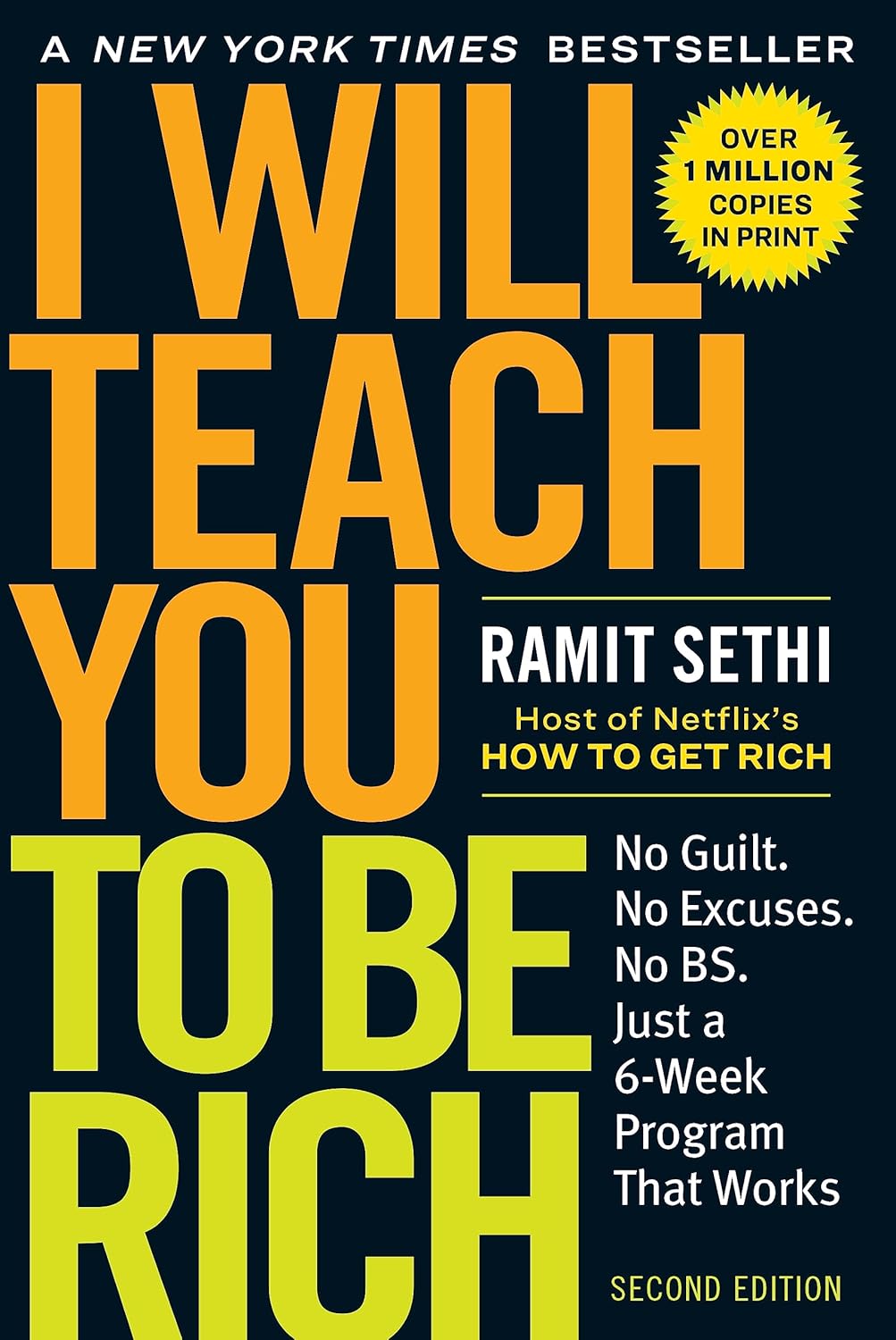
ReadSprintBooksI Will Teach You to Be RichI Will Teach You to Be Rich Key Concepts and Core Ideas
I Will Teach You to Be Rich
I Will Teach You to Be Rich Key Concepts and Core Ideas

I Will Teach You to Be Rich Key Concepts and Core Ideas

by Ramit Sethi

Understand the core concepts in I Will Teach You to Be Rich by Ramit Sethi, with explanations, recall prompts, related books, and connected learning paths.

This page isolates the core concepts carrying I Will Teach You to Be Rich. Use it when you want to understand the book’s mental models, not just skim the chapter sequence.

Built for retention

ReadSprint combines concise summaries, quizzes, active recall, and related reading paths so the useful part of the book is easier to keep.

Open full summary

10

Chapter summaries

5

Quiz questions

12

Key takeaways

6

Related books

Concept map

These are the ideas doing most of the work inside I Will Teach You to Be Rich. Study them as reusable mental models, then jump back into chapters or questions when you want more context.

Concept 1

Optimize Your Credit Cards

This chapter focuses on the importance of optimizing credit card usage to build credit and earn rewards. It provides strategies for selecting the right credit cards and managing them effectively.

Why it matters: The chapter emphasizes financial responsibility and the strategic use of credit to enhance personal wealth. It sets the foundation for building a strong financial base.

Supporting points

  • Choose credit cards with the best rewards and benefits.
  • Pay off your balance in full each month to avoid interest.
  • Monitor your credit score regularly.
Active recall prompt

How does optimize your credit cards change the way you would explain or apply I Will Teach You to Be Rich?

Related chapter

Optimize Your Credit Cards

Concept 2

Beat the Banks

This chapter explains how to navigate the banking system to avoid fees and get the best deals. It covers choosing the right bank accounts and understanding interest rates.

Why it matters: The chapter highlights the importance of being proactive in managing bank relationships to save money and increase savings.

Supporting points

  • Avoid unnecessary bank fees by choosing the right accounts.
  • Understand the difference between checking and savings accounts.
  • Look for high
Active recall prompt

How does beat the banks change the way you would explain or apply I Will Teach You to Be Rich?

Related chapter

Beat the Banks

Concept 3

Get Ready to Invest

This chapter introduces the basics of investing, including different types of investments and how to get started. It demystifies the process and encourages readers to begin investing early.

Why it matters: Investing is presented as a crucial step in building long-term wealth, with an emphasis on starting early and diversifying.

Supporting points

  • Understand different investment vehicles like stocks, bonds, and mutual funds.
  • Start investing early to take advantage of compound interest.
  • Diversify your investment portfolio to reduce risk.
Active recall prompt

How does get ready to invest change the way you would explain or apply I Will Teach You to Be Rich?

Related chapter

Get Ready to Invest

Concept 4

Conscious Spending

This chapter focuses on creating a conscious spending plan that aligns with personal values and goals. It encourages mindful spending and saving for what truly matters.

Why it matters: The chapter emphasizes intentional spending and saving, promoting a balanced approach to personal finance.

Supporting points

  • Identify your spending priorities and align them with your values.
  • Create a budget that allows for guilt
  • free spending on what you love.
Active recall prompt

How does conscious spending change the way you would explain or apply I Will Teach You to Be Rich?

Related chapter

Conscious Spending

Concept 5

Save While Sleeping

This chapter discusses automating savings and investments to ensure consistent financial growth. It provides practical steps to set up automatic transfers and contributions.

Why it matters: Automation is highlighted as a key strategy for achieving financial goals with minimal effort, ensuring steady progress.

Supporting points

  • Automate savings to ensure consistent contributions.
  • Set up automatic transfers to investment accounts.
  • Use technology to track and manage finances.
Active recall prompt

How does save while sleeping change the way you would explain or apply I Will Teach You to Be Rich?

Related chapter

Save While Sleeping

Concept 6

The Myth of Financial Expertise

This chapter challenges the notion that financial expertise is necessary for personal finance success. It encourages readers to trust their instincts and use simple strategies.

Why it matters: The chapter promotes self-reliance and confidence in managing personal finances, debunking myths about financial complexity.

Supporting points

  • Financial success doesn't require complex strategies.
  • Trust your instincts and make informed decisions.
  • Use simple, proven methods for managing money.
Active recall prompt

How does the myth of financial expertise change the way you would explain or apply I Will Teach You to Be Rich?

Related chapter

The Myth of Financial Expertise

Concept 7

Investing Isn’t Only for Rich People

This chapter dispels the myth that investing is only for the wealthy. It provides guidance on how anyone can start investing with small amounts of money.

Why it matters: The chapter democratizes investing, making it accessible to everyone and encouraging financial empowerment.

Supporting points

  • Anyone can start investing, regardless of income level.
  • Use low
  • cost index funds to begin investing.
Active recall prompt

How does investing isn’t only for rich people change the way you would explain or apply I Will Teach You to Be Rich?

Related chapter

Investing Isn’t Only for Rich People

Concept 8

How to Spend Less

This chapter offers practical tips for reducing expenses without sacrificing quality of life. It focuses on smart shopping and cutting unnecessary costs.

Why it matters: The chapter emphasizes frugality and smart spending as key components of financial health, promoting a lifestyle of mindful consumption.

Supporting points

  • Identify and eliminate unnecessary expenses.
  • Use coupons and discounts to save money.
  • Shop smart by comparing prices and buying in bulk.
Active recall prompt

How does how to spend less change the way you would explain or apply I Will Teach You to Be Rich?

Related chapter

How to Spend Less

Quiz checkpoints

Question 1

What is the main focus of the chapter 'Optimize Your Credit Cards'?

Question 2

Which strategy is emphasized in 'Save While Sleeping'?

Question 3

What myth is debunked in 'The Myth of Financial Expertise'?

Practice retrieval

Key concepts

Optimize Your Credit Cards

The chapter emphasizes financial responsibility and the strategic use of credit to enhance personal wealth. It sets the foundation for building a strong financial base.

Beat the Banks

The chapter highlights the importance of being proactive in managing bank relationships to save money and increase savings.

Get Ready to Invest

Investing is presented as a crucial step in building long-term wealth, with an emphasis on starting early and diversifying.

Open concept map
Turn Reading Into Recall

Keep I Will Teach You to Be Rich review-ready instead of letting it fade.

This page is strongest when it becomes part of a review habit: save the summary, revisit the key takeaways, and use recall prompts before the next meeting, study block, or decision.

Save one strong takeaway instead of over-highlighting.
Use the questions page to test what actually stuck.
Return when the book becomes relevant again, not just when motivation is high.
See pricing
Get Book Review Notes

Get practical notes on remembering and reusing ideas from nonfiction books without building an overly heavy note system.

Retention workflow

Turn this page into a repeatable study loop

Move from summary to takeaways, test yourself with questions, revisit the concept map, and then continue into related books. That keeps I Will Teach You to Be Richconnected instead of turning into a one-time skim.

Frequently asked questions

What are the key concepts in I Will Teach You to Be Rich?

The key concepts here are distilled from the chapter summaries, major themes, and action-oriented takeaways so you can quickly see the ideas carrying the whole book.

How should I study these I Will Teach You to Be Rich concepts?

Start by explaining each concept from memory, connect it to a chapter or example, and then test yourself with one active recall prompt before moving on.

How are the concepts connected to other books?

Use the related books and topic links on this page to find books that reinforce, challenge, or extend the same ideas from a different angle.