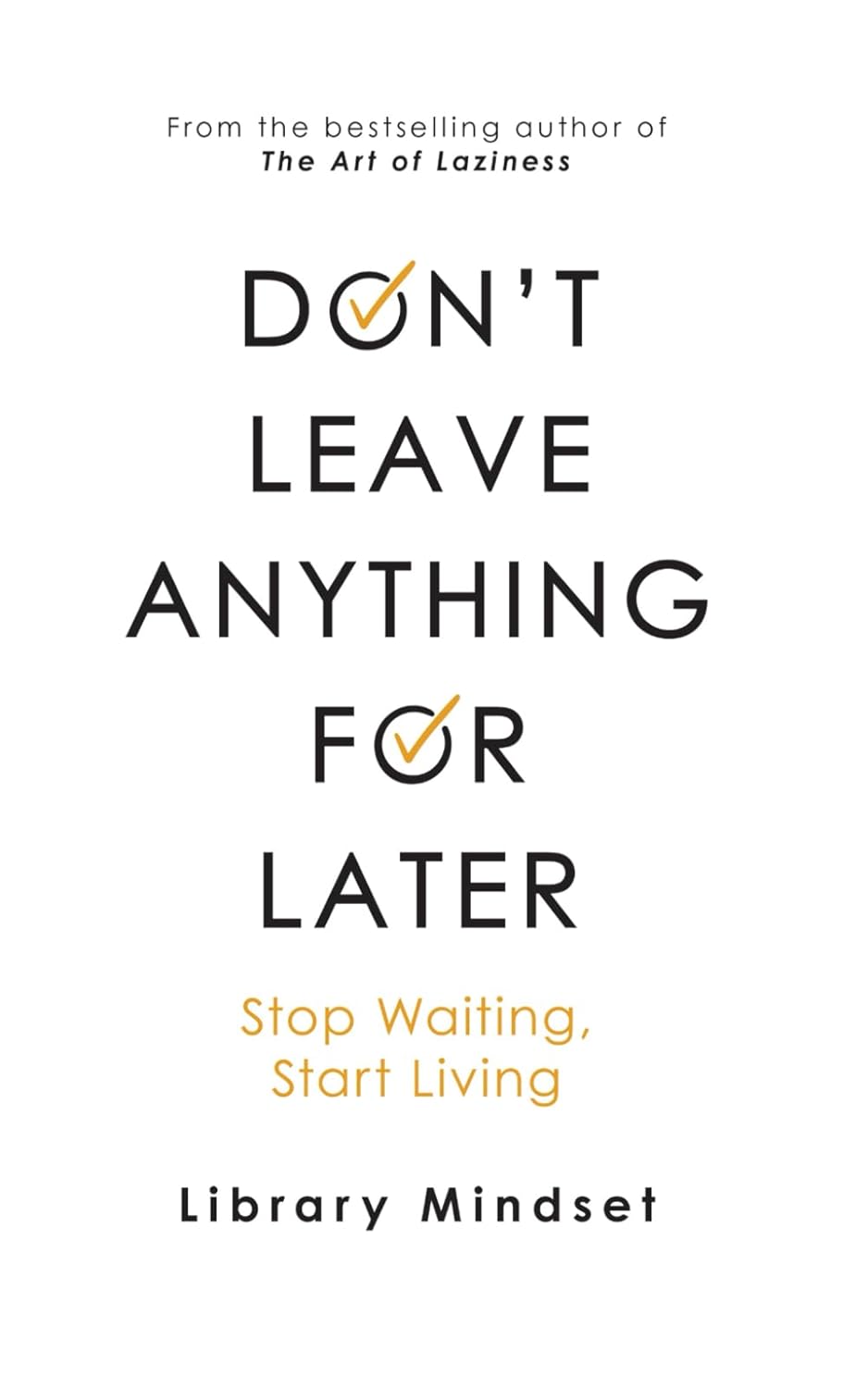
Quiz questions
Question 1
According to "Don't Leave Anything For Later", what is the primary consequence of delaying small tasks?
- They usually resolve themselves without any productivity impact
- They primarily damage reputation but not personal time or energy
- They create hidden costs in time, energy, and opportunity that compound into significant losses
- They are useful for creative incubation and should be encouraged
Question 2
What does the "Library Mindset" refer to in the book?
- Treating available time and resources like a public library—borrow responsibly, return promptly, avoid hoarding
- Hoarding resources to ensure you never run out
- Outsourcing all tasks to others to maximize use of time
- Scheduling tasks only when absolutely necessary to save energy
Question 3
Which combination is cited as common causes of procrastination in the book?
- Fear of failure, decision paralysis, and poor reward structures
- Only a lack of talent or intelligence
- Strict time availability and overplanning only
- Financial constraints and legal issues
Question 4
What is the main benefit of chunking tasks as described in the book?
- It eliminates the need for planning altogether
- Breaking large tasks into bite-sized steps reduces friction, builds momentum, and compounds into significant progress
- It increases the total number of tasks so work feels more important but slows progress
- It ensures only long-term goals are ever worked on
Question 5
Which set of practices does the book recommend for sustaining long-term action?
- Relying solely on bursts of willpower and last-minute intensity
- Avoiding planning and favoring constant multitasking
- Daily and weekly planning rituals, routines and rituals, accountability, identity-based habits, and regular reflection
- Using only technology without behavioral changes
Active recall prompts
According to "Don't Leave Anything For Later", what is the primary consequence of delaying small tasks?
What does the "Library Mindset" refer to in the book?
Which combination is cited as common causes of procrastination in the book?
What is the main benefit of chunking tasks as described in the book?
What is the main idea of "Introduction: The Cost of Waiting", and how would you explain it without looking back?
What is the main idea of "The Library Mindset Explained", and how would you explain it without looking back?
What is the main idea of "Why We Procrastinate", and how would you explain it without looking back?
What is the main idea of "Prioritize: What Truly Matters", and how would you explain it without looking back?