Concept map
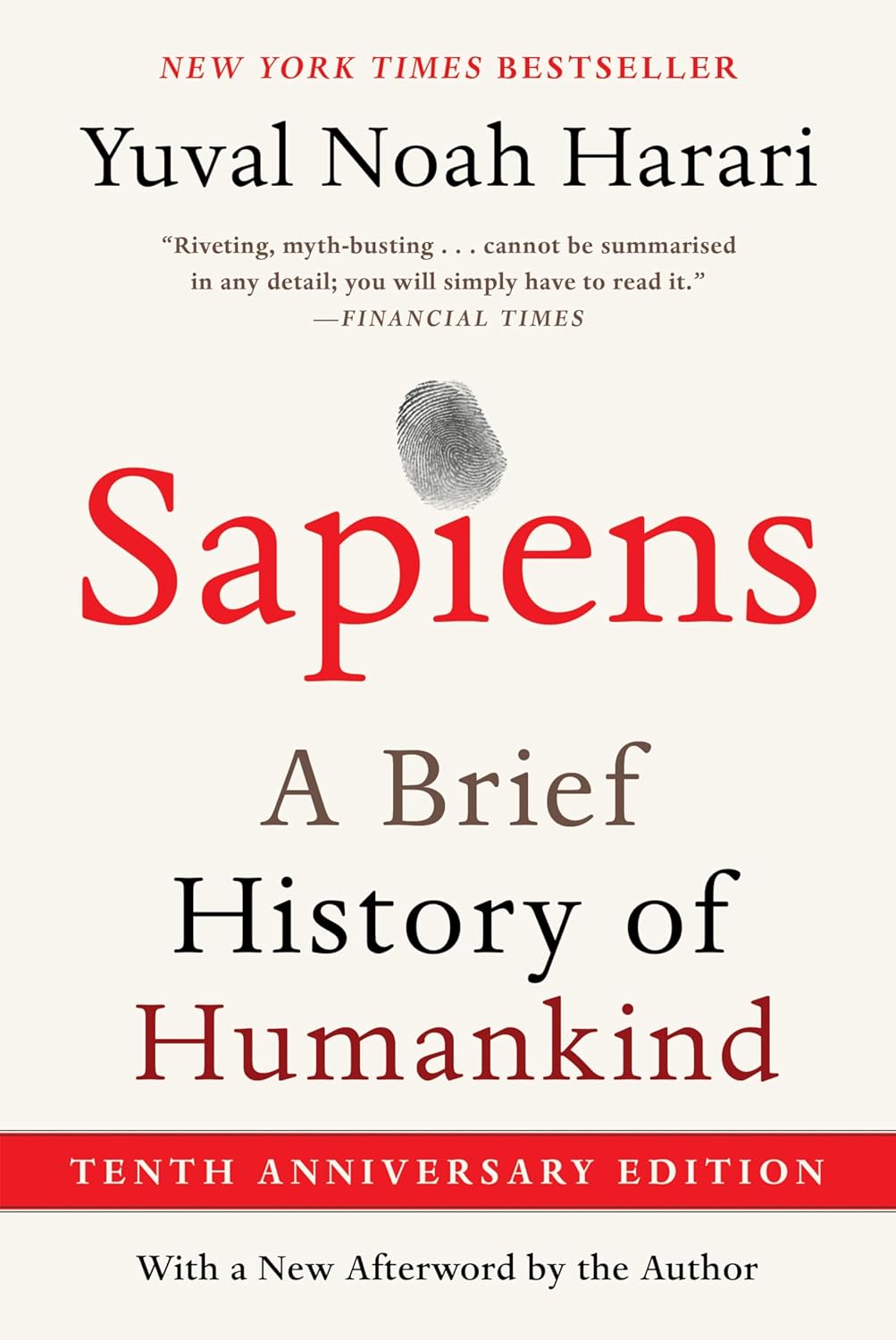
These are the ideas doing most of the work inside Sapiens: A Brief History of Humankind. Study them as reusable mental models, then jump back into chapters or questions when you want more context.
An Animal of No Significance
About 70,000 years ago Homo sapiens underwent a Cognitive Revolution that enabled new modes of thought and communication. This shift from biological to cultural evolution allowed small bands of humans to cooperate flexibly and spread across the globe.
Supporting points
- The Cognitive Revolution produced imagination, complex language, and the ability to share fictional stories.
- Biological differences between Homo sapiens and other humans were small; cultural changes produced large effects.
- Flexible cooperation among strangers became possible and crucial to Sapiens' expansion.
How does an animal of no significance change the way you would explain or apply Sapiens: A Brief History of Humankind?
An Animal of No Significance
The Tree of Knowledge
Human language evolved not only for practical information but primarily to gossip and to communicate about things that do not exist. This ability to create and believe in shared fictions—religions, nations, laws—made large-scale human cooperation possible.
Supporting points
- Language allowed transmission of information about social relations and reputations (gossip).
- Fictional realities (myths, gods, laws, corporations) enable millions to cooperate.
- Shared myths are not objectively true but are effective because many people believe them.
How does the tree of knowledge change the way you would explain or apply Sapiens: A Brief History of Humankind?
The Tree of Knowledge
A Day in the Life of Adam and Eve
Harari contrasts forager life with later agricultural life, describing typical daily activities, diet, social structures, and mobility of hunter-gatherer bands. He argues that many foragers enjoyed varied diets, social equality, and relatively ample leisure compared with early farmers.
Supporting points
- Hunter
- gatherers had diverse diets and flexible subsistence strategies.
- Social life emphasized small
How does a day in the life of adam and eve change the way you would explain or apply Sapiens: A Brief History of Humankind?
A Day in the Life of Adam and Eve
The Flood
This chapter examines the gradual processes that led humans to domesticate plants and animals and settle in fixed communities, initiating sweeping ecological and social changes. Domestication was a co-evolutionary process that reshaped species and human societies, often with unintended consequences.
Supporting points
- Domestication was mutual adaptation: humans cultivated species and species adapted to humans.
- Settling and farming increased population density and disease transmission.
- The shift reorganized human diets, labor patterns, and relationships with other species.
How does the flood change the way you would explain or apply Sapiens: A Brief History of Humankind?
The Flood
History's Biggest Fraud
Harari argues the Agricultural Revolution was history's biggest fraud because it increased total food production and population but often reduced individual well-being. Farming demanded more labor, created health problems, and entrenched inequality while benefiting elites and expanding human numbers.
Supporting points
- Agriculture boosted yields per land area but often worsened nutrition and health.
- Sedentary farming created property, inheritance, and class hierarchies.
- The apparent progress mainly benefited ruling classes and enabled empire
How does history's biggest fraud change the way you would explain or apply Sapiens: A Brief History of Humankind?
History's Biggest Fraud
Building Pyramids
Large-scale constructions, complex states, and monumental projects required new forms of organization and shared beliefs. Imagined orders—religions, laws, and ideologies—provided the glue for hierarchies and centralized power that could mobilize mass labor.
Supporting points
- Monumental architecture symbolizes centralized authority and shared myths.
- Imagined orders legitimize hierarchies and coordinate large populations.
- Institutions like kingship, religion, and bureaucracy make mass cooperation feasible.
How does building pyramids change the way you would explain or apply Sapiens: A Brief History of Humankind?
Building Pyramids
Memory Overload
As societies grew, oral communication and memory were insufficient; writing and record-keeping systems emerged to manage taxes, laws, and commerce. Information technologies transformed governance, economy, and historical consciousness.
Supporting points
- Writing developed primarily for administration—keeping accounts, laws, and obligations.
- Record
- keeping enabled complex states, long-distance trade, and accumulated knowledge.
How does memory overload change the way you would explain or apply Sapiens: A Brief History of Humankind?
Memory Overload
There Is No Justice in History
Harari examines how imagined orders produced persistent inequalities—class, gender, caste, and race—and how these hierarchies were justified by myths and institutions. He emphasizes that many social inequalities are not biologically ordained but constructed and sustained by shared beliefs.
Supporting points
- Hierarchies became codified through legal, religious, and cultural norms.
- Justifications for inequality often rest on imagined categories rather than objective differences.
- Some progress has reduced injustices, but history shows persistent and shifting forms of domination.
How does there is no justice in history change the way you would explain or apply Sapiens: A Brief History of Humankind?
There Is No Justice in History