Takeaways people can pass on
These cards are tuned for social discoverability: one clean idea, one strong visual treatment, and one tap to share on mobile.
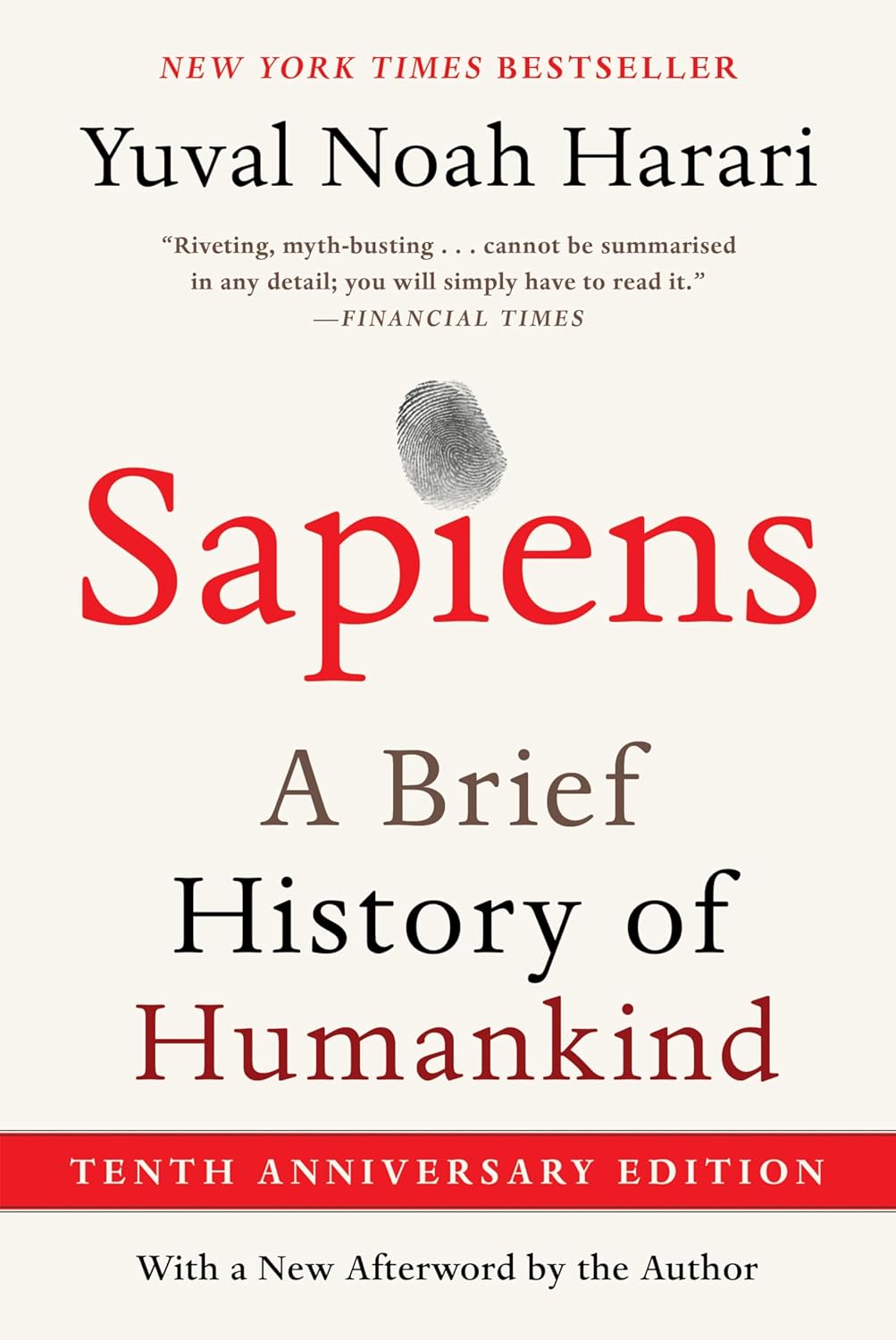
Sapiens: A Brief History of Humankind
by Yuval Noah Harari
The Cognitive Revolution produced imagination, complex language, and the ability to share fictional stories.
Turn the useful part of the book into something worth passing on.
The Cognitive Revolution produced imagination, complex language, and the ability to share fictional stories.
Share with the ReadSprint source so others can read the context.
Sapiens: A Brief History of Humankind
by Yuval Noah Harari
Biological differences between Homo sapiens and other humans were small; cultural changes produced large effects.
Turn the useful part of the book into something worth passing on.
Biological differences between Homo sapiens and other humans were small; cultural changes produced large effects.
Share with the ReadSprint source so others can read the context.
Sapiens: A Brief History of Humankind
by Yuval Noah Harari
Flexible cooperation among strangers became possible and crucial to Sapiens' expansion.
Turn the useful part of the book into something worth passing on.
Flexible cooperation among strangers became possible and crucial to Sapiens' expansion.
Share with the ReadSprint source so others can read the context.
Sapiens: A Brief History of Humankind
by Yuval Noah Harari
Notice how shared stories and narratives enable cooperation and question what imagined orders you accept.
Turn the useful part of the book into something worth passing on.
Notice how shared stories and narratives enable cooperation and question what imagined orders you accept.
Share with the ReadSprint source so others can read the context.
Sapiens: A Brief History of Humankind
by Yuval Noah Harari
Explains the origin of uniquely human capacities (fiction, large-scale cooperation) that underpin all later history. Understanding this helps explain how cultural systems can rapidly transform societies.
Turn the useful part of the book into something worth passing on.
Explains the origin of uniquely human capacities (fiction, large-scale cooperation) that underpin all later history. Understanding this helps explain how cultural systems can rapidly transform societies.
Share with the ReadSprint source so others can read the context.
Sapiens: A Brief History of Humankind
by Yuval Noah Harari
About 70,000 years ago Homo sapiens underwent a Cognitive Revolution that enabled new modes of thought and communication. This shift from biological to cultural evolution allowed small bands of humans to cooperate flexibly and spread acros…
Turn the useful part of the book into something worth passing on.
About 70,000 years ago Homo sapiens underwent a Cognitive Revolution that enabled new modes of thought and communication. This shift from biological to cultural evolution allowed small bands of humans to cooperate flexibly and spread across the globe.
Share with the ReadSprint source so others can read the context.
Sapiens: A Brief History of Humankind
by Yuval Noah Harari
Language allowed transmission of information about social relations and reputations (gossip).
Turn the useful part of the book into something worth passing on.
Language allowed transmission of information about social relations and reputations (gossip).
Share with the ReadSprint source so others can read the context.
Sapiens: A Brief History of Humankind
by Yuval Noah Harari
Fictional realities (myths, gods, laws, corporations) enable millions to cooperate.
Turn the useful part of the book into something worth passing on.
Fictional realities (myths, gods, laws, corporations) enable millions to cooperate.
Share with the ReadSprint source so others can read the context.
Sapiens: A Brief History of Humankind
by Yuval Noah Harari
Shared myths are not objectively true but are effective because many people believe them.
Turn the useful part of the book into something worth passing on.
Shared myths are not objectively true but are effective because many people believe them.
Share with the ReadSprint source so others can read the context.
Sapiens: A Brief History of Humankind
by Yuval Noah Harari
Be conscious of which shared narratives shape your decisions and assess their real-world consequences.
Turn the useful part of the book into something worth passing on.
Be conscious of which shared narratives shape your decisions and assess their real-world consequences.
Share with the ReadSprint source so others can read the context.
Sapiens: A Brief History of Humankind
by Yuval Noah Harari
Highlights the power of collective beliefs in shaping institutions and social order; relevant for understanding modern ideologies and institutions.
Turn the useful part of the book into something worth passing on.
Highlights the power of collective beliefs in shaping institutions and social order; relevant for understanding modern ideologies and institutions.
Share with the ReadSprint source so others can read the context.
Sapiens: A Brief History of Humankind
by Yuval Noah Harari
Human language evolved not only for practical information but primarily to gossip and to communicate about things that do not exist. This ability to create and believe in shared fictions—religions, nations, laws—made large-scale human coop…
Turn the useful part of the book into something worth passing on.
Human language evolved not only for practical information but primarily to gossip and to communicate about things that do not exist. This ability to create and believe in shared fictions—religions, nations, laws—made large-scale human cooperation possible.
Share with the ReadSprint source so others can read the context.