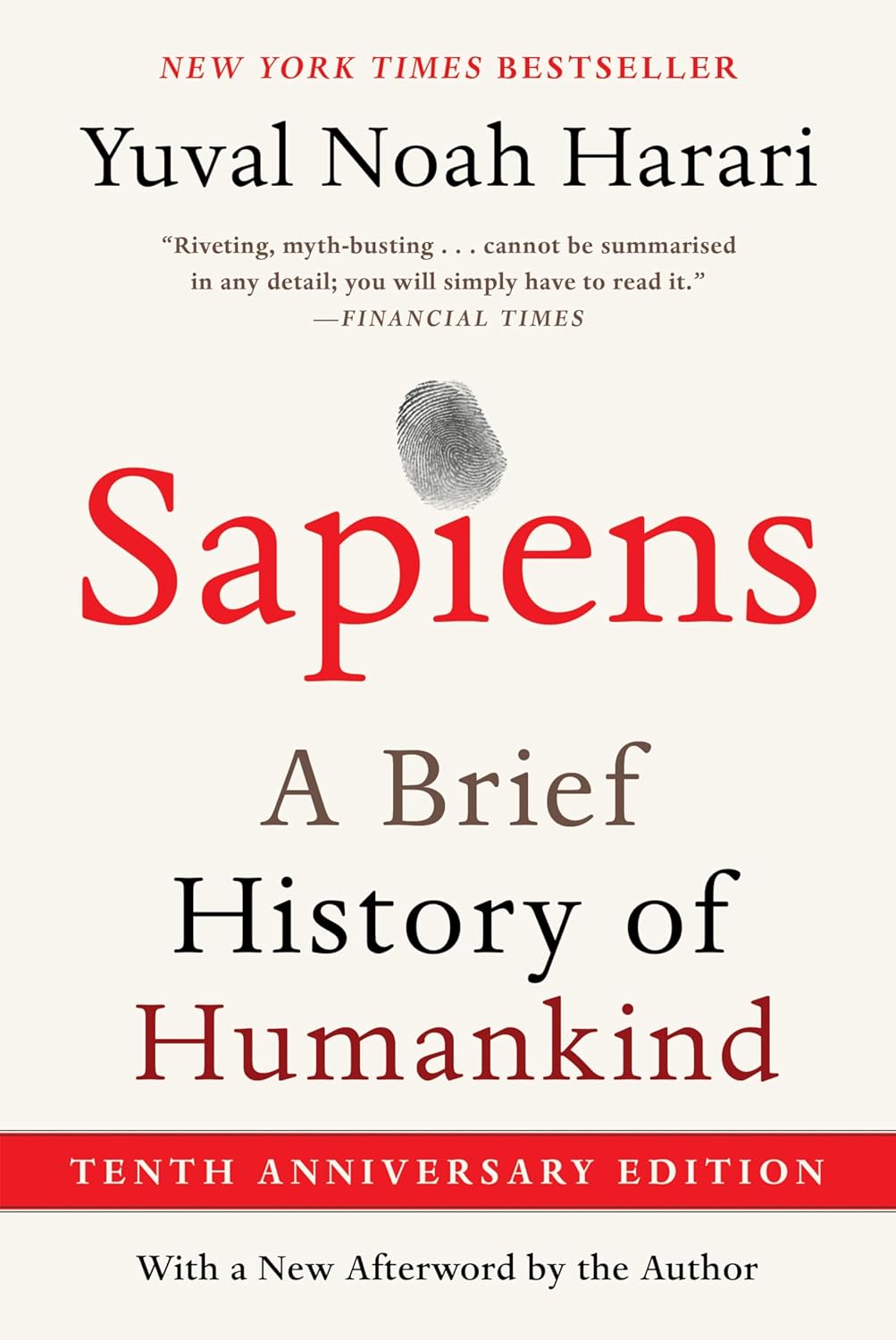
Sapiens: A Brief History of Humankind: ReadSprint summary highlights
ReadSprint paraphrases for review. These highlights are not verbatim quotations from the book or its author. Check the original edition for exact wording and context.
Sapiens: A Brief History of Humankind
by Yuval Noah Harari
About 70,000 years ago Homo sapiens underwent a Cognitive Revolution that enabled new modes of thought and communication.
ReadSprint paraphrase · Not a quotation from the author.
About 70,000 years ago Homo sapiens underwent a Cognitive Revolution that enabled new modes of thought and communication.
An explosion of symbolic thought and language enabling shared fictions and flexible cooperation.
Share with the ReadSprint source so others can read the context.
Sapiens: A Brief History of Humankind
by Yuval Noah Harari
This shift from biological to cultural evolution allowed small bands of humans to cooperate flexibly and spread across the globe.
ReadSprint paraphrase · Not a quotation from the author.
This shift from biological to cultural evolution allowed small bands of humans to cooperate flexibly and spread across the globe.
To gossip and communicate about individuals and shared fictions, enabling large-scale cooperation.
Share with the ReadSprint source so others can read the context.
Sapiens: A Brief History of Humankind
by Yuval Noah Harari
An explosion of symbolic thought and language enabling shared fictions and flexible cooperation.
ReadSprint paraphrase · Not a quotation from the author.
An explosion of symbolic thought and language enabling shared fictions and flexible cooperation.
It raised total food output but often reduced individual well-being through harder labor, disease and social inequality.
Share with the ReadSprint source so others can read the context.
Sapiens: A Brief History of Humankind
by Yuval Noah Harari
To gossip and communicate about individuals and shared fictions, enabling large-scale cooperation.
ReadSprint paraphrase · Not a quotation from the author.
To gossip and communicate about individuals and shared fictions, enabling large-scale cooperation.
Shared myths and imagined orders (religion, laws, money) that allow strangers to cooperate at large scale.
Share with the ReadSprint source so others can read the context.
Sapiens: A Brief History of Humankind
by Yuval Noah Harari
It raised total food output but often reduced individual well-being through harder labor, disease and social inequality.
ReadSprint paraphrase · Not a quotation from the author.
It raised total food output but often reduced individual well-being through harder labor, disease and social inequality.
Science, empire and capitalism formed a feedback loop: admitting ignorance spurred science, empires funded and applied it, and capitalism’s faith in future growth accelerated industrialization and global expansion.
Share with the ReadSprint source so others can read the context.
Sapiens: A Brief History of Humankind
by Yuval Noah Harari
Shared myths and imagined orders (religion, laws, money) that allow strangers to cooperate at large scale.
ReadSprint paraphrase · Not a quotation from the author.
Shared myths and imagined orders (religion, laws, money) that allow strangers to cooperate at large scale.
About 70,000 years ago Homo sapiens underwent a Cognitive Revolution that enabled new modes of thought and communication. This shift from biological to cultural evolution allowed small bands of humans to cooperate flexibly and spread across the globe.
Share with the ReadSprint source so others can read the context.
Use these highlights to review the book
Which highlight from Sapiens: A Brief History of Humankind changes how you would explain the book to someone else?
Which lesson here is worth testing in a real decision this week?
Which highlight feels memorable but less actionable once you slow down and examine it?