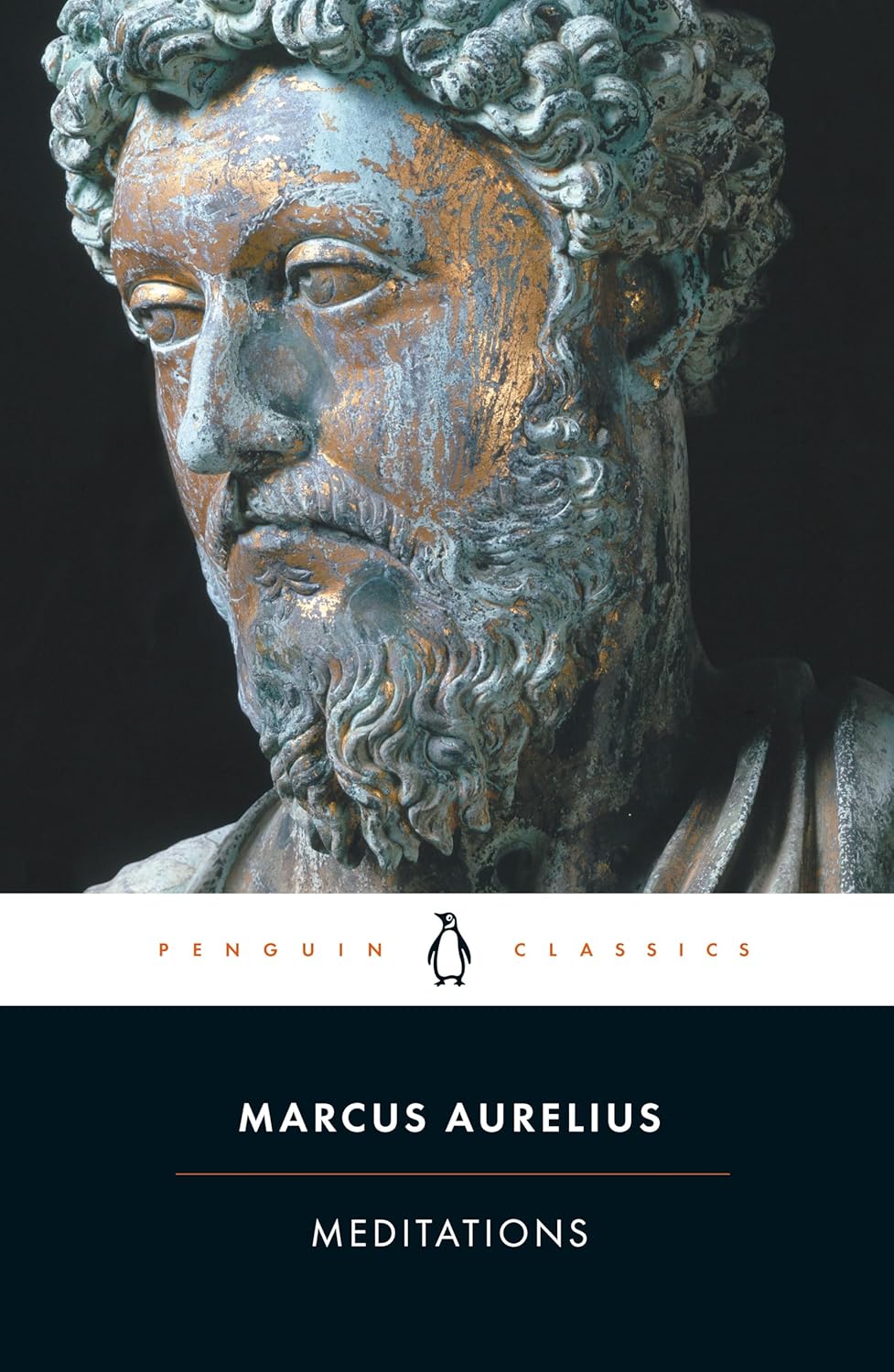
ReadSprintBooksMeditationsMeditations Key Concepts and Core Ideas
Meditations
Meditations Key Concepts and Core Ideas

Meditations Key Concepts and Core Ideas

by Marcus Aurelius

Understand the core concepts in Meditations by Marcus Aurelius, with explanations, recall prompts, related books, and connected learning paths.

This page isolates the core concepts carrying Meditations. Use it when you want to understand the book’s mental models, not just skim the chapter sequence.

Built for retention

ReadSprint combines concise summaries, quizzes, active recall, and related reading paths so the useful part of the book is easier to keep.

Open full summary

12

Chapter summaries

5

Quiz questions

12

Key takeaways

3

Related books

Concept map

These are the ideas doing most of the work inside Meditations. Study them as reusable mental models, then jump back into chapters or questions when you want more context.

Concept 1

Book 1

Marcus Aurelius opens with a list of gratitude, naming teachers, family, and examples who shaped his character and beliefs. He emphasizes lessons learned about humility, duty, rationality, and the value of good modeling in life.

Why it matters: This chapter grounds Stoic practice in concrete interpersonal debts and models, showing virtue as formed through relationships and example. It highlights gratitude and lineage as starting points for ethical development.

Supporting points

  • Acknowledges influences that taught him honesty, self
  • control, and piety.
  • Values practical examples over abstract teaching.
Active recall prompt

How does book 1 change the way you would explain or apply Meditations?

Related chapter

Book 1

Concept 2

Book 2

Marcus turns inward to practical Stoic exercises: beginning the day prepared for difficulty, distinguishing what is within one’s control, and facing mortality. He urges constant vigilance against passion, distraction, and self-deception.

Why it matters: Book 2 frames Stoic discipline as daily practice: mental preparedness, control of impressions, and reflection on death to cultivate resilience. These practices remain relevant for managing stress and focus in modern lif…

Supporting points

  • Start each day expecting obstacles and remain mentally prepared.
  • Focus on what you can control (judgments, actions) and accept what you cannot.
  • Discipline thought to avoid emotional reactivity and petty desires.
Active recall prompt

How does book 2 change the way you would explain or apply Meditations?

Related chapter

Book 2

Concept 3

Book 3

Marcus emphasizes inner sovereignty through reason, urging the reader to live according to nature and rational principle. He discusses the unity of mind and the importance of right judgment over external approval.

Why it matters: This book centers on practical rationality and self-governance, stressing that a disciplined mind produces a virtuous life. Its focus on attention and judgment speaks directly to contemporary concerns about distraction…

Supporting points

  • Use reason to govern impulses and maintain moral integrity.
  • Live in accordance with nature and perform your role well.
  • Value inner freedom over reputation or external goods.
Active recall prompt

How does book 3 change the way you would explain or apply Meditations?

Related chapter

Book 3

Concept 4

Book 4

Marcus reflects on change, the transience of things, and the ordering principle (logos) that connects all events. He counsels acceptance of fate, calm in the face of loss, and consistency in virtue.

Why it matters: Book 4 deepens Stoic acceptance of impermanence and the importance of harmony with the larger whole, offering a philosophical perspective to cope with loss and uncertainty. Its view supports resilience in times of rapid…

Supporting points

  • Everything is transient; accept change as natural.
  • The cosmos is ordered; align personal action with universal reason.
  • Maintain equanimity amid external flux and loss.
Active recall prompt

How does book 4 change the way you would explain or apply Meditations?

Related chapter

Book 4

Concept 5

Book 5

Marcus urges rising to duty, overcoming inertia, and performing one’s social and moral tasks without complaint. He contrasts ease of indolence with the excellence of purposeful action aligned to reason.

Why it matters: This book emphasizes discipline and purposeful action as central to a good life, reinforcing the Stoic ideal that virtue is enacted in everyday responsibilities. It’s applicable to cultivating work ethic and civic-minde…

Supporting points

  • Start work promptly; avoid laziness and procrastination.
  • Fulfill social roles with integrity and without seeking praise.
  • Use every action as an opportunity for virtue.
Active recall prompt

How does book 5 change the way you would explain or apply Meditations?

Related chapter

Book 5

Concept 6

Book 6

Marcus discusses the mind’s relationship to the world, urging simplicity, sincerity, and resilience against disturbance. He returns to themes of universal reason, mutual interdependence, and the internal citadel of the mind.

Why it matters: Book 6 highlights inner resilience and ethical sociality, balancing personal self-mastery with responsibilities to others. Its counsel supports mental health practices that emphasize cognitive control and prosocial beha…

Supporting points

  • Protect the inner citadel by controlling judgments and desires.
  • Recognize human interdependence and act for the common good.
  • Keep language and intentions plain and truthful.
Active recall prompt

How does book 6 change the way you would explain or apply Meditations?

Related chapter

Book 6

Concept 7

Book 7

Marcus examines perception, error, and the need for continual self-examination, stressing that impressions can mislead unless checked by reason. He affirms that a virtuous disposition renders life serene despite external turmoil.

Why it matters: This book reinforces Stoic epistemology and moral psychology, teaching how to correct cognitive errors and cultivate steady character. Its focus on self-awareness is relevant to modern reflective practices and cognitive…

Supporting points

  • Perceptions are fallible; verify impressions with reason.
  • Regular self
  • scrutiny prevents lapses into vice or confusion.
Active recall prompt

How does book 7 change the way you would explain or apply Meditations?

Related chapter

Book 7

Concept 8

Book 8

Marcus consolidates themes of virtue, duty, and perspective, emphasizing acceptance of fate and commitment to right action. He reflects on the shortness of life and the importance of living according to nature and reason.

Why it matters: Book 8 synthesizes Stoic teaching into a call for purposeful, virtuous living grounded in perspective and acceptance, useful as a practical guide to resilient, ethical action today. It reinforces priorities for meaningf…

Supporting points

  • Keep the brevity of life in view to sharpen priorities.
  • Accept events outside your control and work on your responses.
  • Uphold virtue consistently, regardless of others’ behavior.
Active recall prompt

How does book 8 change the way you would explain or apply Meditations?

Related chapter

Book 8

Quiz checkpoints

Question 1

According to Marcus Aurelius in Meditations, what should you focus on to maintain tranquility?

Question 2

What attitude toward death and change does Marcus repeatedly recommend?

Question 3

What is 'living according to nature' best understood as in Marcus’s Stoic view?

Practice retrieval

Key concepts

Book 1

This chapter grounds Stoic practice in concrete interpersonal debts and models, showing virtue as formed through relationships and example. It highlights gratitude and lineage as starting points for ethical development.

Book 2

Book 2 frames Stoic discipline as daily practice: mental preparedness, control of impressions, and reflection on death to cultivate resilience. These practices remain relevant for managing stress and focus in modern lif…

Book 3

This book centers on practical rationality and self-governance, stressing that a disciplined mind produces a virtuous life. Its focus on attention and judgment speaks directly to contemporary concerns about distraction…

Open concept map

Author relationship system

Move from this author into connected writers, nearby themes, and any other books already in the ReadSprint library.

Turn Reading Into Recall

Keep Meditations review-ready instead of letting it fade.

This page is strongest when it becomes part of a review habit: save the summary, revisit the key takeaways, and use recall prompts before the next meeting, study block, or decision.

Save one strong takeaway instead of over-highlighting.
Use the questions page to test what actually stuck.
Return when the book becomes relevant again, not just when motivation is high.
See pricing
Get Book Review Notes

Get practical notes on remembering and reusing ideas from nonfiction books without building an overly heavy note system.

Retention workflow

Turn this page into a repeatable study loop

Move from summary to takeaways, test yourself with questions, revisit the concept map, and then continue into related books. That keeps Meditationsconnected instead of turning into a one-time skim.

Frequently asked questions

What are the key concepts in Meditations?

The key concepts here are distilled from the chapter summaries, major themes, and action-oriented takeaways so you can quickly see the ideas carrying the whole book.

How should I study these Meditations concepts?

Start by explaining each concept from memory, connect it to a chapter or example, and then test yourself with one active recall prompt before moving on.

How are the concepts connected to other books?

Use the related books and topic links on this page to find books that reinforce, challenge, or extend the same ideas from a different angle.