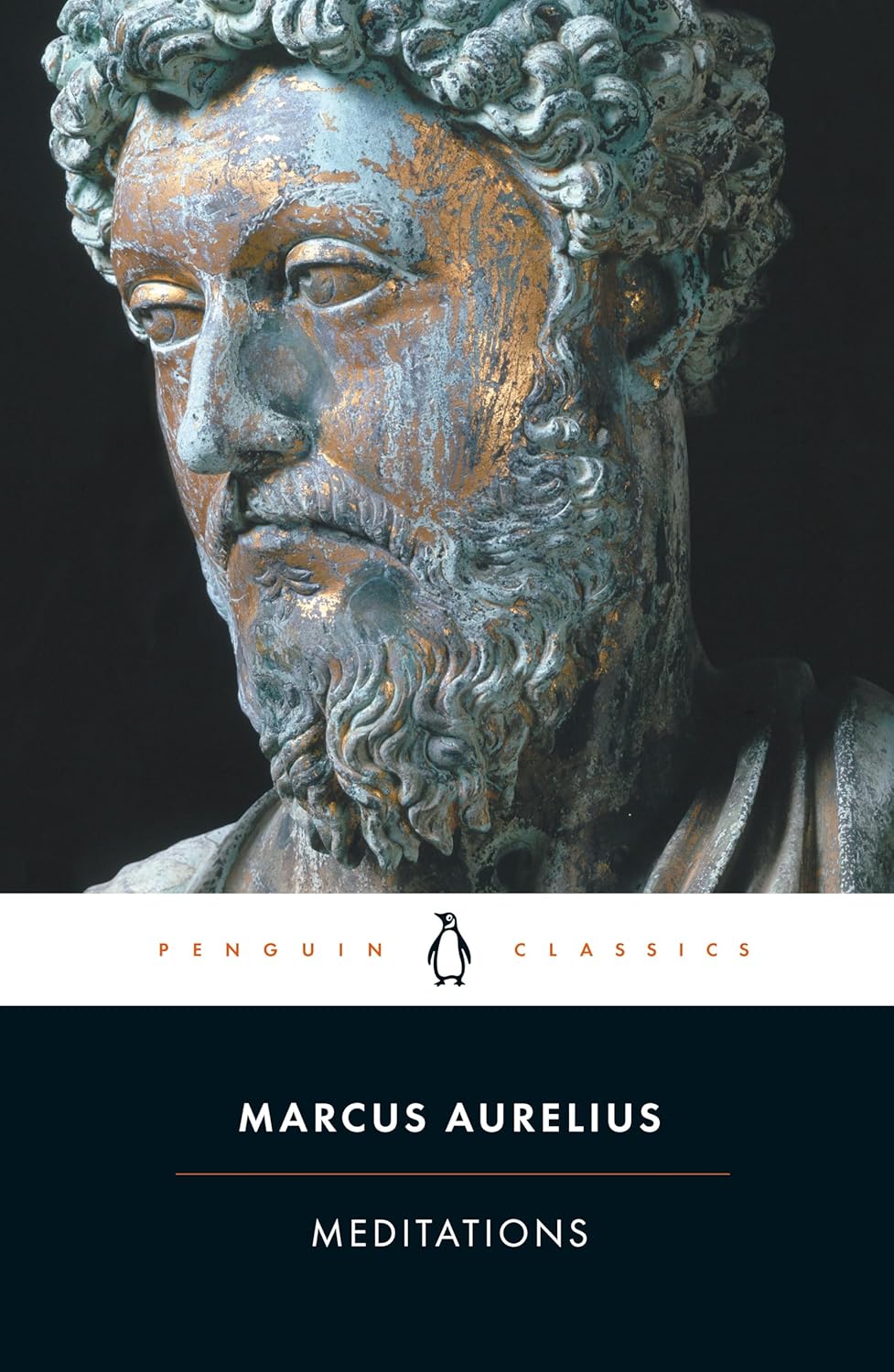
Book overview
Marcus Aurelius opens with a list of gratitude, naming teachers, family, and examples who shaped his character and beliefs. He emphasizes lessons learned about humility, duty, rationality, and the value of good modeling in life.
This page is built to be a compact learning hub for Meditations. You can move from the high-level summary into takeaways, quiz prompts, chapter review, and related books without breaking the reading flow.
Best takeaways to keep
Acknowledges influences that taught him honesty, self
control, and piety.
Values practical examples over abstract teaching.
Emphasizes gratitude for moral and intellectual formation.
Recognizes the importance of mentors, familial models, and community.
List people and lessons that shaped you and let that guide your current conduct.
Retrieval practice
According to Marcus Aurelius in Meditations, what should you focus on to maintain tranquility?
What attitude toward death and change does Marcus repeatedly recommend?
What is 'living according to nature' best understood as in Marcus’s Stoic view?
Which of the following daily practices does Marcus recommend to prepare the mind?
Quiz preview
According to Marcus Aurelius in Meditations, what should you focus on to maintain tranquility?
- Pursuing wealth and status
- Distinguishing what is within your control and acting on it
- Avoiding all difficulties at any cost
What attitude toward death and change does Marcus repeatedly recommend?
- Fear and denial
- Attempt to control death through rituals
- Acceptance of transience and readiness for death
What is 'living according to nature' best understood as in Marcus’s Stoic view?
- Following every impulse and desire
- Acting according to reason, social duty, and the ordering principle (logos)
- Detaching from all relationships entirely
Which of the following daily practices does Marcus recommend to prepare the mind?
- Beginning the day expecting ease and comfort
- Practicing self-examination, expecting difficulty, and training impressions with reason
- Ignoring impressions and emotions completely
Chapter map
Book 1
Marcus Aurelius opens with a list of gratitude, naming teachers, family, and examples who shaped his character and beliefs. He emphasizes lessons learned about humility, duty, rationality, and the value of good modeling in life.
Book 2
Marcus turns inward to practical Stoic exercises: beginning the day prepared for difficulty, distinguishing what is within one’s control, and facing mortality. He urges constant vigilance against passion, distraction, and self-deception.
Book 3
Marcus emphasizes inner sovereignty through reason, urging the reader to live according to nature and rational principle. He discusses the unity of mind and the importance of right judgment over external approval.
Book 4
Marcus reflects on change, the transience of things, and the ordering principle (logos) that connects all events. He counsels acceptance of fate, calm in the face of loss, and consistency in virtue.
Book 5
Marcus urges rising to duty, overcoming inertia, and performing one’s social and moral tasks without complaint. He contrasts ease of indolence with the excellence of purposeful action aligned to reason.
Next best step
Move next into the questions page if you want better retention, or into the takeaways page if you want the shortest useful review loop for this book.