Takeaways people can pass on
These cards are tuned for social discoverability: one clean idea, one strong visual treatment, and one tap to share on mobile.
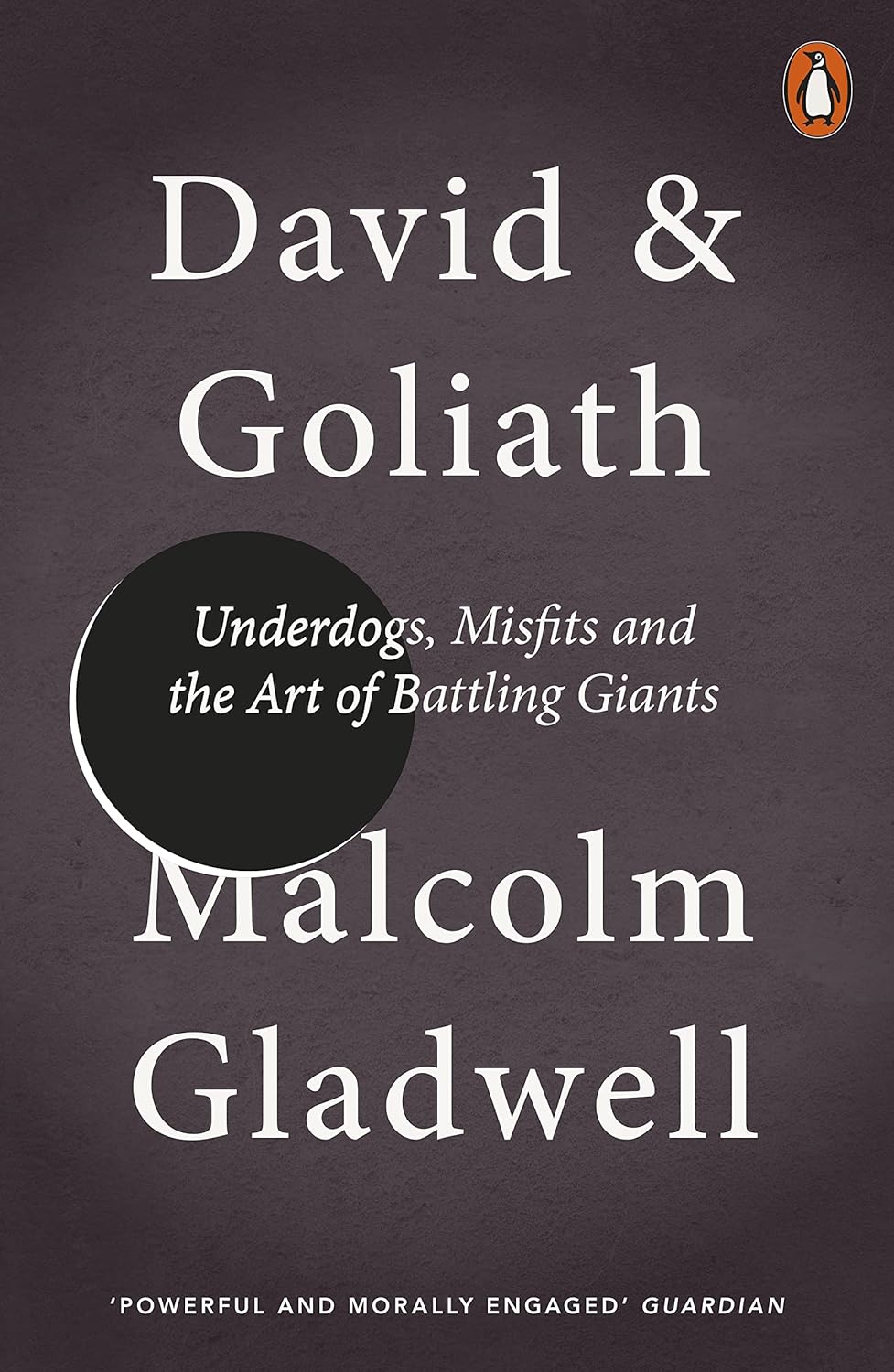
David & Goliath: Underdogs, Misfits and the Art of Battling Giants
by Malcolm Gladwell
The visible advantage (Goliath's size and armor) obscures vulnerabilities (limited mobility, predictable tactics).
Turn the useful part of the book into something worth passing on.
The visible advantage (Goliath's size and armor) obscures vulnerabilities (limited mobility, predictable tactics).
Share with the ReadSprint source so others can read the context.
David & Goliath: Underdogs, Misfits and the Art of Battling Giants
by Malcolm Gladwell
David's apparent weakness (youth, light armament) became an advantage through speed, skill, and strategy.
Turn the useful part of the book into something worth passing on.
David's apparent weakness (youth, light armament) became an advantage through speed, skill, and strategy.
Share with the ReadSprint source so others can read the context.
David & Goliath: Underdogs, Misfits and the Art of Battling Giants
by Malcolm Gladwell
Success often depends on choosing the form of engagement that neutralizes an opponent's strengths.
Turn the useful part of the book into something worth passing on.
Success often depends on choosing the form of engagement that neutralizes an opponent's strengths.
Share with the ReadSprint source so others can read the context.
David & Goliath: Underdogs, Misfits and the Art of Battling Giants
by Malcolm Gladwell
Perception of power can shape behavior and outcomes more than material power itself.
Turn the useful part of the book into something worth passing on.
Perception of power can shape behavior and outcomes more than material power itself.
Share with the ReadSprint source so others can read the context.
David & Goliath: Underdogs, Misfits and the Art of Battling Giants
by Malcolm Gladwell
When facing a stronger opponent, identify and exploit their hidden vulnerabilities rather than confronting their strength directly.
Turn the useful part of the book into something worth passing on.
When facing a stronger opponent, identify and exploit their hidden vulnerabilities rather than confronting their strength directly.
Share with the ReadSprint source so others can read the context.
David & Goliath: Underdogs, Misfits and the Art of Battling Giants
by Malcolm Gladwell
The chapter reframes how we evaluate strength and weakness, showing this concept applies to business, education, and personal challenges. It invites readers to look past appearances and consider deeper dynamics in conflicts.
Turn the useful part of the book into something worth passing on.
The chapter reframes how we evaluate strength and weakness, showing this concept applies to business, education, and personal challenges. It invites readers to look past appearances and consider deeper dynamics in conflicts.
Share with the ReadSprint source so others can read the context.
David & Goliath: Underdogs, Misfits and the Art of Battling Giants
by Malcolm Gladwell
Gladwell opens with the biblical story of David and Goliath to challenge the conventional understanding of advantage and disadvantage, arguing that apparent strength can contain hidden weaknesses and that apparent weakness can conceal real…
Turn the useful part of the book into something worth passing on.
Gladwell opens with the biblical story of David and Goliath to challenge the conventional understanding of advantage and disadvantage, arguing that apparent strength can contain hidden weaknesses and that apparent weakness can conceal real strengths. He reframes the encounter as an illustration of how strategy, perception, and context matter more than raw size or power.
Share with the ReadSprint source so others can read the context.
David & Goliath: Underdogs, Misfits and the Art of Battling Giants
by Malcolm Gladwell
Hardship can catalyze development of compensatory strengths (e.g., creativity, problem
Turn the useful part of the book into something worth passing on.
Hardship can catalyze development of compensatory strengths (e.g., creativity, problem
Share with the ReadSprint source so others can read the context.
David & Goliath: Underdogs, Misfits and the Art of Battling Giants
by Malcolm Gladwell
solving).
Turn the useful part of the book into something worth passing on.
solving).
Share with the ReadSprint source so others can read the context.
David & Goliath: Underdogs, Misfits and the Art of Battling Giants
by Malcolm Gladwell
Not all difficulties are desirable; context and individual resources determine outcomes.
Turn the useful part of the book into something worth passing on.
Not all difficulties are desirable; context and individual resources determine outcomes.
Share with the ReadSprint source so others can read the context.
David & Goliath: Underdogs, Misfits and the Art of Battling Giants
by Malcolm Gladwell
The theory explains why some apparent disadvantages correlate with later success.
Turn the useful part of the book into something worth passing on.
The theory explains why some apparent disadvantages correlate with later success.
Share with the ReadSprint source so others can read the context.
David & Goliath: Underdogs, Misfits and the Art of Battling Giants
by Malcolm Gladwell
Success from difficulty often involves reframing and leveraging the constraint rather than simply overcoming it.
Turn the useful part of the book into something worth passing on.
Success from difficulty often involves reframing and leveraging the constraint rather than simply overcoming it.
Share with the ReadSprint source so others can read the context.