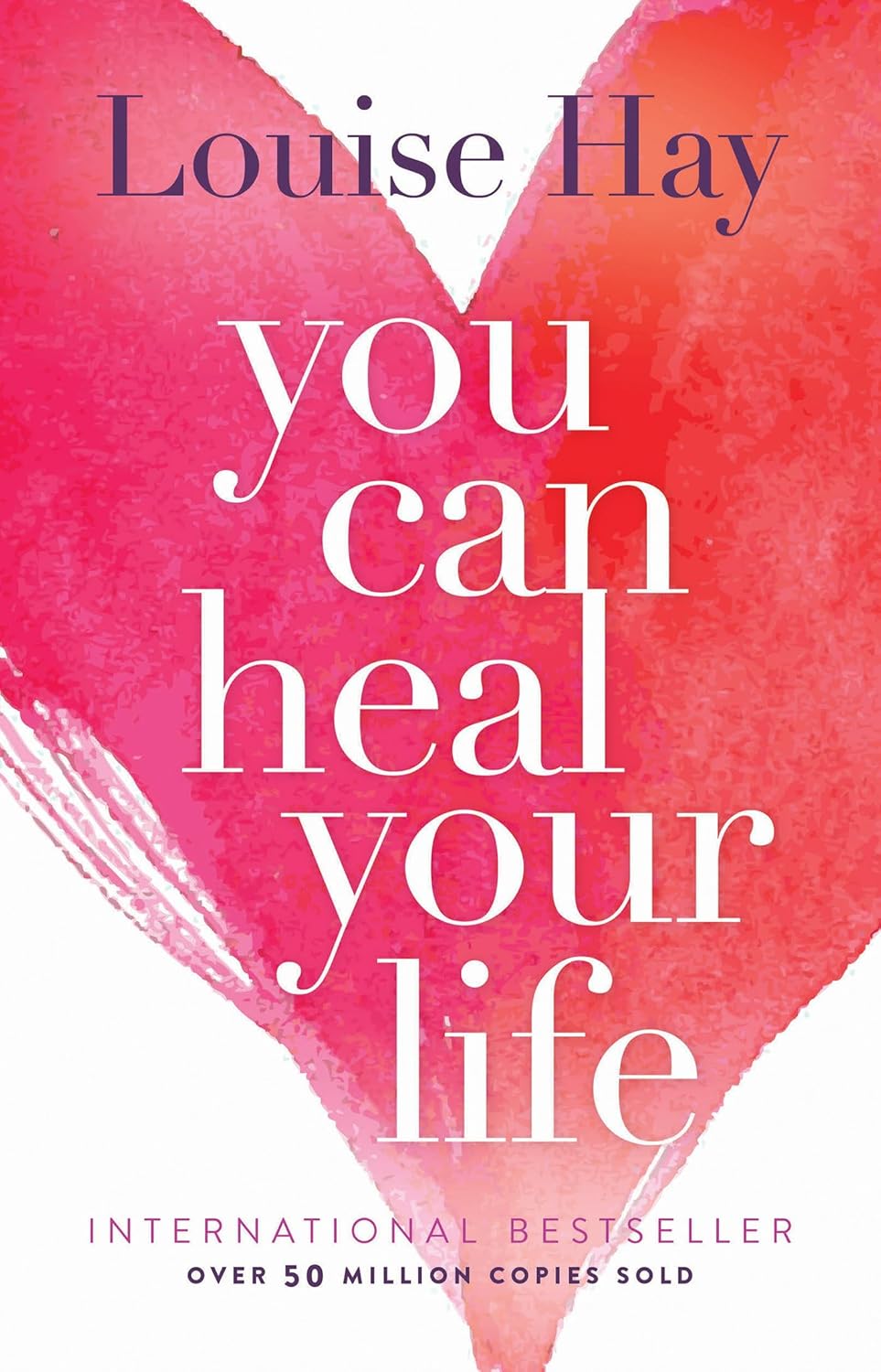
ReadSprintBooksYou Can Heal Your LifeYou Can Heal Your Life Key Concepts and Core Ideas
You Can Heal Your Life
You Can Heal Your Life Key Concepts and Core Ideas

You Can Heal Your Life Key Concepts and Core Ideas

by Louise Hay

Understand the core concepts in You Can Heal Your Life by Louise Hay, with explanations, recall prompts, related books, and connected learning paths.

This page isolates the core concepts carrying You Can Heal Your Life. Use it when you want to understand the book’s mental models, not just skim the chapter sequence.

Built for retention

ReadSprint combines concise summaries, quizzes, active recall, and related reading paths so the useful part of the book is easier to keep.

Open full summary

10

Chapter summaries

5

Quiz questions

12

Key takeaways

0

Related books

Concept map

These are the ideas doing most of the work inside You Can Heal Your Life. Study them as reusable mental models, then jump back into chapters or questions when you want more context.

Concept 1

What I Believe

Louise Hay outlines her core belief that our thoughts and beliefs shape our experiences and physical health, and that changing thought patterns can transform life. She emphasizes self-love, forgiveness, and the use of affirmations as practical tools for healing and growth.

Why it matters: This chapter establishes the book’s metaphysical framework and positions personal responsibility and positive thinking as relevant tools for modern self-help. Its ideas set the tone for practical techniques presented la…

Supporting points

  • Thoughts and beliefs create personal reality and influence physical health.
  • Self
  • love and forgiveness are foundational to healing.
Active recall prompt

How does what i believe change the way you would explain or apply You Can Heal Your Life?

Related chapter

What I Believe

Concept 2

The Problem Is You

Hay argues that many life problems originate from unhelpful beliefs held about the self, often rooted in childhood experiences. She explains that blaming external circumstances misses the internal patterns that maintain suffering, and invites readers to examine their thought systems.

Why it matters: The chapter focuses on personal responsibility and introspection, showing how self-awareness is relevant to breaking cycles of suffering. It reframes problems as opportunities for inner work.

Supporting points

  • Inner beliefs, often unconscious, create recurring problems.
  • Childhood messages frequently shape limiting self
  • concepts.
Active recall prompt

How does the problem is you change the way you would explain or apply You Can Heal Your Life?

Related chapter

The Problem Is You

Concept 3

Can We Change Our Lives?

Hay asserts that change is possible at any time because beliefs are learned and therefore can be unlearned or replaced. She provides evidence from her own life and others’ experiences to support the claim that deliberate mental work produces measurable shifts.

Why it matters: This chapter offers reassurance and practical optimism, making the book’s methods feel accessible and relevant to readers seeking change. It emphasizes agency and the practicality of inner work.

Supporting points

  • Beliefs are learned and therefore changeable.
  • Real
  • life examples illustrate that transformation is achievable.
Active recall prompt

How does can we change our lives? change the way you would explain or apply You Can Heal Your Life?

Related chapter

Can We Change Our Lives?

Concept 4

How to Change

Hay outlines concrete methods for changing thoughts and beliefs, including affirmations, forgiveness exercises, visualization, and habit replacement. She stresses the importance of repetition, feeling the truth of new beliefs, and integrating them into daily life.

Why it matters: Practical technique is the focus: spiritual principles translated into repeatable exercises that readers can apply immediately. The chapter bridges theory and action for personal transformation.

Supporting points

  • Use positive affirmations to reprogram the subconscious mind.
  • Visualize desired outcomes as if they are already true.
  • Practice forgiveness to release past pain and free energy.
Active recall prompt

How does how to change change the way you would explain or apply You Can Heal Your Life?

Related chapter

How to Change

Concept 5

Other People Are Mirrors

Hay explains that other people reflect back our own unresolved issues, beliefs, and expectations, so relationships reveal inner material to be healed. She recommends using interactions as diagnostic tools rather than grounds for blaming others.

Why it matters: The chapter reframes interpersonal difficulty as feedback rather than attack, making relationships a practical arena for applying the book’s healing techniques. It stresses inner work to improve outer connections.

Supporting points

  • People act as mirrors showing our own patterns and beliefs.
  • Conflicts often expose unhealed aspects of the self.
  • Observing reactions can reveal limiting self
Active recall prompt

How does other people are mirrors change the way you would explain or apply You Can Heal Your Life?

Related chapter

Other People Are Mirrors

Concept 6

The Body: The Mirror of Your Thoughts

Hay describes the body as a mirror of mental and emotional states, asserting that many illnesses correspond to specific thought patterns or suppressed emotions. She encourages treating the body with love and using mental healing alongside medical care.

Why it matters: This chapter connects psychology and physiology, highlighting the relevance of emotional health for physical well-being and promoting holistic self care. It invites a compassionate approach to illness.

Supporting points

  • Physical symptoms can reflect emotional and mental patterns.
  • Identifying likely thought patterns linked to ailments aids healing.
  • Love, acceptance, and affirmations support physical recovery.
Active recall prompt

How does the body: the mirror of your thoughts change the way you would explain or apply You Can Heal Your Life?

Related chapter

The Body: The Mirror of Your Thoughts

Concept 7

Love and Relationships

Hay explores how self-love is foundational to healthy romantic and familial relationships, suggesting that unmet needs and expectations often stem from inner lack. She offers exercises to cultivate self worth and attract more nurturing partnerships.

Why it matters: The chapter makes a direct link between inner healing and relationship outcomes, providing actionable strategies for anyone wanting better connections. It emphasizes building a loving relationship with oneself first.

Supporting points

  • Self
  • love determines the quality of intimate relationships.
  • Patterns of dependence, jealousy, and resentment reveal inner wounds.
Active recall prompt

How does love and relationships change the way you would explain or apply You Can Heal Your Life?

Related chapter

Love and Relationships

Concept 8

Work and Money

Hay addresses beliefs around work and money, arguing scarcity often arises from fear-based thinking and a poor money self image. She recommends changing limiting beliefs, cultivating gratitude, and visualizing abundance to improve financial and career situations.

Why it matters: This chapter applies the book’s mental-healing framework to practical domains of work and finance, making the spiritual principles relevant to everyday economic concerns. It encourages both inner and outer work for resu…

Supporting points

  • Money beliefs are learned and can be transformed.
  • Scarcity mindset limits opportunities and creative problem
  • solving.
Active recall prompt

How does work and money change the way you would explain or apply You Can Heal Your Life?

Related chapter

Work and Money

Quiz checkpoints

Question 1

According to You Can Heal Your Life, what is the core principle about how life and health are shaped?

Question 2

Which combination of methods does Louise Hay recommend for changing limiting beliefs?

Question 3

What does Hay mean by the statement “other people are mirrors”?

Practice retrieval

Key concepts

What I Believe

This chapter establishes the book’s metaphysical framework and positions personal responsibility and positive thinking as relevant tools for modern self-help. Its ideas set the tone for practical techniques presented la…

The Problem Is You

The chapter focuses on personal responsibility and introspection, showing how self-awareness is relevant to breaking cycles of suffering. It reframes problems as opportunities for inner work.

Can We Change Our Lives?

This chapter offers reassurance and practical optimism, making the book’s methods feel accessible and relevant to readers seeking change. It emphasizes agency and the practicality of inner work.

Open concept map
Turn Reading Into Recall

Keep You Can Heal Your Life review-ready instead of letting it fade.

This page is strongest when it becomes part of a review habit: save the summary, revisit the key takeaways, and use recall prompts before the next meeting, study block, or decision.

Save one strong takeaway instead of over-highlighting.
Use the questions page to test what actually stuck.
Return when the book becomes relevant again, not just when motivation is high.
See pricing
Get Book Review Notes

Get practical notes on remembering and reusing ideas from nonfiction books without building an overly heavy note system.

Retention workflow

Turn this page into a repeatable study loop

Move from summary to takeaways, test yourself with questions, revisit the concept map, and then continue into related books. That keeps You Can Heal Your Lifeconnected instead of turning into a one-time skim.

Frequently asked questions

What are the key concepts in You Can Heal Your Life?

The key concepts here are distilled from the chapter summaries, major themes, and action-oriented takeaways so you can quickly see the ideas carrying the whole book.

How should I study these You Can Heal Your Life concepts?

Start by explaining each concept from memory, connect it to a chapter or example, and then test yourself with one active recall prompt before moving on.

How are the concepts connected to other books?

Use the related books and topic links on this page to find books that reinforce, challenge, or extend the same ideas from a different angle.