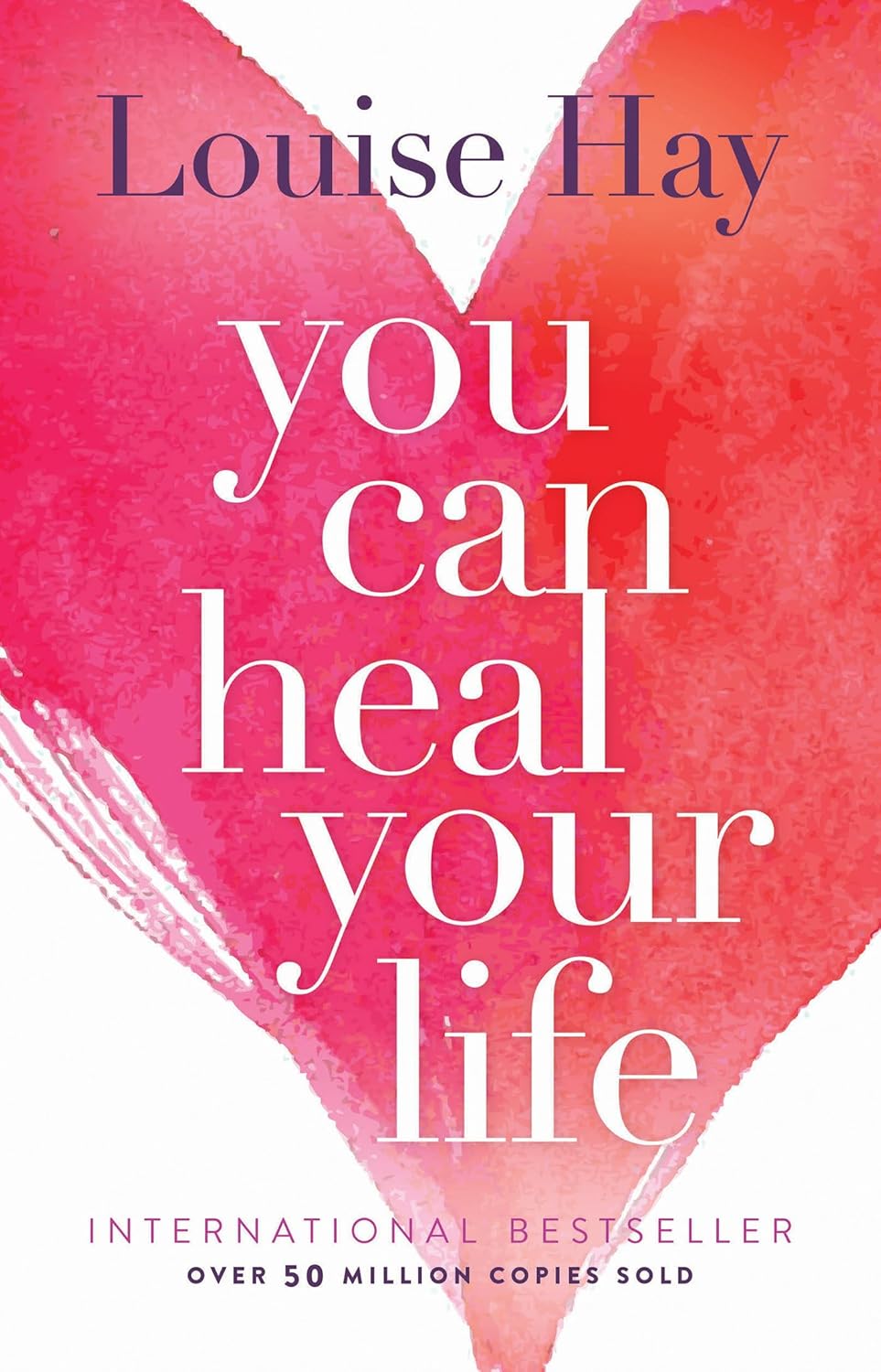
Book overview
Louise Hay outlines her core belief that our thoughts and beliefs shape our experiences and physical health, and that changing thought patterns can transform life. She emphasizes self-love, forgiveness, and the use of affirmations as practical tools for healing and growth.
This page is built to be a compact learning hub for You Can Heal Your Life. You can move from the high-level summary into takeaways, quiz prompts, chapter review, and related books without breaking the reading flow.
Best takeaways to keep
Thoughts and beliefs create personal reality and influence physical health.
Self
love and forgiveness are foundational to healing.
Affirmations and mental reprogramming can shift negative patterns.
Responsibility for one’s life is empowering, not blaming.
Spiritual acceptance and inner work foster lasting change.
Retrieval practice
According to You Can Heal Your Life, what is the core principle about how life and health are shaped?
Which combination of methods does Louise Hay recommend for changing limiting beliefs?
What does Hay mean by the statement “other people are mirrors”?
How does the book describe the relationship between the body and mental/emotional states?
Quiz preview
According to You Can Heal Your Life, what is the core principle about how life and health are shaped?
- External events and other people determine our life and health
- Our thoughts and beliefs shape our experiences and physical health
- Genetics and fate are the primary determinants of health
Which combination of methods does Louise Hay recommend for changing limiting beliefs?
- Affirmations, forgiveness, visualization, and repetition/habit replacement
- Strict willpower and ignoring feelings
- Relying solely on medical treatments
What does Hay mean by the statement “other people are mirrors”?
- Other people reflect our own unresolved issues, beliefs, and expectations back to us
- Other people exist only to blame for our problems
- Other people’s behavior is unrelated to our inner state
How does the book describe the relationship between the body and mental/emotional states?
- The body is independent of thoughts and emotions
- The body is a mirror of mental and emotional states; many illnesses correspond to thought patterns or suppressed emotions
- Illnesses are caused only by germs and genetics, never by thoughts
Chapter map
What I Believe
Louise Hay outlines her core belief that our thoughts and beliefs shape our experiences and physical health, and that changing thought patterns can transform life. She emphasizes self-love, forgiveness, and the use of affirmations as practical tools for healing and growth.
The Problem Is You
Hay argues that many life problems originate from unhelpful beliefs held about the self, often rooted in childhood experiences. She explains that blaming external circumstances misses the internal patterns that maintain suffering, and invites readers to examine their thought systems.
Can We Change Our Lives?
Hay asserts that change is possible at any time because beliefs are learned and therefore can be unlearned or replaced. She provides evidence from her own life and others’ experiences to support the claim that deliberate mental work produces measurable shifts.
How to Change
Hay outlines concrete methods for changing thoughts and beliefs, including affirmations, forgiveness exercises, visualization, and habit replacement. She stresses the importance of repetition, feeling the truth of new beliefs, and integrating them into daily life.
Other People Are Mirrors
Hay explains that other people reflect back our own unresolved issues, beliefs, and expectations, so relationships reveal inner material to be healed. She recommends using interactions as diagnostic tools rather than grounds for blaming others.
Next best step
Move next into the questions page if you want better retention, or into the takeaways page if you want the shortest useful review loop for this book.