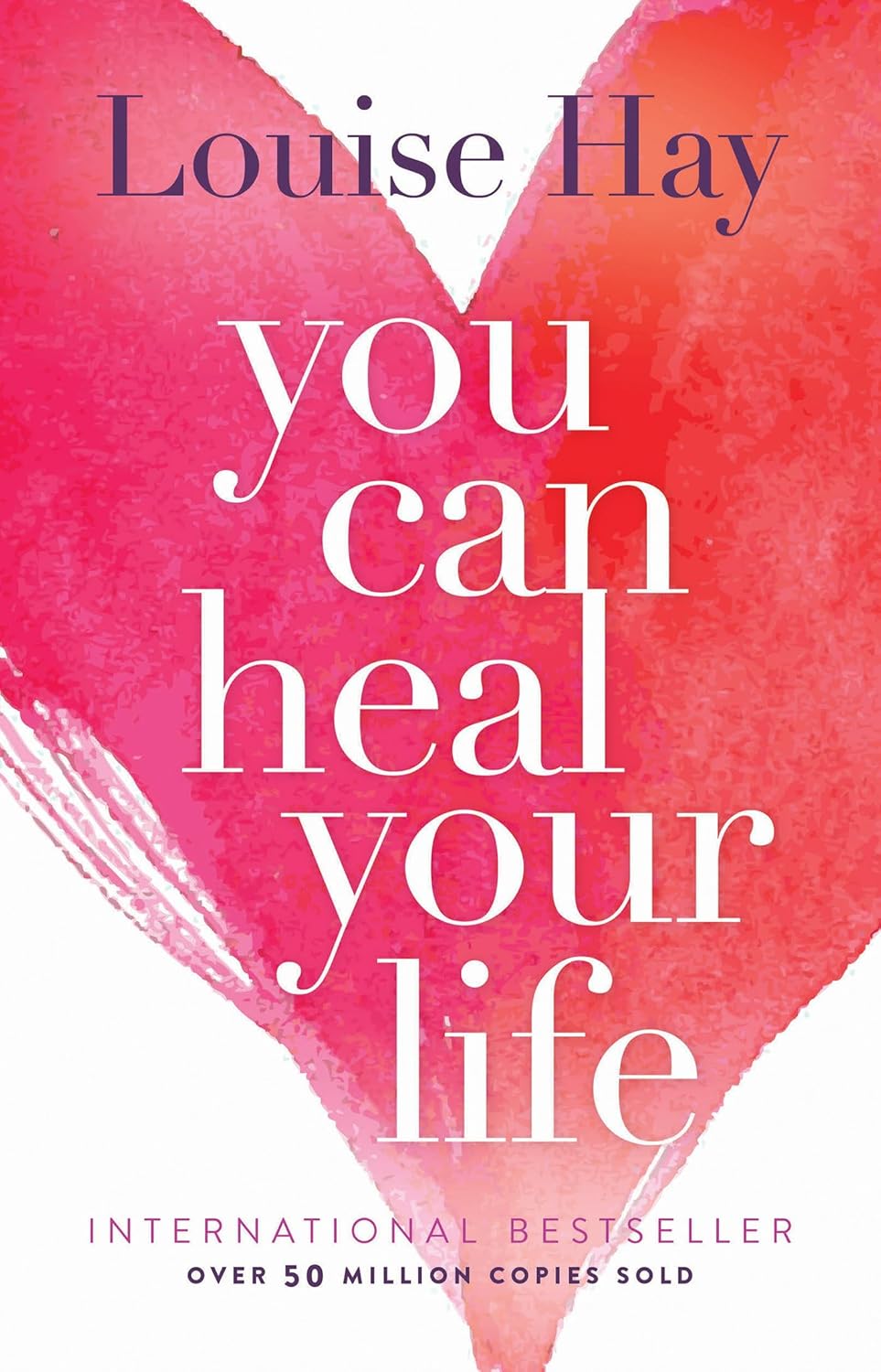
What I Believe
Summary:
Louise Hay outlines her core belief that our thoughts and beliefs shape our experiences and physical health, and that changing thought patterns can transform life. She emphasizes self-love, forgiveness, and the use of affirmations as practical tools for healing and growth.
Key points:
- Thoughts and beliefs create personal reality and influence physical health.
- Self
- love and forgiveness are foundational to healing.
- Affirmations and mental reprogramming can shift negative patterns.
- Responsibility for one’s life is empowering, not blaming.
- Spiritual acceptance and inner work foster lasting change.
Themes & relevance:
This chapter establishes the book’s metaphysical framework and positions personal responsibility and positive thinking as relevant tools for modern self-help. Its ideas set the tone for practical techniques presented later.
Takeaway / How to use:
Begin noticing and gently replacing negative self-talk with loving affirmations.
Key points
- Thoughts and beliefs create personal reality and influence physical health.
- Self
- love and forgiveness are foundational to healing.
- Affirmations and mental reprogramming can shift negative patterns.
- Responsibility for one’s life is empowering, not blaming.
- Spiritual acceptance and inner work foster lasting change.
The Problem Is You
Summary:
Hay argues that many life problems originate from unhelpful beliefs held about the self, often rooted in childhood experiences. She explains that blaming external circumstances misses the internal patterns that maintain suffering, and invites readers to examine their thought systems.
Key points:
- Inner beliefs, often unconscious, create recurring problems.
- Childhood messages frequently shape limiting self
- concepts.
- Blame of external factors prevents inner change.
- Acceptance and awareness of patterns is the first step to healing.
- Changing beliefs requires honesty and compassion toward oneself.
Themes & relevance:
The chapter focuses on personal responsibility and introspection, showing how self-awareness is relevant to breaking cycles of suffering. It reframes problems as opportunities for inner work.
Takeaway / How to use:
Start keeping a simple journal to identify recurring negative beliefs about yourself.
Key points
- Inner beliefs, often unconscious, create recurring problems.
- Childhood messages frequently shape limiting self
- concepts.
- Blame of external factors prevents inner change.
- Acceptance and awareness of patterns is the first step to healing.
- Changing beliefs requires honesty and compassion toward oneself.
Can We Change Our Lives?
Summary:
Hay asserts that change is possible at any time because beliefs are learned and therefore can be unlearned or replaced. She provides evidence from her own life and others’ experiences to support the claim that deliberate mental work produces measurable shifts.
Key points:
- Beliefs are learned and therefore changeable.
- Real
- life examples illustrate that transformation is achievable.
- Consistent practice (affirmations, visualization) supports lasting change.
- Patience and persistence are required for deep shifts.
- Self
- forgiveness accelerates the process of change.
Themes & relevance:
This chapter offers reassurance and practical optimism, making the book’s methods feel accessible and relevant to readers seeking change. It emphasizes agency and the practicality of inner work.
Takeaway / How to use:
Commit to a simple daily practice (affirmations or visualization) and track small changes.
Key points
- Beliefs are learned and therefore changeable.
- Real
- life examples illustrate that transformation is achievable.
- Consistent practice (affirmations, visualization) supports lasting change.
- Patience and persistence are required for deep shifts.
- Self
- forgiveness accelerates the process of change.
How to Change
Summary:
Hay outlines concrete methods for changing thoughts and beliefs, including affirmations, forgiveness exercises, visualization, and habit replacement. She stresses the importance of repetition, feeling the truth of new beliefs, and integrating them into daily life.
Key points:
- Use positive affirmations to reprogram the subconscious mind.
- Visualize desired outcomes as if they are already true.
- Practice forgiveness to release past pain and free energy.
- Replace old habits with small, consistent new behaviors.
- Reinforcement through repetition and feeling is essential.
Themes & relevance:
Practical technique is the focus: spiritual principles translated into repeatable exercises that readers can apply immediately. The chapter bridges theory and action for personal transformation.
Takeaway / How to use:
Choose one affirmation and repeat it with feeling several times daily until it begins to feel true.
Key points
- Use positive affirmations to reprogram the subconscious mind.
- Visualize desired outcomes as if they are already true.
- Practice forgiveness to release past pain and free energy.
- Replace old habits with small, consistent new behaviors.
- Reinforcement through repetition and feeling is essential.
Other People Are Mirrors
Summary:
Hay explains that other people reflect back our own unresolved issues, beliefs, and expectations, so relationships reveal inner material to be healed. She recommends using interactions as diagnostic tools rather than grounds for blaming others.
Key points:
- People act as mirrors showing our own patterns and beliefs.
- Conflicts often expose unhealed aspects of the self.
- Observing reactions can reveal limiting self
- concepts.
- Use relationships as opportunities for personal growth and healing.
- Responding with compassion and awareness changes relationship dynamics.
Themes & relevance:
The chapter reframes interpersonal difficulty as feedback rather than attack, making relationships a practical arena for applying the book’s healing techniques. It stresses inner work to improve outer connections.
Takeaway / How to use:
When triggered, pause and ask what belief of yours this person is reflecting back.
Key points
- People act as mirrors showing our own patterns and beliefs.
- Conflicts often expose unhealed aspects of the self.
- Observing reactions can reveal limiting self
- concepts.
- Use relationships as opportunities for personal growth and healing.
- Responding with compassion and awareness changes relationship dynamics.
The Body: The Mirror of Your Thoughts
Summary:
Hay describes the body as a mirror of mental and emotional states, asserting that many illnesses correspond to specific thought patterns or suppressed emotions. She encourages treating the body with love and using mental healing alongside medical care.
Key points:
- Physical symptoms can reflect emotional and mental patterns.
- Identifying likely thought patterns linked to ailments aids healing.
- Love, acceptance, and affirmations support physical recovery.
- Combine inner work with appropriate medical treatment.
- Self
- care and positive self-image benefit bodily health.
Themes & relevance:
This chapter connects psychology and physiology, highlighting the relevance of emotional health for physical well-being and promoting holistic self
- care. It invites a compassionate approach to illness.
Takeaway / How to use:
Speak loving, specific affirmations to your body daily while also consulting health professionals.
Key points
- Physical symptoms can reflect emotional and mental patterns.
- Identifying likely thought patterns linked to ailments aids healing.
- Love, acceptance, and affirmations support physical recovery.
- Combine inner work with appropriate medical treatment.
- Self
- care and positive self-image benefit bodily health.
Love and Relationships
Summary:
Hay explores how self-love is foundational to healthy romantic and familial relationships, suggesting that unmet needs and expectations often stem from inner lack. She offers exercises to cultivate self
- worth and attract more nurturing partnerships.
Key points:
- Self
- love determines the quality of intimate relationships.
- Patterns of dependence, jealousy, and resentment reveal inner wounds.
- Healing past hurts and setting boundaries improves relationship health.
- Affirmations and visualization can attract healthier partners.
- Gratitude and forgiveness sustain long
- term relational change.
Themes & relevance:
The chapter makes a direct link between inner healing and relationship outcomes, providing actionable strategies for anyone wanting better connections. It emphasizes building a loving relationship with oneself first.
Takeaway / How to use:
Practice a daily self-love affirmation and one small act of self
- care to reinforce worthiness.
Key points
- Self
- love determines the quality of intimate relationships.
- Patterns of dependence, jealousy, and resentment reveal inner wounds.
- Healing past hurts and setting boundaries improves relationship health.
- Affirmations and visualization can attract healthier partners.
- Gratitude and forgiveness sustain long
- term relational change.
Work and Money
Summary:
Hay addresses beliefs around work and money, arguing scarcity often arises from fear-based thinking and a poor money self
- image. She recommends changing limiting beliefs, cultivating gratitude, and visualizing abundance to improve financial and career situations.
Key points:
- Money beliefs are learned and can be transformed.
- Scarcity mindset limits opportunities and creative problem
- solving.
- Gratitude, affirmations, and visualization attract more abundance.
- Taking aligned action and changing habits supports financial change.
- Releasing fear and guilt around money improves flow and decision
- making.
Themes & relevance:
This chapter applies the book’s mental-healing framework to practical domains of work and finance, making the spiritual principles relevant to everyday economic concerns. It encourages both inner and outer work for results.
Takeaway / How to use:
Write and repeat a daily money affirmation while taking one concrete step toward financial organization.
Key points
- Money beliefs are learned and can be transformed.
- Scarcity mindset limits opportunities and creative problem
- solving.
- Gratitude, affirmations, and visualization attract more abundance.
- Taking aligned action and changing habits supports financial change.
- Releasing fear and guilt around money improves flow and decision
- making.
Mirror Work and Affirmations
Summary:
Mirror work and affirmations teach the practice of consciously speaking loving, positive statements to oneself while looking in the mirror, to reprogram negative self-beliefs and cultivate self
- acceptance. Regular repetition of affirmations and mirror exercises helps shift subconscious patterns and supports emotional and physical healing.
Key points:
- Use mirror work to face and accept yourself, saying affirmations aloud while looking into your own eyes.
- Affirmations must be stated in the present tense, positively, and with feeling to be effective.
- Repetition and consistency are essential; brief daily practices build new mental and emotional habits.
- Confronting resistance or discomfort during mirror work is part of the healing process, not a reason to stop.
- Tailor affirmations to specific issues (health, relationships, self
- worth) and combine them with visualization for greater impact.
Themes & relevance:
This chapter emphasizes self-love as the foundation of healing and presents practical, repeatable tools (mirror work and affirmations) to transform inner dialogue and belief systems. The techniques are relevant for anyone seeking to change recurring negative patterns and improve emotional well
- being.
Takeaway / How to use:
Start a daily one- to five
- minute mirror-and
- affirmation practice, speaking present-tense positive statements to yourself with feeling.
Key points
- Use mirror work to face and accept yourself, saying affirmations aloud while looking into your own eyes.
- Affirmations must be stated in the present tense, positively, and with feeling to be effective.
- Repetition and consistency are essential; brief daily practices build new mental and emotional habits.
- Confronting resistance or discomfort during mirror work is part of the healing process, not a reason to stop.
- Tailor affirmations to specific issues (health, relationships, self
- worth) and combine them with visualization for greater impact.
Putting It All Together
Summary:
The final chapter integrates the book's principles into a coherent daily practice: recognize and release limiting beliefs, forgive, love yourself, and use affirmations and visualization to create new patterns. It encourages responsibility for one’s own life, patience with the healing process, and the application of multiple tools together for lasting change.
Key points:
- Healing requires identifying core thought patterns, choosing new beliefs, and consistently reinforcing them with daily techniques.
- Forgiveness and gratitude are central practices that free energy previously tied to past hurts and open space for positive change.
- Combine methods—affirmations, mirror work, visualization, metaphysical understanding, and practical actions—for synergistic effect.
- Be patient and persistent; setbacks are part of growth and should be met with self
- compassion and renewed commitment.
- Take responsibility for your thoughts and responses rather than blaming external circumstances, thereby regaining creative power.
Themes & relevance:
This chapter ties together the emotional, mental, and practical strands of the book into an actionable lifestyle approach emphasizing inner work and personal responsibility. It remains relevant as a roadmap for anyone wanting a structured way to apply self-healing principles daily.
Takeaway / How to use:
Create a simple daily routine combining self-examination, forgiveness, affirmations, and small practical steps towa...
Key points
- Healing requires identifying core thought patterns, choosing new beliefs, and consistently reinforcing them with daily techniques.
- Forgiveness and gratitude are central practices that free energy previously tied to past hurts and open space for positive change.
- Combine methods—affirmations, mirror work, visualization, metaphysical understanding, and practical actions—for synergistic effect.
- Be patient and persistent; setbacks are part of growth and should be met with self
- compassion and renewed commitment.
- Take responsibility for your thoughts and responses rather than blaming external circumstances, thereby regaining creative power.