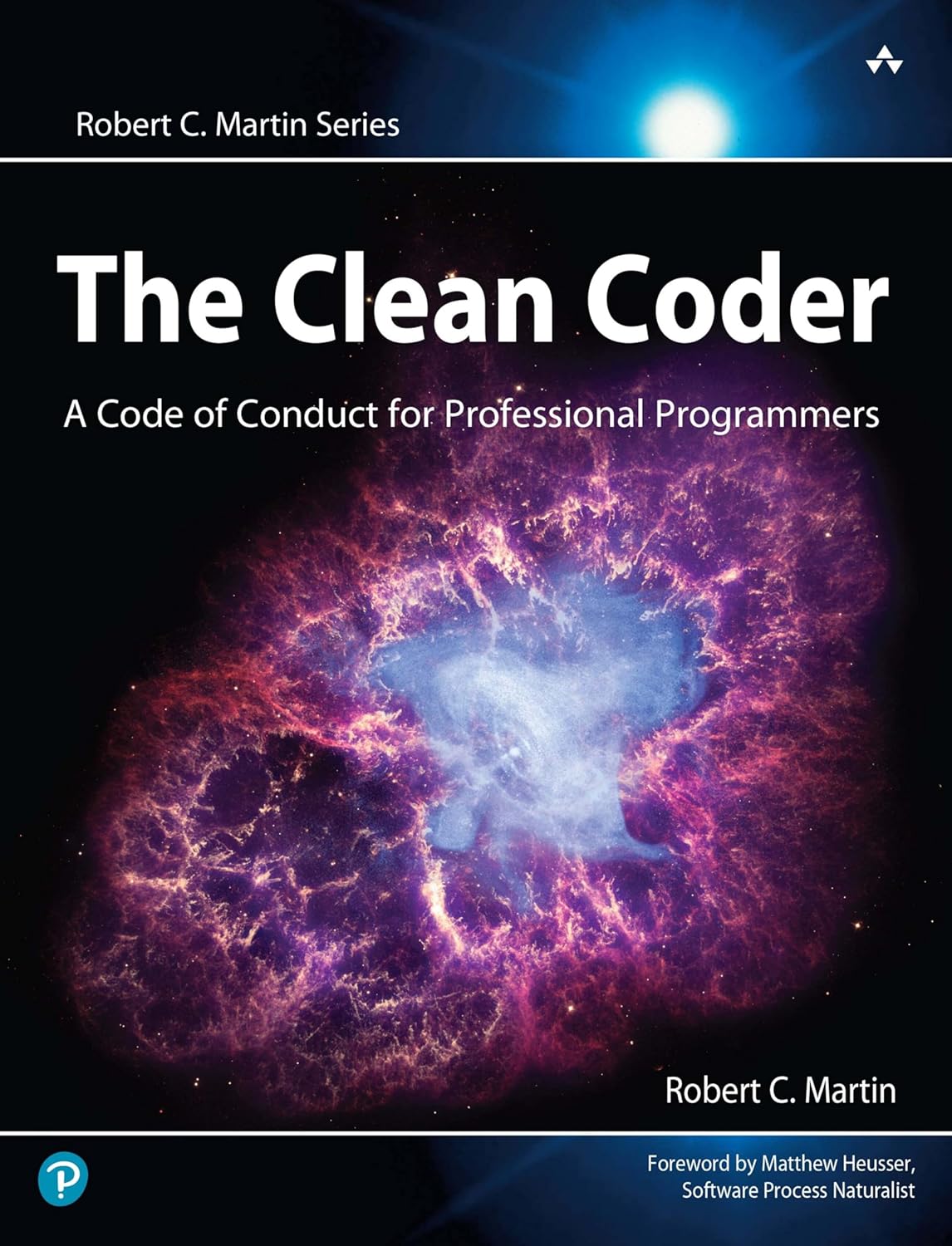
ReadSprintBooksThe Clean Coder: A Code of Conduct for Professional ProgrammersThe Clean Coder: A Code of Conduct for Professional Programmers Key Concepts and Core Ideas
The Clean Coder: A Code of Conduct for Professional Programmers
The Clean Coder: A Code of Conduct for Professional Programmers Key Concepts and Core Ideas

The Clean Coder: A Code of Conduct for Professional Programmers Key Concepts and Core Ideas

by Robert C. Martin

Understand the core concepts in The Clean Coder: A Code of Conduct for Professional Programmers by Robert C. Martin, with explanations, recall prompts, related books, and connected learning paths.

This page isolates the core concepts carrying The Clean Coder: A Code of Conduct for Professional Programmers. Use it when you want to understand the book’s mental models, not just skim the chapter sequence.

Built for retention

ReadSprint combines concise summaries, quizzes, active recall, and related reading paths so the useful part of the book is easier to keep.

Open full summary

14

Chapter summaries

5

Quiz questions

12

Key takeaways

3

Related books

Concept map

These are the ideas doing most of the work inside The Clean Coder: A Code of Conduct for Professional Programmers. Study them as reusable mental models, then jump back into chapters or questions when you want more context.

Concept 1

Professionalism

This chapter introduces the concept of professionalism in software development, emphasizing the importance of taking responsibility for one's work and actions.

Why it matters: The chapter sets the stage for the book by defining what it means to be a professional in the software industry, highlighting the need for integrity and responsibility.

Supporting points

  • Understanding the role of a professional
  • Importance of accountability
  • Balancing quality and deadlines
Active recall prompt

How does professionalism change the way you would explain or apply The Clean Coder: A Code of Conduct for Professional Programmers?

Related chapter

Professionalism

Concept 2

Saying No

This chapter discusses the importance of knowing when and how to say no to unreasonable demands or requests in a professional setting.

Why it matters: The chapter emphasizes the importance of setting boundaries to maintain quality and professionalism, reinforcing the idea that saying no is sometimes necessary.

Supporting points

  • Recognizing unreasonable requests
  • Communicating effectively
  • Maintaining professional boundaries
Active recall prompt

How does saying no change the way you would explain or apply The Clean Coder: A Code of Conduct for Professional Programmers?

Related chapter

Saying No

Concept 3

Time Management

Time management is crucial for professionals, and this chapter provides strategies for effectively managing time and prioritizing tasks.

Why it matters: The chapter highlights the importance of time management in achieving professional success and maintaining a work-life balance.

Supporting points

  • Prioritizing tasks
  • Avoiding procrastination
  • Using tools and techniques for time management
Active recall prompt

How does time management change the way you would explain or apply The Clean Coder: A Code of Conduct for Professional Programmers?

Related chapter

Time Management

Concept 4

Estimation

This chapter covers the art of estimation, teaching professionals how to provide accurate and realistic estimates for their work.

Why it matters: Estimation is a critical skill for professionals, and this chapter underscores its importance in planning and executing projects successfully.

Supporting points

  • Techniques for accurate estimation
  • Communicating estimates clearly
  • Handling estimation errors
Active recall prompt

How does estimation change the way you would explain or apply The Clean Coder: A Code of Conduct for Professional Programmers?

Related chapter

Estimation

Concept 5

Coding

The chapter delves into the core activity of coding, emphasizing the importance of writing clean, maintainable code.

Why it matters: Coding is at the heart of software development, and this chapter reinforces the need for quality and continuous improvement in coding practices.

Supporting points

  • Writing clean code
  • Importance of code reviews
  • Continuous learning and improvement
Active recall prompt

How does coding change the way you would explain or apply The Clean Coder: A Code of Conduct for Professional Programmers?

Related chapter

Coding

Concept 6

Testing

Testing is an integral part of software development, and this chapter explores various testing methodologies and their importance.

Why it matters: The chapter highlights the role of testing in ensuring software quality and reliability, advocating for its integration into the development lifecycle.

Supporting points

  • Different types of testing
  • Importance of automated testing
  • Incorporating testing into the development process
Active recall prompt

How does testing change the way you would explain or apply The Clean Coder: A Code of Conduct for Professional Programmers?

Related chapter

Testing

Concept 7

Practicing

This chapter emphasizes the importance of continuous practice and learning to maintain and enhance professional skills.

Why it matters: Continuous practice is essential for professional growth, and this chapter encourages a mindset of lifelong learning and improvement.

Supporting points

  • Importance of deliberate practice
  • Learning from mistakes
  • Staying updated with industry trends
Active recall prompt

How does practicing change the way you would explain or apply The Clean Coder: A Code of Conduct for Professional Programmers?

Related chapter

Practicing

Concept 8

Acceptance Testing

Acceptance testing is crucial for validating software against user requirements, and this chapter explains its role and execution.

Why it matters: The chapter underscores the importance of acceptance testing in ensuring that software meets user needs and expectations.

Supporting points

  • Understanding acceptance criteria
  • Collaborating with stakeholders
  • Executing acceptance tests effectively
Active recall prompt

How does acceptance testing change the way you would explain or apply The Clean Coder: A Code of Conduct for Professional Programmers?

Related chapter

Acceptance Testing

Quiz checkpoints

Question 1

What is the main focus of the book 'The Clean Coder'?

Question 2

Why is saying 'no' important according to the book?

Question 3

What is emphasized in the chapter on 'Time Management'?

Practice retrieval

Key concepts

Professionalism

The chapter sets the stage for the book by defining what it means to be a professional in the software industry, highlighting the need for integrity and responsibility.

Saying No

The chapter emphasizes the importance of setting boundaries to maintain quality and professionalism, reinforcing the idea that saying no is sometimes necessary.

Time Management

The chapter highlights the importance of time management in achieving professional success and maintaining a work-life balance.

Open concept map

Author relationship system

Move from this author into connected writers, nearby themes, and any other books already in the ReadSprint library.

Similar themes and topic pages

Use topic hubs and category pages to keep reading depth aligned with what this book is actually about.

Turn Reading Into Recall

Keep The Clean Coder: A Code of Conduct for Professional Programmers review-ready instead of letting it fade.

This page is strongest when it becomes part of a review habit: save the summary, revisit the key takeaways, and use recall prompts before the next meeting, study block, or decision.

Save one strong takeaway instead of over-highlighting.
Use the questions page to test what actually stuck.
Return when the book becomes relevant again, not just when motivation is high.
See pricing
Get Book Review Notes

Get practical notes on remembering and reusing ideas from nonfiction books without building an overly heavy note system.

Retention workflow

Turn this page into a repeatable study loop

Move from summary to takeaways, test yourself with questions, revisit the concept map, and then continue into related books. That keeps The Clean Coder: A Code of Conduct for Professional Programmersconnected instead of turning into a one-time skim.

Frequently asked questions

What are the key concepts in The Clean Coder: A Code of Conduct for Professional Programmers?

The key concepts here are distilled from the chapter summaries, major themes, and action-oriented takeaways so you can quickly see the ideas carrying the whole book.

How should I study these The Clean Coder: A Code of Conduct for Professional Programmers concepts?

Start by explaining each concept from memory, connect it to a chapter or example, and then test yourself with one active recall prompt before moving on.

How are the concepts connected to other books?

Use the related books and topic links on this page to find books that reinforce, challenge, or extend the same ideas from a different angle.