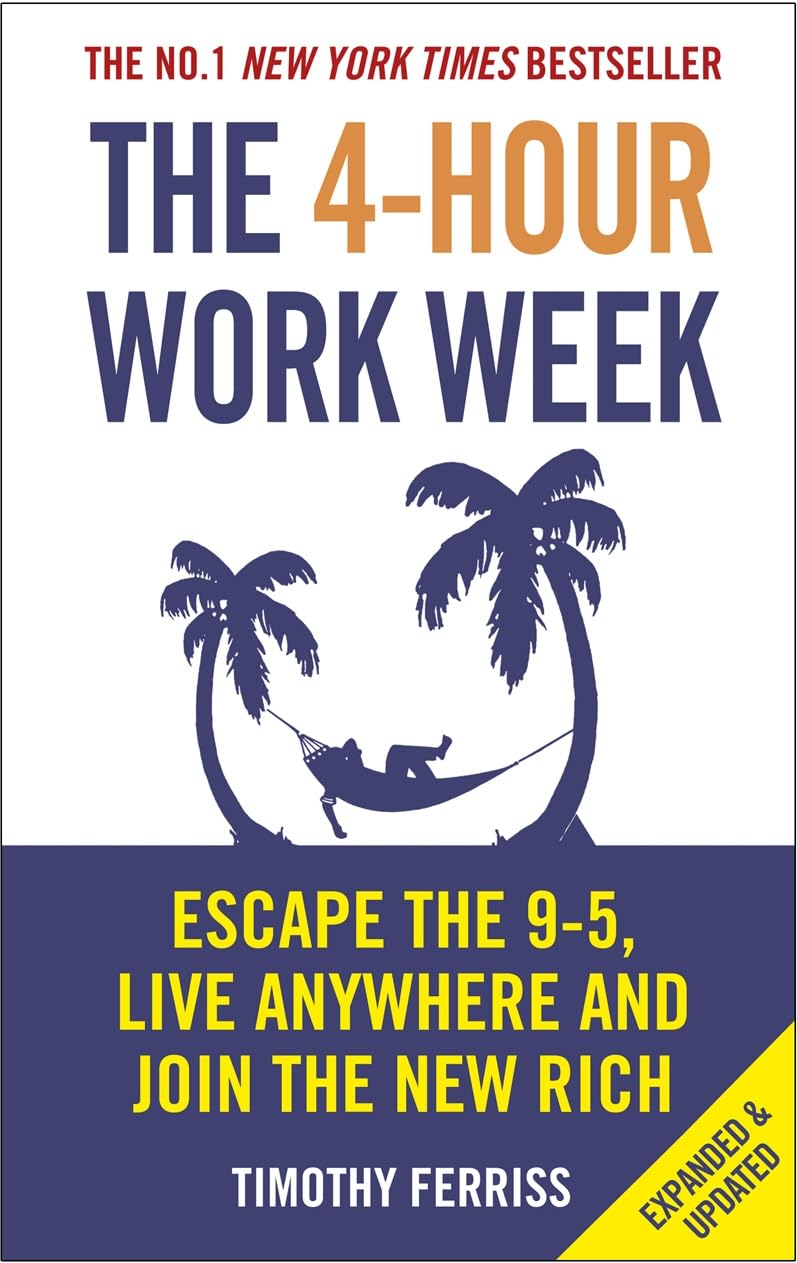
Chapter 1: D is for Definition
Summary:
This chapter introduces the concept of redefining success and the importance of creating a vision for a new lifestyle. Ferriss emphasizes the need to challenge traditional beliefs about work and retirement.
Key points:
- Redefining success beyond financial wealth.
- The importance of lifestyle design.
- Challenging societal norms about work.
- Creating a vision for your ideal life.
Themes & relevance:
This chapter sets the foundation for the book's core message about escaping the conventional work model and pursuing a life of freedom and fulfillment.
Takeaway / How to use:
Reflect on your own definitions of success and consider what a fulfilling life looks like for you.
Key points
- Redefining success beyond financial wealth.
- The importance of lifestyle design.
- Challenging societal norms about work.
- Creating a vision for your ideal life.
Chapter 2: E is for Elimination
Summary:
Ferriss discusses the importance of eliminating unnecessary tasks and focusing on what truly matters. He introduces the 80/20 principle, which suggests that 80% of results come from 20% of efforts.
Key points:
- The 80/20 principle in productivity.
- Identifying and eliminating time
- wasting activities.
- The importance of saying no.
- Streamlining tasks for efficiency.
Themes & relevance:
This chapter emphasizes the need to prioritize effectively and eliminate distractions, which is crucial for achieving the lifestyle design Ferriss advocates.
Takeaway / How to use:
Identify tasks in your life that do not contribute significantly to your goals and eliminate or delegate them.
Key points
- The 80/20 principle in productivity.
- Identifying and eliminating time
- wasting activities.
- The importance of saying no.
- Streamlining tasks for efficiency.
Chapter 3: A is for Automation
Summary:
This chapter focuses on automating income through outsourcing and leveraging technology. Ferriss explains how to create systems that generate income with minimal effort.
Key points:
- The benefits of outsourcing tasks.
- Tools and technologies for automation.
- Creating passive income streams.
- The importance of delegation.
Themes & relevance:
Automation is a key strategy in achieving the 4-hour work week, allowing individuals to free up time for more meaningful pursuits.
Takeaway / How to use:
Explore opportunities to automate tasks in your work and personal life to increase efficiency.
Key points
- The benefits of outsourcing tasks.
- Tools and technologies for automation.
- Creating passive income streams.
- The importance of delegation.
Chapter 4: L is for Liberation
Summary:
Ferriss discusses the concept of liberation, which involves breaking free from traditional work environments. He provides strategies for negotiating remote work and creating a mobile lifestyle.
Key points:
- Strategies for negotiating remote work.
- The importance of mobility in lifestyle design.
- Overcoming fears of leaving a traditional job.
- Creating a plan for liberation.
Themes & relevance:
This chapter highlights the final step in achieving the 4-hour work week, emphasizing the importance of freedom and flexibility in work.
Takeaway / How to use:
Consider how you can negotiate for more flexibility in your current job or explore remote work opportunities.
Key points
- Strategies for negotiating remote work.
- The importance of mobility in lifestyle design.
- Overcoming fears of leaving a traditional job.
- Creating a plan for liberation.
Chapter 5: Mini-Retirements
Summary:
Ferriss introduces the concept of mini-retirements, encouraging readers to take breaks throughout their lives rather than waiting for traditional retirement. He shares practical tips for planning these experiences.
Key points:
- The benefits of taking mini
- retirements.
- Planning and budgeting for travel.
- Overcoming obstacles to taking time off.
- The importance of experiences over possessions.
Themes & relevance:
This chapter reinforces the idea that life should be lived fully at every stage, not just during retirement, aligning with the book's overall message of lifestyle design.
Takeaway / How to use:
Plan a mini-retirement for yourself, focusing on experiences that enrich your life.
Key points
- The benefits of taking mini
- retirements.
- Planning and budgeting for travel.
- Overcoming obstacles to taking time off.
- The importance of experiences over possessions.
Chapter 6: The New Rich
Summary:
Ferriss defines the New Rich (NR) as those who prioritize time and mobility over money. He contrasts NR with traditional wealth and discusses the mindset shifts necessary to become NR.
Key points:
- Characteristics of the New Rich.
- Mindset shifts required for lifestyle design.
- The importance of valuing time over money.
- Examples of New Rich individuals.
Themes & relevance:
This chapter encapsulates the essence of the book, emphasizing a shift in values towards time and freedom rather than conventional success.
Takeaway / How to use:
Adopt a mindset that prioritizes time and experiences over financial accumulation.
Key points
- Characteristics of the New Rich.
- Mindset shifts required for lifestyle design.
- The importance of valuing time over money.
- Examples of New Rich individuals.
Chapter 7: Fear-Setting
Summary:
Ferriss introduces the concept of fear-setting, a tool for overcoming fears that hold people back from pursuing their dreams. He provides a structured approach to identifying and addressing fears.
Key points:
- The process of fear
- setting.
- Identifying fears and their impacts.
- Strategies for mitigating fears.
- The importance of taking action despite fear.
Themes & relevance:
Fear-setting is a crucial technique for breaking through barriers and achieving the lifestyle changes Ferriss advocates.
Takeaway / How to use:
Practice fear-setting to confront and overcome your own fears.
Key points
- The process of fear
- setting.
- Identifying fears and their impacts.
- Strategies for mitigating fears.
- The importance of taking action despite fear.
Chapter 8: The Art of Letting Go
Summary:
This chapter discusses the importance of letting go of unproductive habits and relationships that drain energy. Ferriss emphasizes the need for a clean slate to pursue new opportunities.
Key points:
- Identifying toxic relationships and habits.
- The benefits of letting go.
- Strategies for moving on.
- Creating space for new opportunities.
Themes & relevance:
Letting go is essential for personal growth and aligns with the book's theme of creating a fulfilling life.
Takeaway / How to use:
Evaluate your relationships and habits, and take steps to let go of those that do not serve you.
Key points
- Identifying toxic relationships and habits.
- The benefits of letting go.
- Strategies for moving on.
- Creating space for new opportunities.
Chapter 9: Designing Your Life
Summary:
Ferriss provides practical steps for designing a life that aligns with personal values and goals. He emphasizes the importance of intentionality in lifestyle choices.
Key points:
- The importance of intentional living.
- Steps for designing your ideal life.
- Aligning goals with values.
- The role of experimentation in life design.
Themes & relevance:
This chapter reinforces the idea that individuals have the power to shape their lives according to their desires and values.
Takeaway / How to use:
Take time to reflect on your values and design a plan that aligns with them.
Key points
- The importance of intentional living.
- Steps for designing your ideal life.
- Aligning goals with values.
- The role of experimentation in life design.
Chapter 10: The 4-Hour Work Week in Action
Summary:
Ferriss shares case studies and examples of individuals who have successfully implemented the principles of the 4-hour work week. He highlights diverse paths to achieving freedom and flexibility.
Key points:
- Real
- life examples of the 4-hour work week.
- Diverse approaches to lifestyle design.
- Lessons learned from case studies.
- The impact of the 4
- hour work week on individuals' lives.
Themes & relevance:
This chapter provides inspiration and practical insights, showing that the principles can be applied in various contexts.
Takeaway / How to use:
Learn from the examples provided and consider how you can apply similar principles in your own life.
Key points
- Real
- life examples of the 4-hour work week.
- Diverse approaches to lifestyle design.
- Lessons learned from case studies.
- The impact of the 4
- hour work week on individuals' lives.
Chapter 11: Overcoming Obstacles
Summary:
Ferriss addresses common obstacles that people face when trying to implement the 4-hour work week principles. He provides strategies for overcoming these challenges.
Key points:
- Common obstacles to lifestyle design.
- Strategies for overcoming fear and doubt.
- The importance of persistence.
- Building a support system.
Themes & relevance:
This chapter acknowledges the challenges of change and provides practical solutions, reinforcing the book's message of resilience.
Takeaway / How to use:
Identify potential obstacles in your path and develop a plan to overcome them.
Key points
- Common obstacles to lifestyle design.
- Strategies for overcoming fear and doubt.
- The importance of persistence.
- Building a support system.
Chapter 12: The Future of Work
Summary:
Ferriss explores the evolving nature of work and the impact of technology on the future. He discusses trends that will shape the workforce and lifestyle choices.
Key points:
- The impact of technology on work.
- Future trends in remote work.
- The importance of adaptability.
- Preparing for changes in the workforce.
Themes & relevance:
This chapter looks forward, encouraging readers to stay informed and adaptable in a rapidly changing work environment.
Takeaway / How to use:
Stay informed about trends in your industry and be prepared to adapt your skills and strategies.
Key points
- The impact of technology on work.
- Future trends in remote work.
- The importance of adaptability.
- Preparing for changes in the workforce.
Chapter 13: Conclusion and Next Steps
Summary:
In the conclusion, Ferriss summarizes the key principles of the 4-hour work week and encourages readers to take action. He emphasizes the importance of starting small and building momentum.
Key points:
- Recap of the 4
- hour work week principles.
- The importance of taking action.
- Starting small to build momentum.
- Encouragement to pursue a fulfilling life.
Themes & relevance:
The conclusion ties together the book's themes and motivates readers to implement the ideas discussed throughout.
Takeaway / How to use:
Take the first step towards your ideal lifestyle today.
Key points
- Recap of the 4
- hour work week principles.
- The importance of taking action.
- Starting small to build momentum.
- Encouragement to pursue a fulfilling life.