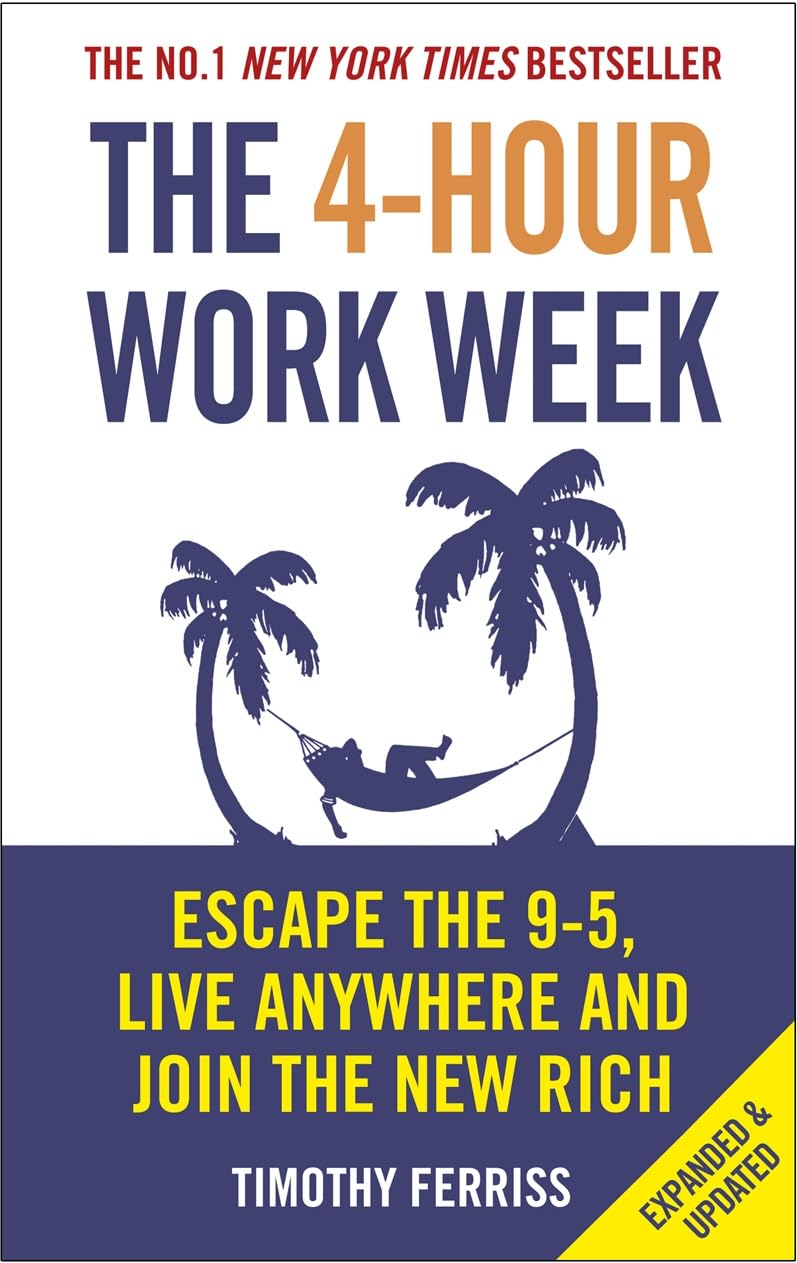
Book overview
This chapter introduces the concept of redefining success and the importance of creating a vision for a new lifestyle. Ferriss emphasizes the need to challenge traditional beliefs about work and retirement.
This page is built to be a compact learning hub for The 4-Hour Work Week. You can move from the high-level summary into takeaways, quiz prompts, chapter review, and related books without breaking the reading flow.
Best takeaways to keep
Redefining success beyond financial wealth.
The importance of lifestyle design.
Challenging societal norms about work.
Creating a vision for your ideal life.
Reflect on your own definitions of success and consider what a fulfilling life looks like for you.
This chapter sets the foundation for the book's core message about escaping the conventional work model and pursuing a life of freedom and fulfillment.
Retrieval practice
What does the 80/20 principle refer to in the book?
What is a mini-retirement?
What is the main focus of the chapter on fear-setting?
What does Ferriss suggest about traditional work environments?
Quiz preview
What does the 80/20 principle refer to in the book?
- 80% of results come from 20% of efforts
- 20% of results come from 80% of efforts
- 80% of tasks are unnecessary
What is a mini-retirement?
- A short vacation
- A break taken throughout life instead of waiting for retirement
- A retirement plan
What is the main focus of the chapter on fear-setting?
- Identifying fears and taking action
- Overcoming procrastination
- Setting financial goals
What does Ferriss suggest about traditional work environments?
- They are essential for success
- They should be avoided
- They are outdated
Chapter map
Chapter 1: D is for Definition
This chapter introduces the concept of redefining success and the importance of creating a vision for a new lifestyle. Ferriss emphasizes the need to challenge traditional beliefs about work and retirement.
Chapter 2: E is for Elimination
Ferriss discusses the importance of eliminating unnecessary tasks and focusing on what truly matters. He introduces the 80/20 principle, which suggests that 80% of results come from 20% of efforts.
Chapter 3: A is for Automation
This chapter focuses on automating income through outsourcing and leveraging technology. Ferriss explains how to create systems that generate income with minimal effort.
Chapter 4: L is for Liberation
Ferriss discusses the concept of liberation, which involves breaking free from traditional work environments. He provides strategies for negotiating remote work and creating a mobile lifestyle.
Chapter 5: Mini-Retirements
Ferriss introduces the concept of mini-retirements, encouraging readers to take breaks throughout their lives rather than waiting for traditional retirement. He shares practical tips for planning these experiences.
Next best step
Move next into the questions page if you want better retention, or into the takeaways page if you want the shortest useful review loop for this book.