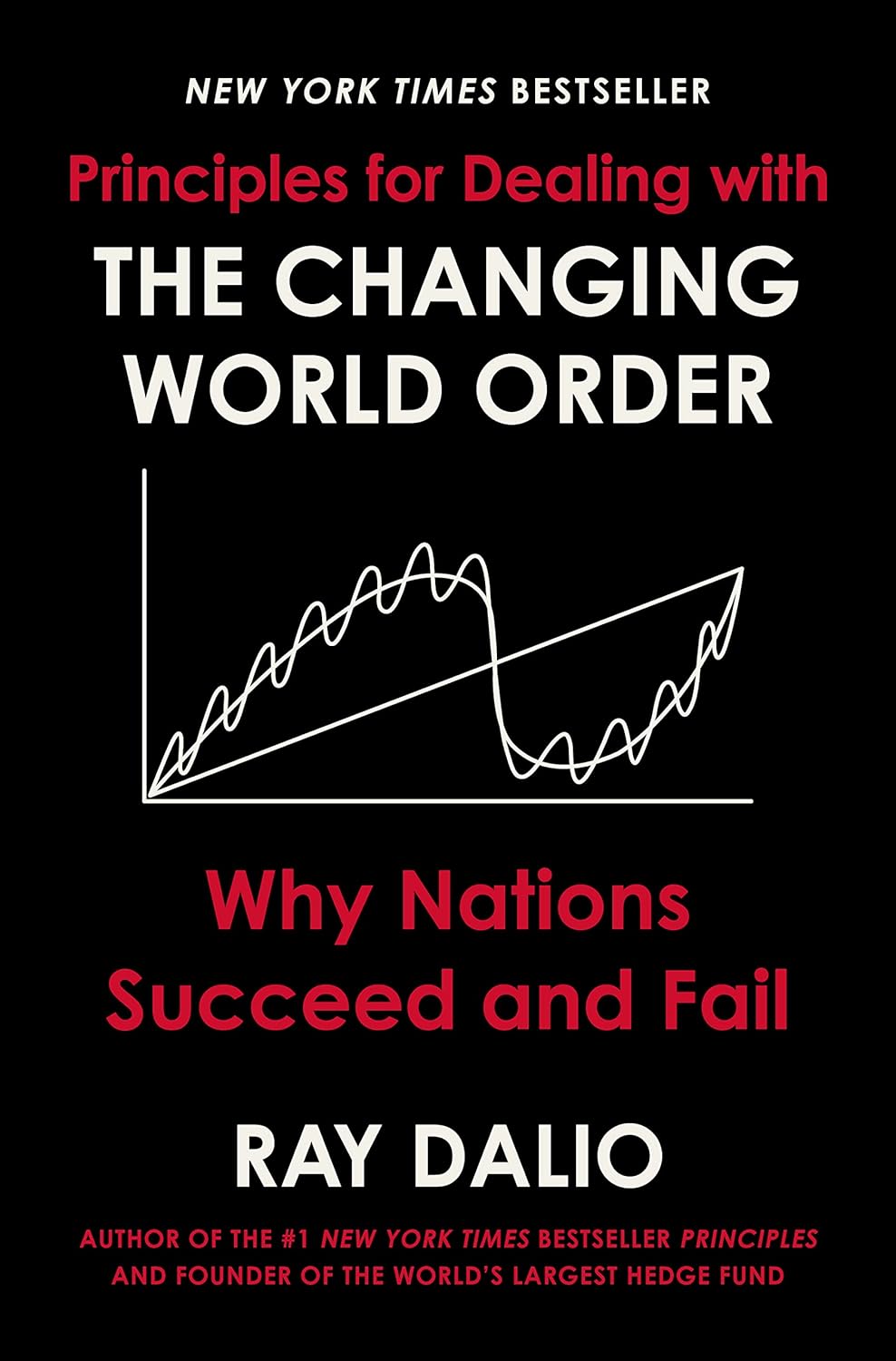
Principles for Dealing with the Changing World Order: Why Nations Succeed and Fail: ReadSprint summary highlights
ReadSprint paraphrases for review. These highlights are not verbatim quotations from the book or its author. Check the original edition for exact wording and context.
Principles for Dealing with the Changing World Order: Why Nations Succeed and Fail
by Ray Dalio
This chapter explores the historical patterns of the rise and fall of empires, focusing on economic, military, and cultural factors.
ReadSprint paraphrase · Not a quotation from the author.
This chapter explores the historical patterns of the rise and fall of empires, focusing on economic, military, and cultural factors.
Historical cycles of empires
Share with the ReadSprint source so others can read the context.
Principles for Dealing with the Changing World Order: Why Nations Succeed and Fail
by Ray Dalio
It provides a framework for understanding how these patterns repeat over time.
ReadSprint paraphrase · Not a quotation from the author.
It provides a framework for understanding how these patterns repeat over time.
Economic and military power dynamics
Share with the ReadSprint source so others can read the context.
Principles for Dealing with the Changing World Order: Why Nations Succeed and Fail
by Ray Dalio
This chapter delves into the economic principles that underpin national success, including productivity, innovation, and trade.
ReadSprint paraphrase · Not a quotation from the author.
This chapter delves into the economic principles that underpin national success, including productivity, innovation, and trade.
Cultural influences on national success
Share with the ReadSprint source so others can read the context.
Principles for Dealing with the Changing World Order: Why Nations Succeed and Fail
by Ray Dalio
It highlights the importance of sound economic policies in maintaining a nation's competitive edge.
ReadSprint paraphrase · Not a quotation from the author.
It highlights the importance of sound economic policies in maintaining a nation's competitive edge.
Patterns of decline and renewal
Share with the ReadSprint source so others can read the context.
Principles for Dealing with the Changing World Order: Why Nations Succeed and Fail
by Ray Dalio
This chapter examines the role of debt and capital markets in shaping national economies.
ReadSprint paraphrase · Not a quotation from the author.
This chapter examines the role of debt and capital markets in shaping national economies.
Analyze historical patterns to predict future geopolitical shifts.
Share with the ReadSprint source so others can read the context.
Principles for Dealing with the Changing World Order: Why Nations Succeed and Fail
by Ray Dalio
It discusses how debt cycles influence economic stability and the importance of managing financial systems.
ReadSprint paraphrase · Not a quotation from the author.
It discusses how debt cycles influence economic stability and the importance of managing financial systems.
The chapter sets the stage for understanding the cyclical nature of world orders and how nations can learn from past empires.
Share with the ReadSprint source so others can read the context.
Use these highlights to review the book
Which highlight from Principles for Dealing with the Changing World Order: Why Nations Succeed and Fail changes how you would explain the book to someone else?
Which lesson here is worth testing in a real decision this week?
Which highlight feels memorable but less actionable once you slow down and examine it?