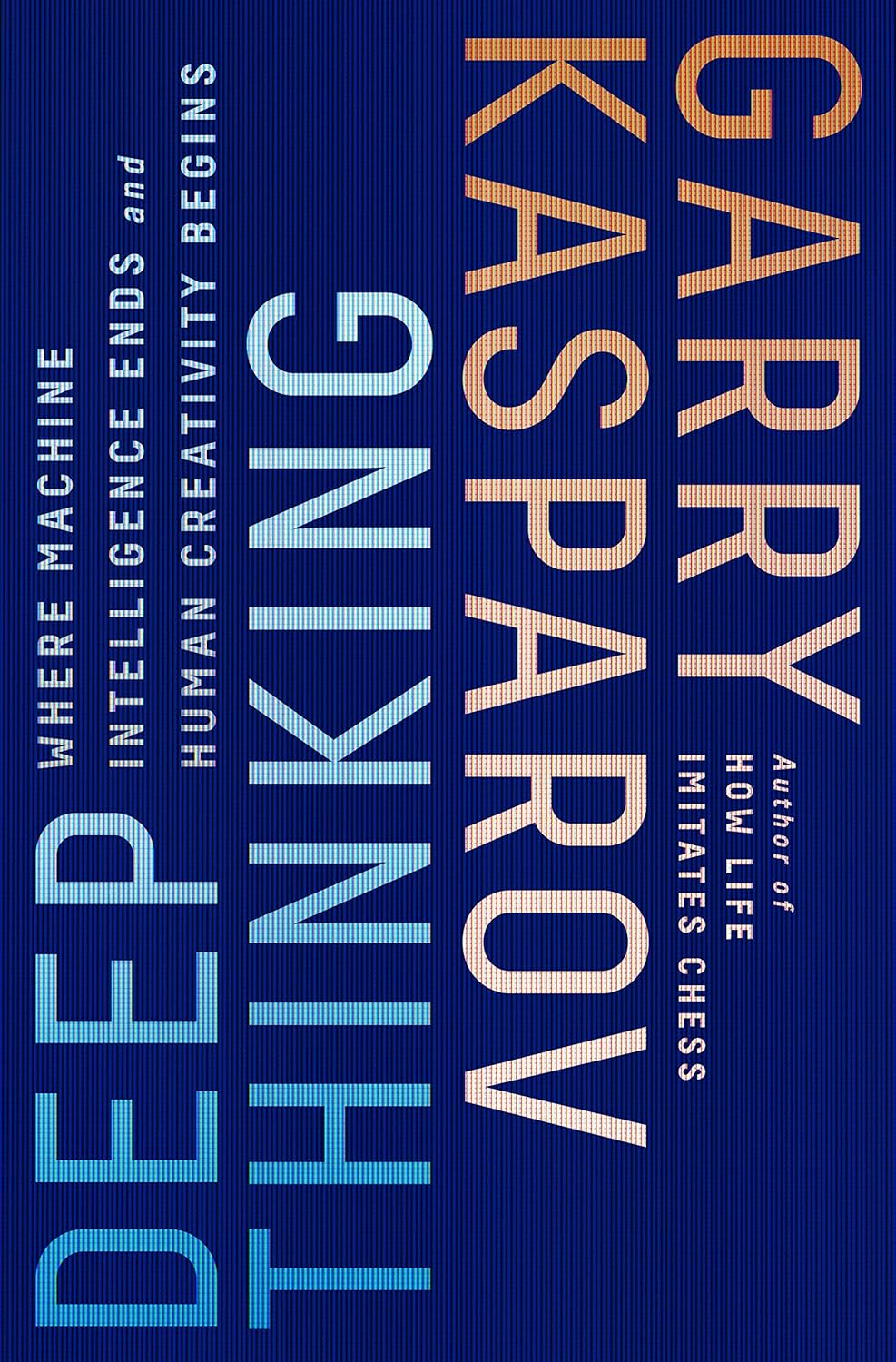
Prologue: Facing the Machine
Summary:
Garry Kasparov recounts his first encounters with computer chess and frames the book around the confrontation between human intuition and machine computation. He sets up the narrative of Deep Blue as a turning point and introduces the central question of where machine intelligence ends and human creativity begins.
Key points:
- Personal framing of human vs machine through the author's experiences as a world chess champion.
- Introduction of Deep Blue as emblematic of broader technological change.
- Emphasis on the emotional and philosophical stakes of competing with machines.
- The prologue establishes chess as a useful laboratory for exploring intelligence and strategy.
Themes & relevance:
The prologue positions the Deep Blue matches as both a historical event and a lens for examining modern AI and its implications for human agency. It signals that the book will mix memoir, technical explanation, and philosophical reflection.
Takeaway / How to use:
Use the chess-human
- machine narrative as a framework to evaluate technological advances in your own field.
Key points
- Personal framing of human vs machine through the author's experiences as a world chess champion.
- Introduction of Deep Blue as emblematic of broader technological change.
- Emphasis on the emotional and philosophical stakes of competing with machines.
- The prologue establishes chess as a useful laboratory for exploring intelligence and strategy.
1. The Long Game — Chess, Strategy, and Computation
Summary:
Kasparov explains chess as a deep strategic domain where short-term calculation and long
- term planning intersect, and argues that studying chess illuminates general issues about computation and decision-making. He describes how chessthinking combines pattern recognition, evaluation, and search — processes that map well onto debates about artificial intelligence.
Key points:
- Chess requires both brute
- force calculation and qualitative judgment about position and strategy.
- Pattern recognition and experience guide human choices when exhaustive search is impossible.
- Computers excel at rapid calculation but historically lacked contextual judgment.
- The chapter frames chess as a microcosm for broader computational challenges in strategy.
Themes & relevance:
This chapter links gameplay mechanics to cognitive theory and AI, making chess a practical case study for understanding strengths and limits of machines. It remains relevant for anyone comparing algorithmic power to human judgment in complex domains.
Takeaway / How to use:
Balance quantitative analysis with qualitative judgment when solving complex strategic problems.
Key points
- Chess requires both brute
- force calculation and qualitative judgment about position and strategy.
- Pattern recognition and experience guide human choices when exhaustive search is impossible.
- Computers excel at rapid calculation but historically lacked contextual judgment.
- The chapter frames chess as a microcosm for broader computational challenges in strategy.
2. From Rules to Learning — A Short History of AI
Summary:
Kasparov surveys key developments in AI from rule-based expert systems to statistical learning approaches, highlighting shifts in methodology and expectations. He traces cycles of optimism and disillusionment while emphasizing how practical advances often arise from combining ideas rather than single breakthroughs.
Key points:
- Early AI focused on hand
- coded rules and symbolic reasoning, which struggled with real-world complexity.
- Statistical methods and machine learning shifted focus to data
- driven induction and pattern discovery.
- Progress often came incrementally and through hybrid approaches rather than monolithic paradigm shifts.
- The history shows both technological promise and recurring limits tied to resources, data, and conceptual understanding.
Themes & relevance:
The chapter situates modern machine learning within a longer arc of AI research, reminding readers that current capabilities are products of accumulated techniques and trade-offs. Understanding this history helps judge present claims and future directions in AI.
Takeaway / How to use:
When evaluating AI tools, consider both their algorithmic basis and the data and design choices that enable their performance.
Key points
- Early AI focused on hand
- coded rules and symbolic reasoning, which struggled with real-world complexity.
- Statistical methods and machine learning shifted focus to data
- driven induction and pattern discovery.
- Progress often came incrementally and through hybrid approaches rather than monolithic paradigm shifts.
- The history shows both technological promise and recurring limits tied to resources, data, and conceptual understanding.
3. Deep Blue — The Match That Changed Everything
Summary:
Kasparov gives a detailed account of the development and matches of Deep Blue, culminating in the historic 1997 game that represented a symbolic shift in human–machine competition. He narrates technical details, team dynamics, and the emotional intensity surrounding the match.
Key points:
- Deep Blue combined specialized hardware with sophisticated search algorithms and evaluation functions.
- The matches exposed gaps between computational power and human strategic understanding, as well as moments where computers outperformed humans on concrete calculation.
- Kasparov reflects on the psychological pressure and public perception shaped by the competition.
- The match accelerated public and scientific conversation about AI capability and its implications.
Themes & relevance:
This chapter treats Deep Blue not just as a technical milestone but as a cultural event that reframed expectations about machines and expertise. It remains a touchstone for debates about automation and human value.
Takeaway / How to use:
Study both technical design and human context when assessing the impact of a breakthrough technology.
Key points
- Deep Blue combined specialized hardware with sophisticated search algorithms and evaluation functions.
- The matches exposed gaps between computational power and human strategic understanding, as well as moments where computers outperformed humans on concrete calculation.
- Kasparov reflects on the psychological pressure and public perception shaped by the competition.
- The match accelerated public and scientific conversation about AI capability and its implications.
4. Aftermath — Lessons from Victory and Defeat
Summary:
Kasparov reflects on the aftermath of his matches with Deep Blue, exploring lessons about preparation, adaptation, and the limits of purely computational dominance. He discusses how the encounter changed his understanding of machines and informed broader conversations about collaboration and rivalry.
Key points:
- Human players learned to adapt their preparation, embracing computer analysis as a tool rather than fearing it.
- The psychological and interpretive dimensions of competition remain uniquely human and important.
- The episode highlighted the need for transparency about machine processes and the role of human oversight.
- Kasparov stresses learning from loss and integrating machines into human workflows to enhance, not simply replace, human capabilities.
Themes & relevance:
The chapter argues for a pragmatic response to machine advances: combine human strengths with machine speed rather than framing the relationship as zero-sum. It informs current debates about augmentation vs replacement.
Takeaway / How to use:
Use technology as a partner: incorporate machine analysis into your preparation and decision processes.
Key points
- Human players learned to adapt their preparation, embracing computer analysis as a tool rather than fearing it.
- The psychological and interpretive dimensions of competition remain uniquely human and important.
- The episode highlighted the need for transparency about machine processes and the role of human oversight.
- Kasparov stresses learning from loss and integrating machines into human workflows to enhance, not simply replace, human capabilities.
5. The Rise of Machine Learning and Big Data
Summary:
Kasparov sketches the emergence of machine learning and the data-driven revolution that followed Deep Blue, explaining how access to large datasets and improved algorithms transformed practical AI applications. He examines how scale, computing power, and new architectures enabled systems that learn patterns from data rather than relying solely on hand
- crafted rules.
Key points:
- The availability of big data and increased computing power propelled advances in supervised and unsupervised learning.
- New model architectures and training techniques allowed machines to solve problems once thought out of reach.
- Practical AI shifted from toy problems to real
- world applications across industries.
- The chapter highlights both opportunities and challenges: bias, interpretability, and dependence on data quality.
Themes & relevance:
This chapter connects the chess story to the broader socioeconomic impact of modern AI, showing how machine learning reshapes professions and industries. Understanding these dynamics helps anticipate benefits and risks.
Takeaway / How to use:
Leverage data thoughtfully: prioritize data quality, bias mitigation, and clear evaluation when deploying machine-learning solutions.
Key points
- The availability of big data and increased computing power propelled advances in supervised and unsupervised learning.
- New model architectures and training techniques allowed machines to solve problems once thought out of reach.
- Practical AI shifted from toy problems to real
- world applications across industries.
- The chapter highlights both opportunities and challenges: bias, interpretability, and dependence on data quality.
6. The Limits of Algorithms — What Machines Don’t Understand
Summary:
Kasparov explores fundamental limits of algorithmic approaches, arguing that machines struggle with context, common sense, and the kinds of flexible reasoning that humans perform easily. He emphasizes that computation excels at defined problems but often fails where nuance, values, and ambiguous objectives matter.
Key points:
- Algorithms lack human
- style common sense and struggle with out-of
- distribution or under-specified problems.
- Contextual judgment, ethical reasoning, and understanding intent remain challenging for machines.
- Overreliance on metrics and narrow benchmarks can produce brittle systems that fail in real
- world complexity.
- Human oversight and multidisciplinary evaluation are necessary to mitigate these limitations.
Themes & relevance:
The chapter underscores that AI is powerful but not omniscient, framing a cautious optimism that values human judgment alongside machine strengths. It is relevant for anyone deploying AI in settings requiring nuance or moral consideration.
Takeaway / How to use:
Combine algorithmic tools with human oversight to handle ambiguity, context, and ethical judgment.
Key points
- Algorithms lack human
- style common sense and struggle with out-of
- distribution or under-specified problems.
- Contextual judgment, ethical reasoning, and understanding intent remain challenging for machines.
- Overreliance on metrics and narrow benchmarks can produce brittle systems that fail in real
- world complexity.
- Human oversight and multidisciplinary evaluation are necessary to mitigate these limitations.
7. Human Strengths — Intuition, Judgment, and Creativity
Summary:
Kasparov celebrates distinctively human capacities — intuition, judgment, creativity — and argues these remain essential even as machines become more capable. He proposes that humans and machines should be paired to leverage complementary strengths for better decision-making and creative outcomes.
Key points:
- Intuition and pattern
- based judgment allow humans to make leaps that pure computation may miss.
- Creativity involves recombination, analogical thinking, and value
- driven choices beyond algorithmic optimization.
- Effective human
- machine teams exploit machine speed and scale while relying on humans for strategy, meaning, and ethics.
- Emphasizes training and adaptation so people can work effectively with increasingly powerful tools.
Themes & relevance:
This chapter affirms human agency in an era of automation and proposes a partnership model that amplifies strengths on both sides. It speaks directly to professionals adapting to AI-enhanced workplaces.
Takeaway / How to use:
Develop your judgment and creative skills to complement, rather than compete with, machine capabilities.
Key points
- Intuition and pattern
- based judgment allow humans to make leaps that pure computation may miss.
- Creativity involves recombination, analogical thinking, and value
- driven choices beyond algorithmic optimization.
- Effective human
- machine teams exploit machine speed and scale while relying on humans for strategy, meaning, and ethics.
- Emphasizes training and adaptation so people can work effectively with increasingly powerful tools.
8. Collaboration — How Humans and Machines Work Together
Summary:
Human-machine collaboration is presented as a complementary partnership where machines amplify specific cognitive tasks and humans provide context, judgment, and creative leaps. The chapter emphasizes designing systems that leverage machine strengths (speed, pattern recognition) while preserving human agency and oversight.
Key points:
- Machines excel at narrow, repetitive, and high
- dimensional pattern recognition; humans excel at causal reasoning, ethics, and creative synthesis.
- Effective collaboration requires interfaces and workflows that make machine outputs interpretable and actionable for humans.
- Hybrid teams (human + machine) outperform either alone when roles and decision boundaries are clearly defined.
- Trust, transparency, and calibration of confidence are essential to prevent overreliance or dismissal of machine advice.
Themes & relevance:
This chapter underscores a recurring theme: framing AI as a collaborator rather than a replacement, which reframes design, training, and evaluation priorities in industry and research. Its relevance lies in guiding practitioners to build systems that augment human capabilities across domains.
Takeaway / How to use:
Design systems that assign tasks by comparative advantage and surface machine reasoning in human-understandable ways.
Key points
- Machines excel at narrow, repetitive, and high
- dimensional pattern recognition; humans excel at causal reasoning, ethics, and creative synthesis.
- Effective collaboration requires interfaces and workflows that make machine outputs interpretable and actionable for humans.
- Hybrid teams (human + machine) outperform either alone when roles and decision boundaries are clearly defined.
- Trust, transparency, and calibration of confidence are essential to prevent overreliance or dismissal of machine advice.
9. The New Economy — Jobs, Value, and Automation
Summary:
Automation reshapes labor markets by displacing some tasks while creating new kinds of value and roles, often requiring different skills and human strengths. The chapter argues that the economic impact of AI depends on policy, education, and how organizations restructure work to capture complementary gains.
Key points:
- Automation tends to substitute routine and predictable tasks but complements tasks requiring creativity, social intelligence, and complex judgment.
- The emergence of new roles (e.g., AI supervisors, data translators) shifts demand toward skills in problem formulation, interpretation, and cross
- disciplinary collaboration.
- Economic value will accrue to systems and organizations that integrate human insight with machine scale, not solely to machines themselves.
- Policy choices (safety nets, retraining programs) and corporate investments in human capital determine whether transitions are equitable or disruptive.
Themes & relevance:
The chapter links technological change to institutional responses, stressing that economic outcomes are not predetermined by technology but shaped by human decisions and policy. It is relevant for leaders planning workforce strategy and for policymakers managing transition risks.
Takeaway / How to use:
Focus workforce planning on skills that complement machines and create pathways for continuous reskilling.
Key points
- Automation tends to substitute routine and predictable tasks but complements tasks requiring creativity, social intelligence, and complex judgment.
- The emergence of new roles (e.g., AI supervisors, data translators) shifts demand toward skills in problem formulation, interpretation, and cross
- disciplinary collaboration.
- Economic value will accrue to systems and organizations that integrate human insight with machine scale, not solely to machines themselves.
- Policy choices (safety nets, retraining programs) and corporate investments in human capital determine whether transitions are equitable or disruptive.
10. Ethics and Governance — Guiding Intelligent Systems
Summary:
Ethical design and governance are necessary to ensure intelligent systems align with human values, avoid harms, and remain accountable. The chapter discusses transparency, responsibility, and institutional frameworks as central to trustworthy AI deployment.
Key points:
- Ethical challenges include bias, opacity, unintended consequences, and power concentration; technical fixes must be paired with governance structures.
- Accountability requires clear roles: who built, who deployed, and who is responsible for decisions assisted or made by machines.
- Transparency and explainability improve user trust and enable meaningful oversight, even when perfect interpretability is unattainable.
- Multi
- stakeholder governance — combining industry standards, regulation, and civil society input — helps balance innovation with public good.
Themes & relevance:
This chapter emphasizes that ethical considerations are operational concerns that affect design, procurement, and deployment; good governance is a stabilizing force for long-term adoption. Its relevance extends to executives, regulators, and technologists crafting AI policy.
Takeaway / How to use:
Embed accountability and transparency requirements into system design and procurement processes.
Key points
- Ethical challenges include bias, opacity, unintended consequences, and power concentration; technical fixes must be paired with governance structures.
- Accountability requires clear roles: who built, who deployed, and who is responsible for decisions assisted or made by machines.
- Transparency and explainability improve user trust and enable meaningful oversight, even when perfect interpretability is unattainable.
- Multi
- stakeholder governance — combining industry standards, regulation, and civil society input — helps balance innovation with public good.
11. Preparing for the Future — Education and Policy
Summary:
Preparing society for intelligent systems requires rethinking education, lifelong learning, and public policy to prioritize adaptability, critical thinking, and the human skills that machines cannot replicate. The chapter advocates proactive policies and educational reforms that enable people to work effectively alongside machines.
Key points:
- Education should shift from memorization toward problem framing, interdisciplinary thinking, collaboration, and the social
- emotional skills that complement AI.
- Lifelong learning infrastructures (micro
- credentials, employer-supported retraining) are critical as job requirements evolve rapidly.
- Public policy should incentivize broadly shared benefits: funding for education, safety nets during transitions, and support for innovation that augments human capabilities.
- International coordination and evidence
- based policy help manage cross-border impacts of automation and ensure comparative advantages translate into inclusive prosperity.
Themes & relevance:
The chapter ties technological trajectories to long-term societal resilience, stressing that deliberate investment in people and institutions determines whether AI amplifies opportunity or inequality. It is relevant to educators, policymakers, and business leaders planning for generational change.
Takeaway / How to use:
Prioritize education and continuous training programs that cultivate skills complementary to AI and support equitable policy me...
Key points
- Education should shift from memorization toward problem framing, interdisciplinary thinking, collaboration, and the social
- emotional skills that complement AI.
- Lifelong learning infrastructures (micro
- credentials, employer-supported retraining) are critical as job requirements evolve rapidly.
- Public policy should incentivize broadly shared benefits: funding for education, safety nets during transitions, and support for innovation that augments human capabilities.
- International coordination and evidence
- based policy help manage cross-border impacts of automation and ensure comparative advantages translate into inclusive prosperity.