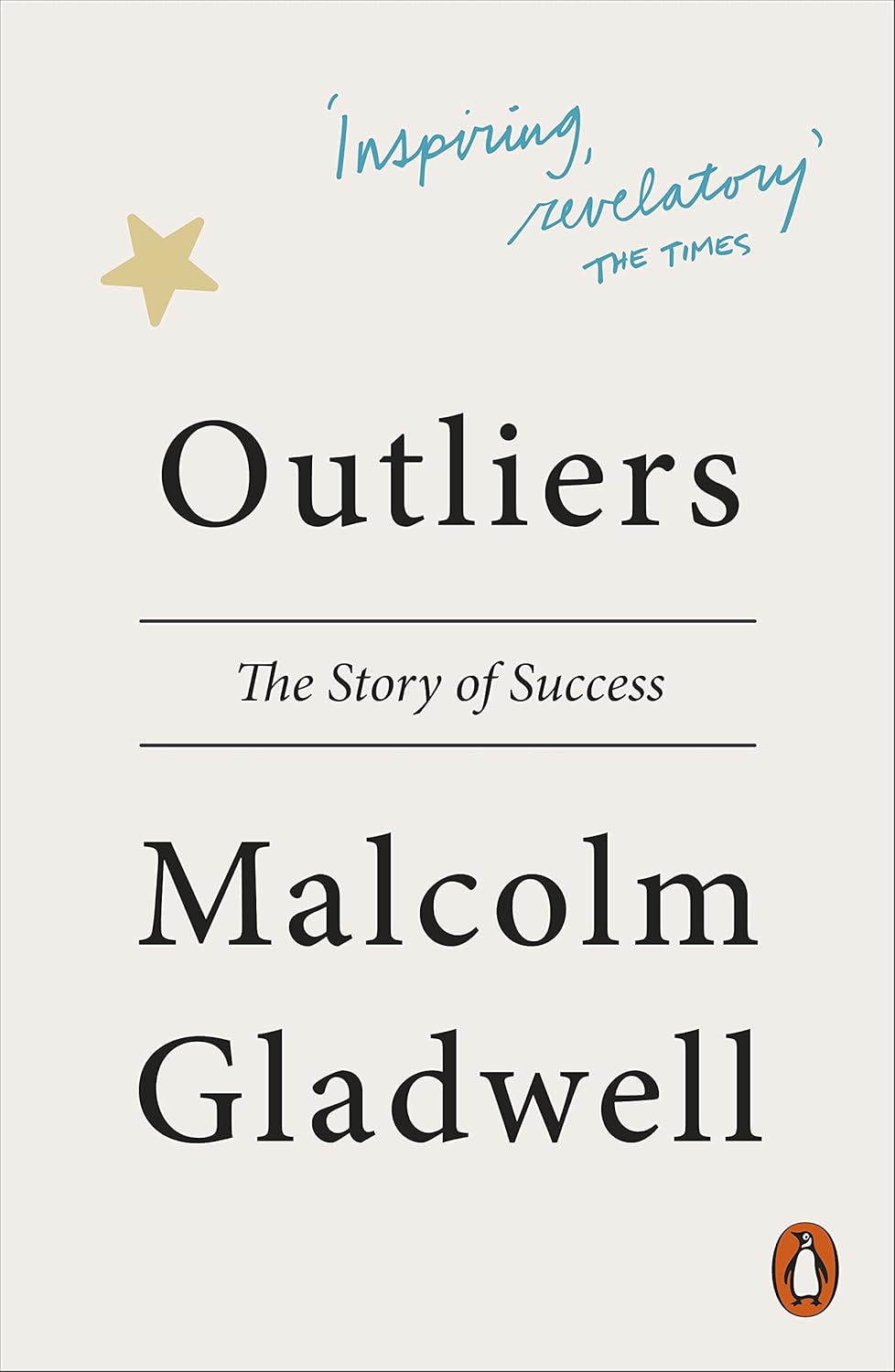
Outliers: The Story of Success: ReadSprint summary highlights
ReadSprint paraphrases for review. These highlights are not verbatim quotations from the book or its author. Check the original edition for exact wording and context.
Outliers: The Story of Success
by Malcolm Gladwell
Two to three sentences: Gladwell explains how small initial advantages compound over time into large differences in achievement, using the "Matthew Effect" to show that success often depends on accumulated opportunities rather than only pe…
ReadSprint paraphrase · Not a quotation from the author.
Two to three sentences: Gladwell explains how small initial advantages compound over time into large differences in achievement, using the "Matthew Effect" to show that success often depends on accumulated opportunities rather than only personal merit.
Small advantages (age, initial selection) compound over time into much larger ones.
Share with the ReadSprint source so others can read the context.
Outliers: The Story of Success
by Malcolm Gladwell
He illustrates this with examples like youth hockey cut-off dates and how early advantages translate into greater coaching, practice, and visibility.
ReadSprint paraphrase · Not a quotation from the author.
He illustrates this with examples like youth hockey cut-off dates and how early advantages translate into greater coaching, practice, and visibility.
Selection and opportunity structures (e.g., sports cut
Share with the ReadSprint source so others can read the context.
Outliers: The Story of Success
by Malcolm Gladwell
Two to three sentences: Gladwell argues that high-level success in complex skills is largely a function of practice — roughly 10,000 hours of deliberate work — rather than magical innate talent.
ReadSprint paraphrase · Not a quotation from the author.
Two to three sentences: Gladwell argues that high-level success in complex skills is largely a function of practice — roughly 10,000 hours of deliberate work — rather than magical innate talent.
off dates) systematically favor certain groups.
Share with the ReadSprint source so others can read the context.
Outliers: The Story of Success
by Malcolm Gladwell
He supports this with cases like the Beatles and Bill Gates, showing how unusual access to practice opportunities and timing enable mastery.
ReadSprint paraphrase · Not a quotation from the author.
He supports this with cases like the Beatles and Bill Gates, showing how unusual access to practice opportunities and timing enable mastery.
Social and institutional practices amplify early differences, creating cumulative advantage.
Share with the ReadSprint source so others can read the context.
Outliers: The Story of Success
by Malcolm Gladwell
Two to three sentences: Gladwell questions the assumption that raw IQ alone guarantees extraordinary success, contrasting extremely high-IQ individuals with real world achievers.
ReadSprint paraphrase · Not a quotation from the author.
Two to three sentences: Gladwell questions the assumption that raw IQ alone guarantees extraordinary success, contrasting extremely high-IQ individuals with real world achievers.
Meritocratic narratives obscure the role of luck and timing in success.
Share with the ReadSprint source so others can read the context.
Outliers: The Story of Success
by Malcolm Gladwell
Through stories like Chris Langan and references to research, he shows that practical intelligence and social savvy matter as much as measured intelligence.
ReadSprint paraphrase · Not a quotation from the author.
Through stories like Chris Langan and references to research, he shows that practical intelligence and social savvy matter as much as measured intelligence.
Policy and selection systems can unintentionally reproduce inequality.
Share with the ReadSprint source so others can read the context.
Outliers: The Story of Success
by Malcolm Gladwell
Two to three sentences: Gladwell expands on how class and upbringing — what sociologists call cultural capital — shape the ability to navigate institutions and assert oneself.
ReadSprint paraphrase · Not a quotation from the author.
Two to three sentences: Gladwell expands on how class and upbringing — what sociologists call cultural capital — shape the ability to navigate institutions and assert oneself.
Look for and create early structural advantages (timing, access, mentorship) to enable cumulative success.
Share with the ReadSprint source so others can read the context.
Outliers: The Story of Success
by Malcolm Gladwell
He contrasts parenting styles (concerted cultivation vs.
ReadSprint paraphrase · Not a quotation from the author.
He contrasts parenting styles (concerted cultivation vs.
Structural and historical factors, not just individual talent, shape who gets opportunities; recognizing cumulative advantage helps explain unequal outcomes in many fields. This reframes success as often contingent on context, timing, and institutional rules.
Share with the ReadSprint source so others can read the context.
Outliers: The Story of Success
by Malcolm Gladwell
natural growth) and shows how middle-class children gain advantages in negotiation, advocacy, and working with authority figures.
ReadSprint paraphrase · Not a quotation from the author.
natural growth) and shows how middle-class children gain advantages in negotiation, advocacy, and working with authority figures.
Two to three sentences: Gladwell explains how small initial advantages compound over time into large differences in achievement, using the "Matthew Effect" to show that success often depends on accumulated opportunities rather than only personal merit. He illustrates this with examples like youth hockey cut-off dates and how early advantages translate into greater coaching, practice, and visibility.
Share with the ReadSprint source so others can read the context.
Outliers: The Story of Success
by Malcolm Gladwell
Two to three sentences: Using Joe Flom's career as a case study, Gladwell identifies three lessons about success: demographic luck, the importance of being willing to do undesirable work, and the power of specific historical timing.
ReadSprint paraphrase · Not a quotation from the author.
Two to three sentences: Using Joe Flom's career as a case study, Gladwell identifies three lessons about success: demographic luck, the importance of being willing to do undesirable work, and the power of specific historical timing.
Mastery requires extensive, deliberate practice; ~10,000 hours is a useful benchmark.
Share with the ReadSprint source so others can read the context.