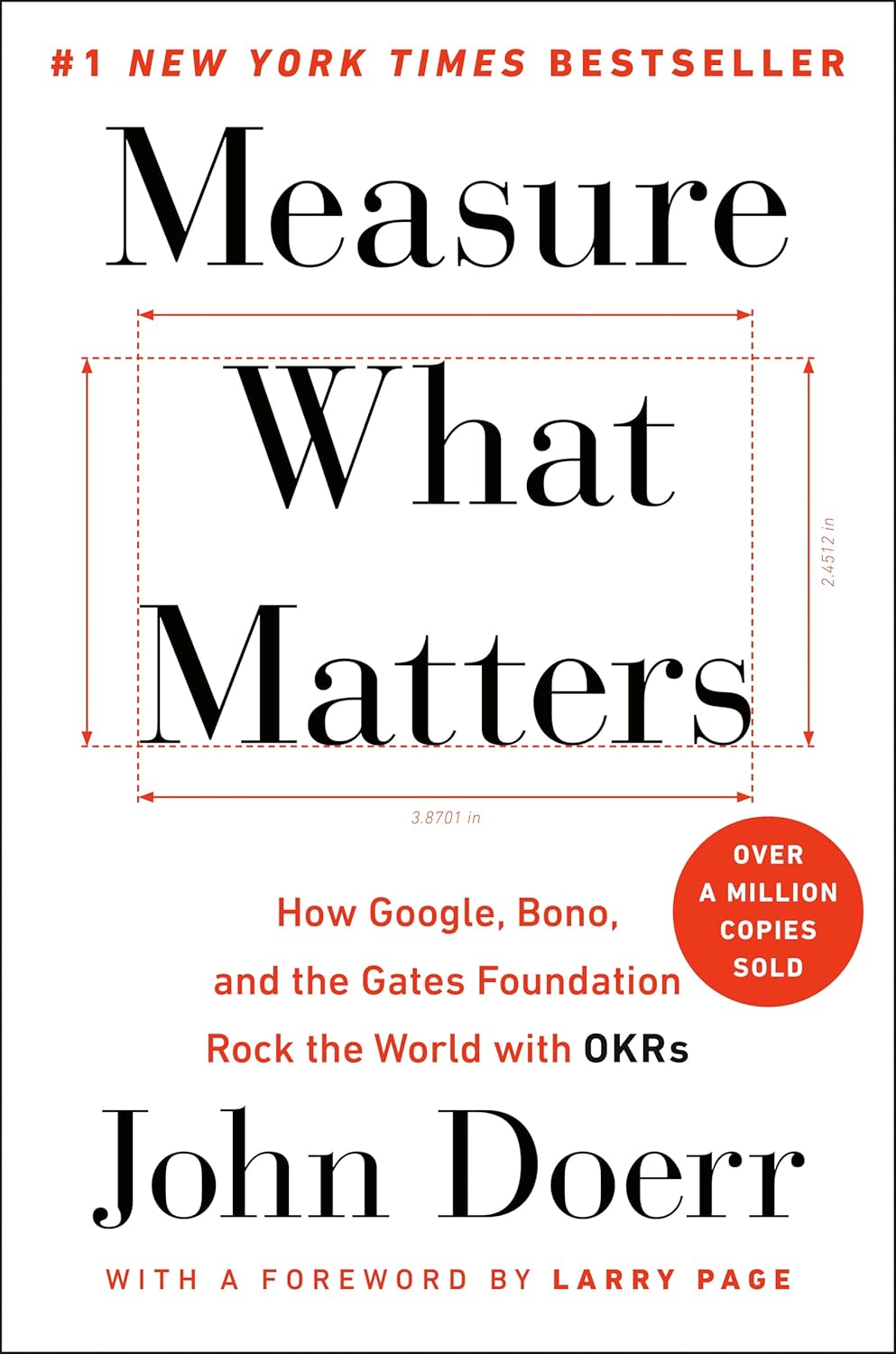
Measure What Matters: ReadSprint summary highlights
ReadSprint paraphrases for review. These highlights are not verbatim quotations from the book or its author. Check the original edition for exact wording and context.
Measure What Matters
by John Doerr
Measure What Matters popularizes OKRs as a way to align teams around clear objectives and visible progress instead of activity that feels productive but does not move the outcome.
ReadSprint paraphrase · Not a quotation from the author.
Measure What Matters popularizes OKRs as a way to align teams around clear objectives and visible progress instead of activity that feels productive but does not move the outcome.
Objectives describe the goal while key results make progress measurable.
Share with the ReadSprint source so others can read the context.
Measure What Matters
by John Doerr
The book becomes more useful when readers connect Measure What Matters to a live decision, repeated workflow, or operating habit instead of treating it as abstract advice.
ReadSprint paraphrase · Not a quotation from the author.
The book becomes more useful when readers connect Measure What Matters to a live decision, repeated workflow, or operating habit instead of treating it as abstract advice.
Alignment improves when goals are visible and specific.
Share with the ReadSprint source so others can read the context.
Measure What Matters
by John Doerr
Objectives describe the goal while key results make progress measurable.
ReadSprint paraphrase · Not a quotation from the author.
Objectives describe the goal while key results make progress measurable.
Execution gets stronger when measurement supports learning instead of theater.
Share with the ReadSprint source so others can read the context.
Measure What Matters
by John Doerr
Turn one vague team priority into a concrete objective with a small set of measurable results.
ReadSprint paraphrase · Not a quotation from the author.
Turn one vague team priority into a concrete objective with a small set of measurable results.
Turn one vague team priority into a concrete objective with a small set of measurable results.
Share with the ReadSprint source so others can read the context.
Measure What Matters
by John Doerr
goals, accountability, and execution clarity.
ReadSprint paraphrase · Not a quotation from the author.
goals, accountability, and execution clarity.
goals, accountability, and execution clarity
Share with the ReadSprint source so others can read the context.
Use these highlights to review the book
Which highlight from Measure What Matters changes how you would explain the book to someone else?
Which lesson here is worth testing in a real decision this week?
Which highlight feels memorable but less actionable once you slow down and examine it?