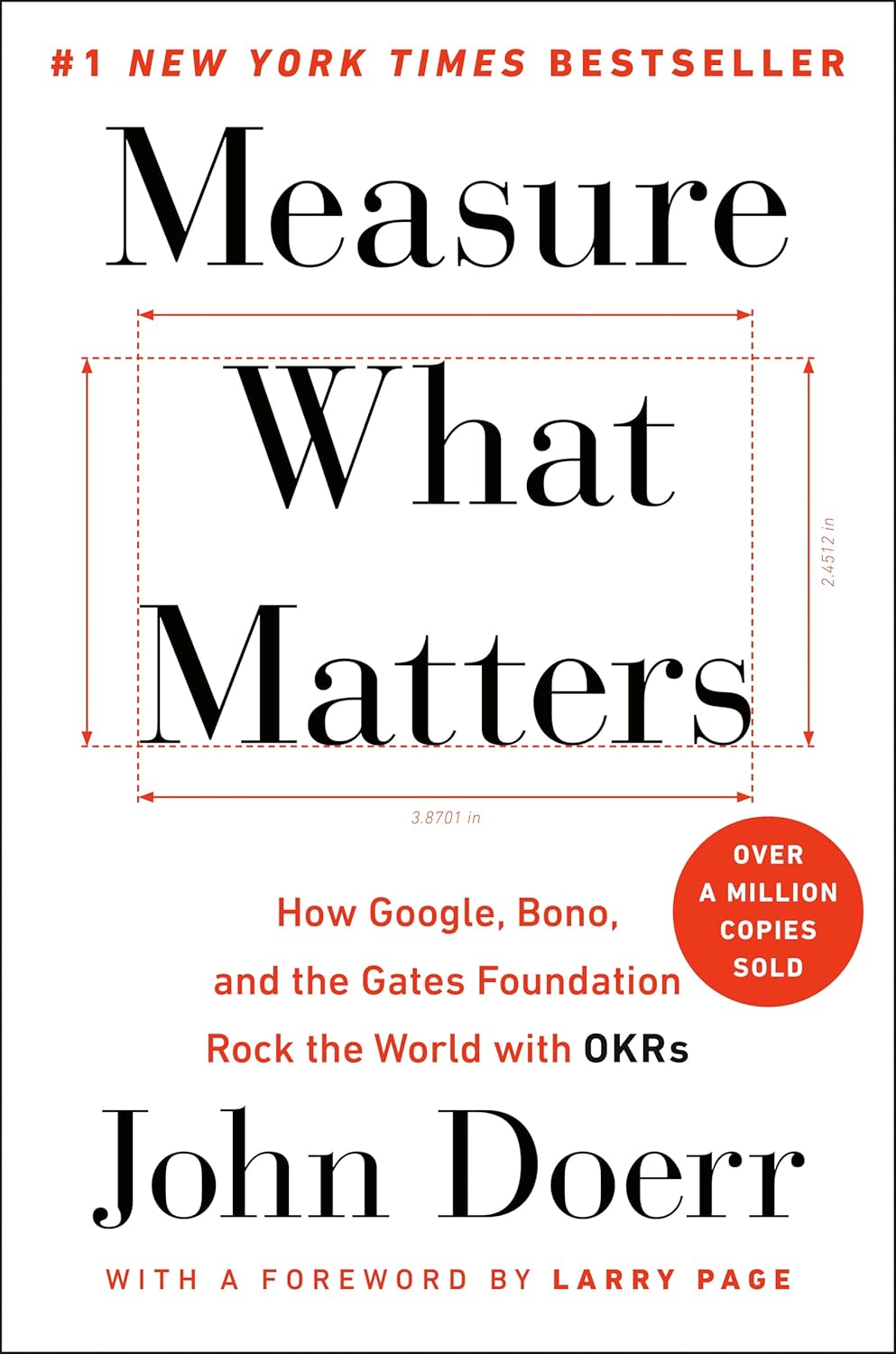
ReadSprintBooksMeasure What MattersMeasure What Matters Questions, Quiz, and Active Recall Prompts
Measure What Matters
Measure What Matters Questions, Quiz, and Active Recall Prompts

Measure What Matters Questions, Quiz, and Active Recall Prompts

by John Doerr

Test your understanding of Measure What Matters by John Doerr with quiz questions, active recall prompts, and related learning resources.

Reading without retrieval fades fast. Use these Measure What Matters questions and active recall prompts to pressure-test what you understood and keep the book usable later.

Built for retention

ReadSprint combines concise summaries, quizzes, active recall, and related reading paths so the useful part of the book is easier to keep.

Open full summary

14

Chapter summaries

5

Quiz questions

12

Key takeaways

6

Related books

Quiz questions

Question 1

What are the two parts of the OKR framework?

  • Objective (a short, inspiring qualitative goal) and Key Results (measurable outcomes)
  • Goals and KPIs
  • Tasks and Milestones
  • Vision and Strategy
Question 2

Which management innovator at Intel is credited with adapting Management by Objectives into the system that became OKRs?

  • Peter Drucker
  • Andy Grove
  • John Doerr
  • Larry Page
Question 3

Which best describes a well-crafted Key Result?

  • A long checklist of tasks to complete
  • A vague aspirational statement tied to morale
  • Quantitative, outcome-focused, limited in number (2–5) and signaling real progress
  • A list of every team activity and meeting schedule
Question 4

Which routine is recommended to make OKRs work for accountability and progress?

  • Quarterly reviews only
  • Regular cadence with weekly check-ins and quarterly reviews
  • Annual performance reviews
  • Daily micromanagement updates
Question 5

What is the primary purpose of setting "stretch" or "moonshot" OKRs?

  • To ensure goals are easily attainable
  • To push organizations beyond incremental improvements and unlock breakthroughs when paired with measurable KRs and commitment
  • To eliminate the need for alignment across teams
  • To discourage risk-taking and focus only on safe outcomes

Active recall prompts

What are the two parts of the OKR framework?

Which management innovator at Intel is credited with adapting Management by Objectives into the system that became OKRs?

Which best describes a well-crafted Key Result?

Which routine is recommended to make OKRs work for accountability and progress?

What is the main idea of "Introduction: Why OKRs Matter", and how would you explain it without looking back?

What is the main idea of "How OKRs Work: Objectives and Key Results", and how would you explain it without looking back?

What is the main idea of "The Origins: Andy Grove, Intel, and Management by Objectives", and how would you explain it without looking back?

What is the main idea of "Setting Objectives: Choosing What Matters", and how would you explain it without looking back?

Quiz checkpoints

Question 1

What are the two parts of the OKR framework?

Question 2

Which management innovator at Intel is credited with adapting Management by Objectives into the system that became OKRs?

Question 3

Which best describes a well-crafted Key Result?

Practice retrieval

Key concepts

Introduction: Why OKRs Matter

The chapter frames OKRs as a practical tool for leaders to execute strategy and foster a performance culture, relevant to teams seeking better outcomes and clearer priorities. OKRs are positioned as adaptable across org…

How OKRs Work: Objectives and Key Results

The mechanics of OKRs are emphasized as straightforward but powerful: combine inspiration with measurement to drive execution. This explanation matters for teams learning to write effective objectives and measurable res…

The Origins: Andy Grove, Intel, and Management by Objectives

Understanding OKRs’ origins shows they’re not a fad but a tested management practice rooted in disciplined execution. The Intel story validates the approach for leaders who need proven frameworks to scale performance.

Open concept map
Turn Reading Into Recall

Keep Measure What Matters review-ready instead of letting it fade.

This page is strongest when it becomes part of a review habit: save the summary, revisit the key takeaways, and use recall prompts before the next meeting, study block, or decision.

Save one strong takeaway instead of over-highlighting.
Use the questions page to test what actually stuck.
Return when the book becomes relevant again, not just when motivation is high.
See pricing
Get Book Review Notes

Get practical notes on remembering and reusing ideas from nonfiction books without building an overly heavy note system.

Retention workflow

Turn this page into a repeatable study loop

Move from summary to takeaways, test yourself with questions, revisit the concept map, and then continue into related books. That keeps Measure What Mattersconnected instead of turning into a one-time skim.

Frequently asked questions

Why use quiz questions for Measure What Matters?

Quiz-style recall is more durable than passive rereading because it forces you to retrieve the idea instead of merely recognizing it.

How should I answer active recall prompts?

Answer from memory first, then review the relevant chapter summary only after you have tried to explain the idea on your own.

What if I miss several questions about Measure What Matters?

That usually means the book needs a shorter review loop. Revisit the chapter summaries, keep only a few high-value takeaways, and test yourself again later.