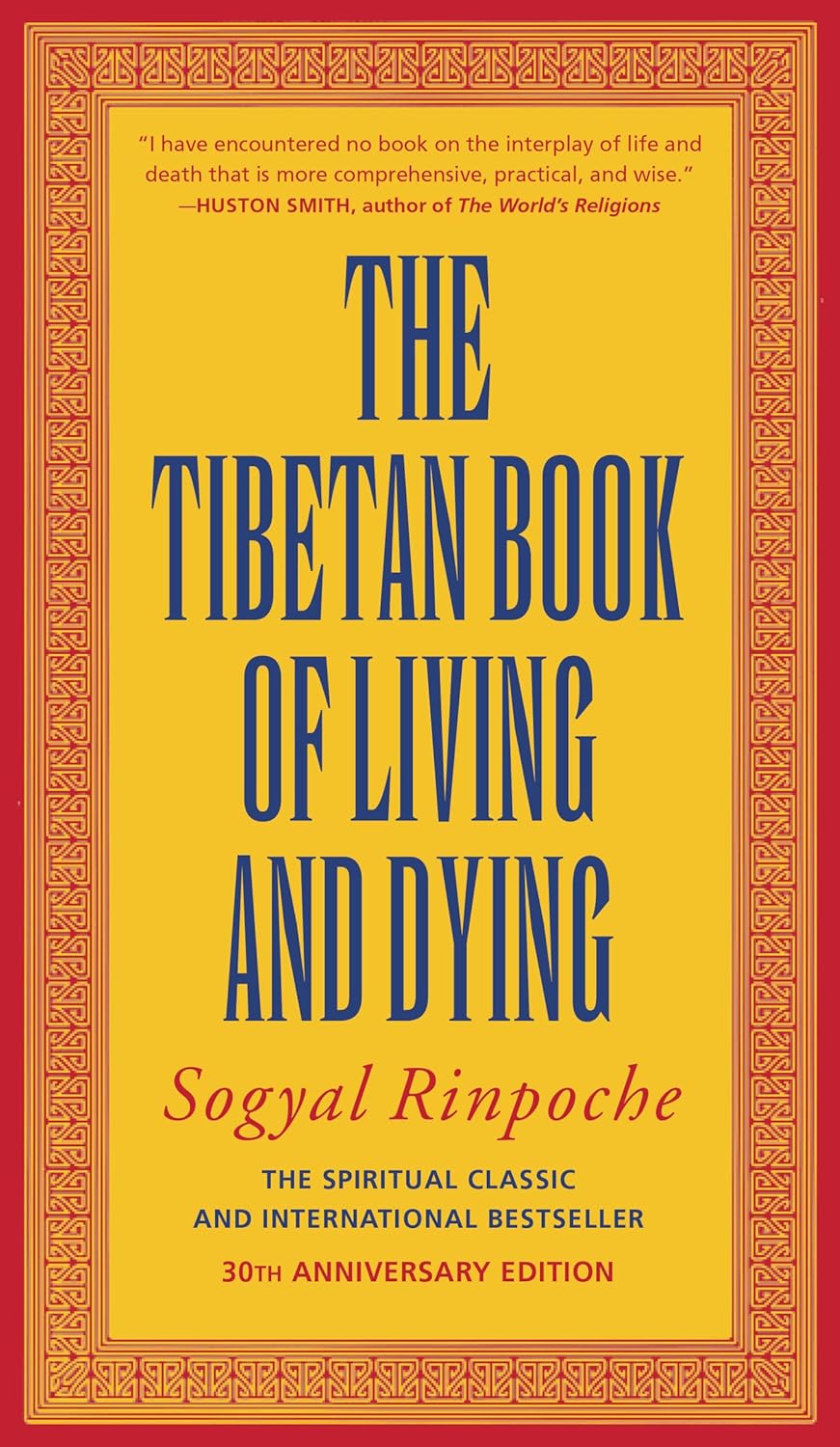
The Tibetan Book of Living and Dying: ReadSprint summary highlights
ReadSprint paraphrases for review. These highlights are not verbatim quotations from the book or its author. Check the original edition for exact wording and context.
The Tibetan Book of Living and Dying
by Sogyal Rinpoche
This introduction establishes why understanding death is vital to living a meaningful life and presents dying as a teacher rather than a failure.
ReadSprint paraphrase · Not a quotation from the author.
This introduction establishes why understanding death is vital to living a meaningful life and presents dying as a teacher rather than a failure.
Death is a universal and inevitable part of life that merits conscious attention.
Share with the ReadSprint source so others can read the context.
The Tibetan Book of Living and Dying
by Sogyal Rinpoche
It frames death awareness as a practical, spiritual discipline that can transform fear and attachment into clarity and compassion.
ReadSprint paraphrase · Not a quotation from the author.
It frames death awareness as a practical, spiritual discipline that can transform fear and attachment into clarity and compassion.
Awareness of death can motivate ethical living and spiritual practice.
Share with the ReadSprint source so others can read the context.
The Tibetan Book of Living and Dying
by Sogyal Rinpoche
It also outlines the book’s purpose: to provide guidance for dying, death, and bereavement.
ReadSprint paraphrase · Not a quotation from the author.
It also outlines the book’s purpose: to provide guidance for dying, death, and bereavement.
Practical guidance and contemplative methods can ease fear and isolation around dying.
Share with the ReadSprint source so others can read the context.
The Tibetan Book of Living and Dying
by Sogyal Rinpoche
This chapter introduces the central teaching that mind and consciousness are primary in the process of dying and beyond.
ReadSprint paraphrase · Not a quotation from the author.
This chapter introduces the central teaching that mind and consciousness are primary in the process of dying and beyond.
Preparing for death benefits both the dying and those who love them.
Share with the ReadSprint source so others can read the context.
The Tibetan Book of Living and Dying
by Sogyal Rinpoche
It presents the idea that recognizing the nature of mind is the key to a fearless approach to death and the bardo (intermediate state).
ReadSprint paraphrase · Not a quotation from the author.
It presents the idea that recognizing the nature of mind is the key to a fearless approach to death and the bardo (intermediate state).
Begin by reflecting briefly each day on impermanence to orient priorities and reduce habitual avoidance.
Share with the ReadSprint source so others can read the context.
The Tibetan Book of Living and Dying
by Sogyal Rinpoche
This chapter focuses on impermanence, explaining how clinging to permanence causes suffering and how recognizing change can free us.
ReadSprint paraphrase · Not a quotation from the author.
This chapter focuses on impermanence, explaining how clinging to permanence causes suffering and how recognizing change can free us.
The chapter connects mortality to everyday priorities, arguing that facing death deepens meaning and improves relationships. It positions death-awareness as relevant to modern readers seeking psychological and spiritual resilience.
Share with the ReadSprint source so others can read the context.
The Tibetan Book of Living and Dying
by Sogyal Rinpoche
It emphasizes practical reflections and meditations to internalize transience and to loosen attachments to identity, relationships, and possessions.
ReadSprint paraphrase · Not a quotation from the author.
It emphasizes practical reflections and meditations to internalize transience and to loosen attachments to identity, relationships, and possessions.
This introduction establishes why understanding death is vital to living a meaningful life and presents dying as a teacher rather than a failure. It frames death awareness as a practical, spiritual discipline that can transform fear and attachment into clarity and compassion. It also outlines the book’s purpose: to provide guidance for dying, death, and bereavement.
Share with the ReadSprint source so others can read the context.
The Tibetan Book of Living and Dying
by Sogyal Rinpoche
This chapter describes mind’s two inseparable qualities: emptiness (lack of inherent, fixed identity) and clarity (awareness, luminosity).
ReadSprint paraphrase · Not a quotation from the author.
This chapter describes mind’s two inseparable qualities: emptiness (lack of inherent, fixed identity) and clarity (awareness, luminosity).
Mind, not the body, is central to the experience of dying and post
Share with the ReadSprint source so others can read the context.
The Tibetan Book of Living and Dying
by Sogyal Rinpoche
It explains how realizing these qualities dissolves fear of annihilation and reveals a compassionate ground for life and death.
ReadSprint paraphrase · Not a quotation from the author.
It explains how realizing these qualities dissolves fear of annihilation and reveals a compassionate ground for life and death.
death states.
Share with the ReadSprint source so others can read the context.
The Tibetan Book of Living and Dying
by Sogyal Rinpoche
This chapter offers practical instruction on cultivating mindfulness and meditation as daily habits that prepare one for dying and living well.
ReadSprint paraphrase · Not a quotation from the author.
This chapter offers practical instruction on cultivating mindfulness and meditation as daily habits that prepare one for dying and living well.
Training to recognize the nature of mind helps one meet death with clarity and peace.
Share with the ReadSprint source so others can read the context.