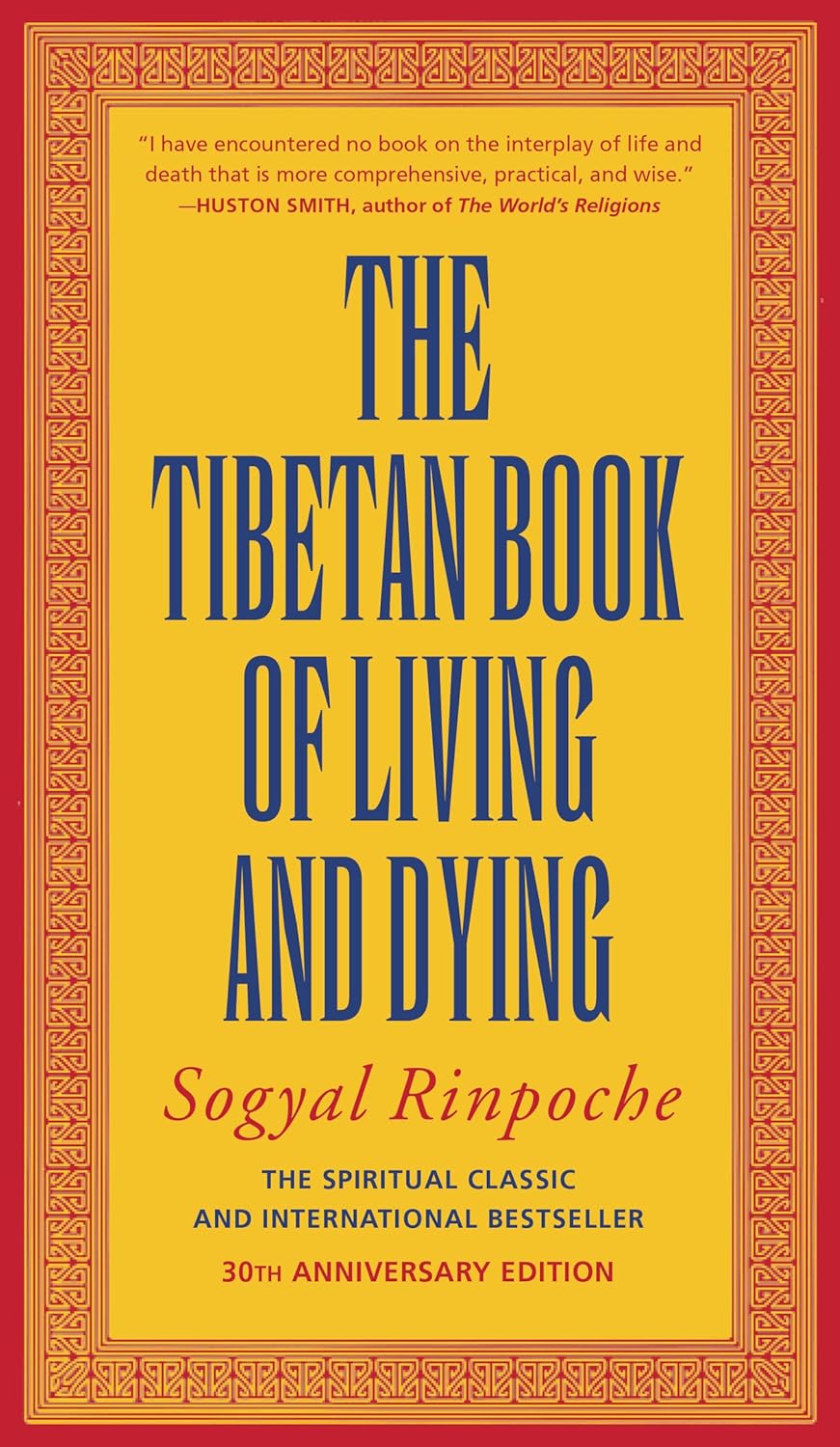
Introduction: The Relevance of Dying
Summary:
This introduction establishes why understanding death is vital to living a meaningful life and presents dying as a teacher rather than a failure. It frames death awareness as a practical, spiritual discipline that can transform fear and attachment into clarity and compassion. It also outlines the book’s purpose: to provide guidance for dying, death, and bereavement.
Key points:
- Death is a universal and inevitable part of life that merits conscious attention.
- Awareness of death can motivate ethical living and spiritual practice.
- Practical guidance and contemplative methods can ease fear and isolation around dying.
- Preparing for death benefits both the dying and those who love them.
Themes & relevance:
The chapter connects mortality to everyday priorities, arguing that facing death deepens meaning and improves relationships. It positions death-awareness as relevant to modern readers seeking psychological and spiritual resilience.
Takeaway / How to use:
Begin by reflecting briefly each day on impermanence to orient priorities and reduce habitual avoidance.
Key points
- Death is a universal and inevitable part of life that merits conscious attention.
- Awareness of death can motivate ethical living and spiritual practice.
- Practical guidance and contemplative methods can ease fear and isolation around dying.
- Preparing for death benefits both the dying and those who love them.
1. The Great Secret: An Introduction to Mind and Death
Summary:
This chapter introduces the central teaching that mind and consciousness are primary in the process of dying and beyond. It presents the idea that recognizing the nature of mind is the key to a fearless approach to death and the bardo (intermediate state).
Key points:
- Mind, not the body, is central to the experience of dying and post
- death states.
- Training to recognize the nature of mind helps one meet death with clarity and peace.
- Practices and teachings aim to reveal mind’s luminous and empty aspects.
- Understanding mind reduces attachment and cultivates detachment without indifference.
Themes & relevance:
The chapter links contemplative insight about consciousness to practical attitudes toward dying, making esoteric ideas accessible and applicable. It argues that inner familiarity with mind transforms fear into opportunity for awakening.
Takeaway / How to use:
Practice short awareness exercises to notice the basic qualities of your mind throughout the day.
Key points
- Mind, not the body, is central to the experience of dying and post
- death states.
- Training to recognize the nature of mind helps one meet death with clarity and peace.
- Practices and teachings aim to reveal mind’s luminous and empty aspects.
- Understanding mind reduces attachment and cultivates detachment without indifference.
2. The Illusion of Permanence and the Reality of Change
Summary:
This chapter focuses on impermanence, explaining how clinging to permanence causes suffering and how recognizing change can free us. It emphasizes practical reflections and meditations to internalize transience and to loosen attachments to identity, relationships, and possessions.
Key points:
- Perceiving permanence where there is change leads to fear, grief, and unhealthy clinging.
- Contemplation of impermanence helps cultivate acceptance and wise priorities.
- Everyday moments and the process of dying both reveal change; training with smaller losses prepares one for greater ones.
- Letting go fosters presence, compassion, and freedom from compulsive reactions.
Themes & relevance:
Impermanence is presented as a foundational contemplative insight with direct ethical and emotional implications for living well. Recognizing change is portrayed as essential preparation for the transition of death.
Takeaway / How to use:
Use brief daily reflections on change—e.g., remembering that all experiences pass—to reduce attachment and anxiety.
Key points
- Perceiving permanence where there is change leads to fear, grief, and unhealthy clinging.
- Contemplation of impermanence helps cultivate acceptance and wise priorities.
- Everyday moments and the process of dying both reveal change; training with smaller losses prepares one for greater ones.
- Letting go fosters presence, compassion, and freedom from compulsive reactions.
3. The True Nature of Mind: Emptiness and Clarity
Summary:
This chapter describes mind’s two inseparable qualities: emptiness (lack of inherent, fixed identity) and clarity (awareness, luminosity). It explains how realizing these qualities dissolves fear of annihilation and reveals a compassionate ground for life and death.
Key points:
- Emptiness means phenomena lack independent, permanent essence; clarity refers to the knowing quality of mind.
- Recognizing emptiness prevents reification of the self and reduces ego
- driven fear at death.
- Experiential practices aim to reveal emptiness and clarity rather than merely conceptualize them.
- Integration of these insights supports genuine compassion and spiritual freedom.
Themes & relevance:
The chapter ties classical Buddhist metaphysics to psychological healing, showing how insights into mind transform suffering around death. It makes the point that experiential knowledge of emptiness and clarity is both liberating and ethically motivating.
Takeaway / How to use:
Practice brief meditations that alternate observing thoughts’ insubstantiality and the clear awareness that notices them.
Key points
- Emptiness means phenomena lack independent, permanent essence; clarity refers to the knowing quality of mind.
- Recognizing emptiness prevents reification of the self and reduces ego
- driven fear at death.
- Experiential practices aim to reveal emptiness and clarity rather than merely conceptualize them.
- Integration of these insights supports genuine compassion and spiritual freedom.
4. Training the Mind: Meditation and Awareness in Daily Life
Summary:
This chapter offers practical instruction on cultivating mindfulness and meditation as daily habits that prepare one for dying and living well. It covers formal sitting practice and informal awareness techniques for integrating presence into ordinary activities.
Key points:
- Regular meditation stabilizes attention and reduces reactivity in crisis and daily stress.
- Informal mindfulness—awareness during routine tasks—reinforces insight and compassion.
- Training includes methods for grounding in breath, recognizing emotions, and returning to awareness after distraction.
- Consistent practice creates familiarity with the mind’s processes that is invaluable at the time of death.
Themes & relevance:
The chapter makes practice practical, showing how contemplative skills developed in life become resources during dying. It emphasizes continuity between everyday training and critical moments.
Takeaway / How to use:
Set aside a short daily slot for focused meditation and apply one mindful check-in during ordinary activities.
Key points
- Regular meditation stabilizes attention and reduces reactivity in crisis and daily stress.
- Informal mindfulness—awareness during routine tasks—reinforces insight and compassion.
- Training includes methods for grounding in breath, recognizing emotions, and returning to awareness after distraction.
- Consistent practice creates familiarity with the mind’s processes that is invaluable at the time of death.
5. Compassion, Love, and the Spiritual Path
Summary:
This chapter explores compassion and love as the heart of spiritual practice and the most effective preparation for death. It argues that genuine concern for others clarifies intention, heals relationships, and eases the dying process for both the individual and their community.
Key points:
- Compassion is both a motivation and a practice that counters self
- centered fear of death.
- Loving
- kindness practices develop emotional stability and reduce isolation in dying.
- Ethical living and service to others cultivate a peaceful mind at the end of life.
- Relationships practiced with honesty and kindness become sources of support in bereavement.
Themes & relevance:
The chapter frames compassion as practical spirituality with measurable effects on wellbeing and the quality of dying. It links inward cultivation to outward action, emphasizing relational healing.
Takeaway / How to use:
Practice one brief loving-kindness or compassionate action each day to strengthen altruistic habit.
Key points
- Compassion is both a motivation and a practice that counters self
- centered fear of death.
- Loving
- kindness practices develop emotional stability and reduce isolation in dying.
- Ethical living and service to others cultivate a peaceful mind at the end of life.
- Relationships practiced with honesty and kindness become sources of support in bereavement.
6. Preparations for Death: Practical and Spiritual Guidance
Summary:
This chapter offers concrete preparations—medical, legal, emotional, and spiritual—that ease the transition of dying for individuals and loved ones. It balances practical arrangements (wills, directives) with inner preparation like confession, reconciliation, and practice of the mind.
Key points:
- Practical preparations (planning, communicating wishes) reduce confusion and suffering for survivors.
- Emotional reconciliation—resolving conflicts and expressing love—relieves regret and isolation.
- Spiritual practices and rituals support the dying person’s clarity and the community’s grieving process.
- Training in presence and letting go is integral alongside mundane preparations.
Themes & relevance:
The chapter integrates worldly and transcendent care, insisting that both domains must be addressed for a humane death. It presents preparation as an act of compassion toward self and others.
Takeaway / How to use:
Complete at least one practical arrangement (e.g., a health directive) and one relational task (e.g., a reconciliatory conversation).
Key points
- Practical preparations (planning, communicating wishes) reduce confusion and suffering for survivors.
- Emotional reconciliation—resolving conflicts and expressing love—relieves regret and isolation.
- Spiritual practices and rituals support the dying person’s clarity and the community’s grieving process.
- Training in presence and letting go is integral alongside mundane preparations.
7. The Tibetan Teachings on the Bardo (The Intermediate State)
Summary:
This chapter introduces the Tibetan concept of the bardo—the intermediate states between death and rebirth—and outlines signs, experiences, and guidance for navigating them. It presents the bardo as an opportunity for liberation if one recognizes the mind’s nature at those moments.
Key points:
- The bardo consists of transitional phases with distinct mental and visionary experiences after physical death.
- Familiarity with one’s mind and meditative skills helps recognition of peaceful or luminous experiences in the bardo.
- Fear, attachment, and ignorance in the bardo can lead to confused rebirth; clarity can lead to liberation.
- Rituals, prayers, and guidance from compassionate attendants support the deceased’s passage.
Themes & relevance:
The chapter connects detailed traditional teachings about post-death states to contemporary preparation and psychological understanding, treating the bardo as both literal and metaphorical transition. It emphasizes training and support as decisive factors in the intermediate state.
Takeaway / How to use:
Learn and practice simple bardo-related meditations to increase familiarity with mind and reduce fear of transitional states.
Key points
- The bardo consists of transitional phases with distinct mental and visionary experiences after physical death.
- Familiarity with one’s mind and meditative skills helps recognition of peaceful or luminous experiences in the bardo.
- Fear, attachment, and ignorance in the bardo can lead to confused rebirth; clarity can lead to liberation.
- Rituals, prayers, and guidance from compassionate attendants support the deceased’s passage.
8. Care of the Dying: What to Do When Someone is Dying
Summary:
The chapter gives practical and spiritual guidance for those accompanying someone through the dying process, emphasizing presence, preparation, and compassionate attention. It outlines how environment, speech, and simple practices can help stabilize the dying person's mind and ease transition.
Key points:
- Create a calm, warm, and uncluttered environment to reduce fear and distraction.
- Offer a steady, compassionate presence rather than doing excessive interventions.
- Use gentle verbal reminders and familiar prayers or mantras to help the dying focus their awareness.
- Attend to basic physical comfort (positioning, breathing, hydration as appropriate) without forcing stimulation.
- Encourage letting go of attachments and regrets through listening, reassurance, and guided visualization.
Themes & relevance:
The chapter links practical caregiving with spiritual practice, showing how mindful presence transforms clinical dying into a sacred transition; these lessons are immediately applicable to modern hospice and family care.
Takeaway / How to use:
Be calmly present, attend to comfort, and use brief, gentle spiritual prompts to support the dying person's awareness.
Key points
- Create a calm, warm, and uncluttered environment to reduce fear and distraction.
- Offer a steady, compassionate presence rather than doing excessive interventions.
- Use gentle verbal reminders and familiar prayers or mantras to help the dying focus their awareness.
- Attend to basic physical comfort (positioning, breathing, hydration as appropriate) without forcing stimulation.
- Encourage letting go of attachments and regrets through listening, reassurance, and guided visualization.
9. Rituals, Prayers, and Practices at the Time of Death
Summary:
This chapter surveys the rituals and practices used in Tibetan Buddhism to support consciousness at death, describing how prayers, recitations, and specific techniques (such as transference practices) are applied to guide the dying. It stresses that rituals serve to focus the mind, reduce fear, and provide a structured container for transition.
Key points:
- Recitation of prayers, mantras, and sacred texts helps stabilize and orient the dying mind.
- Phowa (transference of consciousness) and other specific practices aim to direct the consciousness toward a favorable rebirth or liberation.
- The presence of a spiritual friend or qualified practitioner can sustain the dying person's awareness and perform ritual guidance.
- Rituals also support the family and community, giving them roles and meaning during upheaval.
- Simpler, compassionate practices can and should be adapted when traditional rites are impractical.
Themes & relevance:
Rituals are portrayed not as mere formality but as skillful means to change mental states at a vulnerable moment; they remain useful in secular and religious settings when adapted thoughtfully.
Takeaway / How to use:
Use brief, familiar prayers or a guided practice to focus the dying person's mind and reduce confusion.
Key points
- Recitation of prayers, mantras, and sacred texts helps stabilize and orient the dying mind.
- Phowa (transference of consciousness) and other specific practices aim to direct the consciousness toward a favorable rebirth or liberation.
- The presence of a spiritual friend or qualified practitioner can sustain the dying person's awareness and perform ritual guidance.
- Rituals also support the family and community, giving them roles and meaning during upheaval.
- Simpler, compassionate practices can and should be adapted when traditional rites are impractical.
10. Handling the Body: Cremation, Relics, and Aftercare
Summary:
The chapter explains traditional Tibetan approaches to handling the body after death—cremation, sky burial, relic preservation—and the religious meaning attached to these practices, as well as practical aftercare concerns. It links respectful treatment of remains to the grieving process and to karmic and devotional considerations.
Key points:
- Different cultural options (cremation, sky burial, interment) are presented along with their symbolic and ritual significance.
- Certain postmortem rituals and timings are important for completing rites and creating merit; relics and stupas can become focal points of devotion.
- Treating the body with respect and clear procedures helps relatives process grief and maintain social order.
- Practical aftercare includes notifying authorities, arranging ceremonies, and attending to possessions and legal affairs.
- Adaptations are necessary where local law, climate, or resources prevent traditional rites.
Themes & relevance:
The chapter balances reverence for the physical remains with pragmatic considerations, showing how aftercare practices support both spiritual aims and the emotional needs of survivors.
Takeaway / How to use:
Arrange respectful, lawful aftercare and simple rites that honor the deceased and help the living begin grieving.
Key points
- Different cultural options (cremation, sky burial, interment) are presented along with their symbolic and ritual significance.
- Certain postmortem rituals and timings are important for completing rites and creating merit; relics and stupas can become focal points of devotion.
- Treating the body with respect and clear procedures helps relatives process grief and maintain social order.
- Practical aftercare includes notifying authorities, arranging ceremonies, and attending to possessions and legal affairs.
- Adaptations are necessary where local law, climate, or resources prevent traditional rites.
11. Living with Death: Lessons for Life and Rebirth
Summary:
This chapter draws lessons from death for how to live: cultivating awareness of impermanence, practicing compassion, and preparing the mind now to influence future rebirth and the quality of dying. It encourages integrating meditation and ethical conduct into daily life so facing death becomes a continuity of practice rather than a crisis.
Key points:
- Regular meditation on impermanence and death reduces fear and fosters clearer priorities.
- Ethical living, generosity, and compassion create karmic conditions that shape future states of mind and rebirth.
- Training the mind now—through mindfulness, visualization, and study—builds familiarity that aids at the time of death.
- Community, teachings, and a spiritual mentor are important supports for maintaining practice across life stages.
Themes & relevance:
Death is presented as the ultimate teacher that makes the urgency of spiritual practice clear; applying these teachings modernly encourages mindful, value-driven living.
Takeaway / How to use:
Make daily practice of mindfulness, compassion, and reflection on impermanence to prepare for death and deepen life.
Key points
- Regular meditation on impermanence and death reduces fear and fosters clearer priorities.
- Ethical living, generosity, and compassion create karmic conditions that shape future states of mind and rebirth.
- Training the mind now—through mindfulness, visualization, and study—builds familiarity that aids at the time of death.
- Community, teachings, and a spiritual mentor are important supports for maintaining practice across life stages.