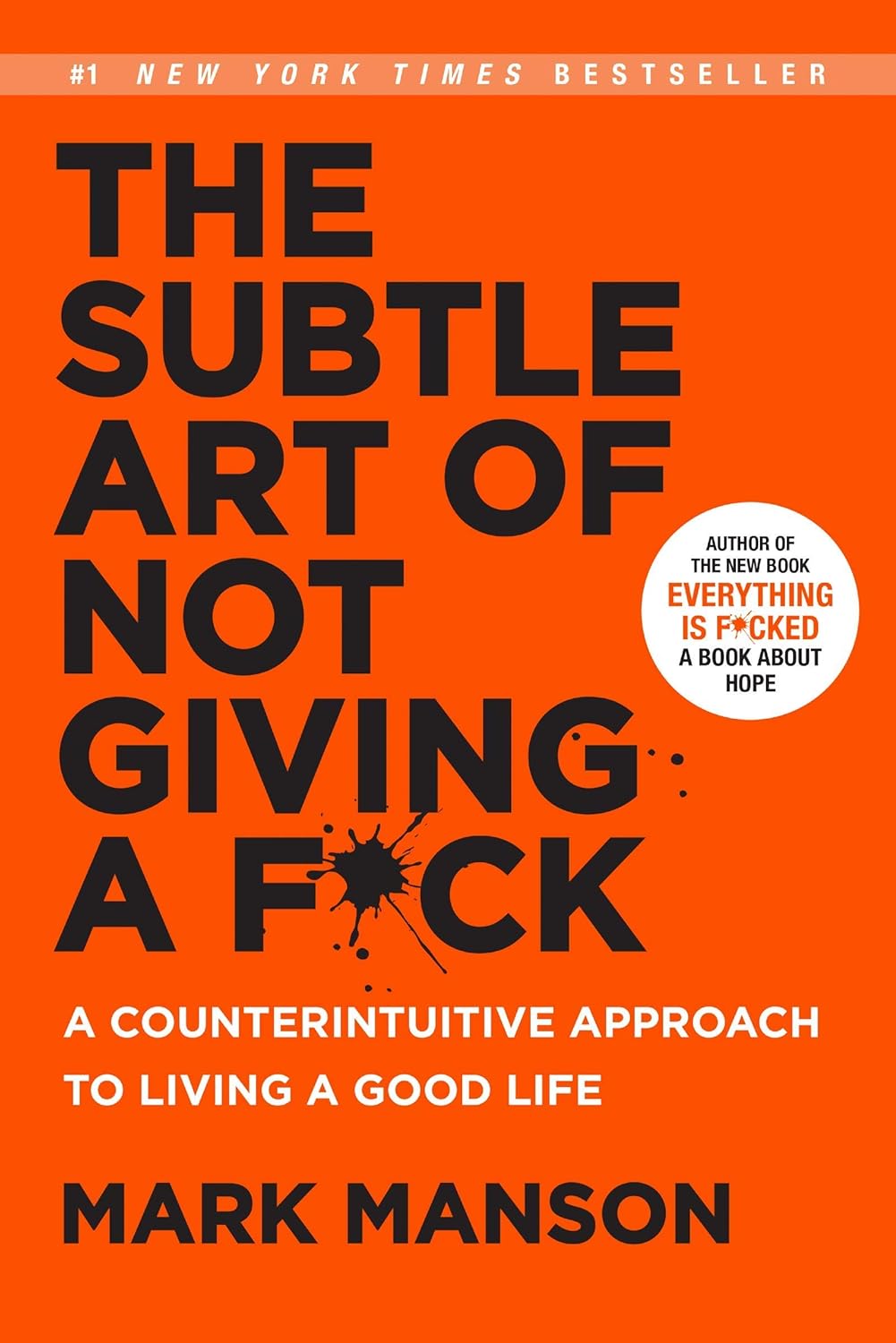
ReadSprintBooksThe Subtle Art of Not Giving a F*ckThe Subtle Art of Not Giving a F*ck Takeaways and Key Lessons
The Subtle Art of Not Giving a F*ck
The Subtle Art of Not Giving a F*ck Takeaways and Key Lessons

The Subtle Art of Not Giving a F*ck Takeaways and Key Lessons

by Mark Manson

Explore the main takeaways from The Subtle Art of Not Giving a F*ck by Mark Manson, plus related books, quiz prompts, and retention-focused review paths.

The strongest ideas in The Subtle Art of Not Giving a F*ck are easier to keep when they are compressed into a short list you can revisit. This page surfaces the takeaways most worth remembering and applying.

Built for retention

ReadSprint combines concise summaries, quizzes, active recall, and related reading paths so the useful part of the book is easier to keep.

Open full summary

9

Chapter summaries

5

Quiz questions

12

Key takeaways

1

Related books

Takeaways people can pass on

These cards are tuned for social discoverability: one clean idea, one strong visual treatment, and one tap to share on mobile.

Share this takeaway

The Subtle Art of Not Giving a F*ck

by Mark Manson

Embracing struggles leads to growth.

Turn the useful part of the book into something worth passing on.

ReadSprint
Takeaway 1

Embracing struggles leads to growth.

Post to X

Native share opens first on mobile, with copy-link fallback when it is unavailable.

Open full summary
Share this takeaway

The Subtle Art of Not Giving a F*ck

by Mark Manson

The pursuit of happiness can be counterproductive.

Turn the useful part of the book into something worth passing on.

ReadSprint
Takeaway 2

The pursuit of happiness can be counterproductive.

Post to X

Native share opens first on mobile, with copy-link fallback when it is unavailable.

Open full summary
Share this takeaway

The Subtle Art of Not Giving a F*ck

by Mark Manson

Accepting limitations is crucial for self

Turn the useful part of the book into something worth passing on.

ReadSprint
Takeaway 3

Accepting limitations is crucial for self

Post to X

Native share opens first on mobile, with copy-link fallback when it is unavailable.

Open full summary
Share this takeaway

The Subtle Art of Not Giving a F*ck

by Mark Manson

improvement.

Turn the useful part of the book into something worth passing on.

ReadSprint
Takeaway 4

improvement.

Post to X

Native share opens first on mobile, with copy-link fallback when it is unavailable.

Open full summary
Share this takeaway

The Subtle Art of Not Giving a F*ck

by Mark Manson

Focus on what truly matters in life.

Turn the useful part of the book into something worth passing on.

ReadSprint
Takeaway 5

Focus on what truly matters in life.

Post to X

Native share opens first on mobile, with copy-link fallback when it is unavailable.

Open full summary
Share this takeaway

The Subtle Art of Not Giving a F*ck

by Mark Manson

Focus on what you can control and accept what you cannot.

Turn the useful part of the book into something worth passing on.

ReadSprint
Takeaway 6

Focus on what you can control and accept what you cannot.

Post to X

Native share opens first on mobile, with copy-link fallback when it is unavailable.

Open full summary
Share this takeaway

The Subtle Art of Not Giving a F*ck

by Mark Manson

The theme of acceptance is central to this chapter, emphasizing that acknowledging our flaws can lead to a more fulfilling life. It sets the tone for the book's counterintuitive approach to self-help.

Turn the useful part of the book into something worth passing on.

ReadSprint
Takeaway 7

The theme of acceptance is central to this chapter, emphasizing that acknowledging our flaws can lead to a more fulfilling life. It sets the tone for the book's counterintuitive approach to self-help.

Post to X

Native share opens first on mobile, with copy-link fallback when it is unavailable.

Open full summary
Share this takeaway

The Subtle Art of Not Giving a F*ck

by Mark Manson

This chapter introduces the idea that trying too hard to be positive can lead to negative outcomes. Manson argues that accepting our limitations and struggles is essential for personal growth.

Turn the useful part of the book into something worth passing on.

ReadSprint
Takeaway 8

This chapter introduces the idea that trying too hard to be positive can lead to negative outcomes. Manson argues that accepting our limitations and struggles is essential for personal growth.

Post to X

Native share opens first on mobile, with copy-link fallback when it is unavailable.

Open full summary
Share this takeaway

The Subtle Art of Not Giving a F*ck

by Mark Manson

Happiness is a byproduct of problem

Turn the useful part of the book into something worth passing on.

ReadSprint
Takeaway 9

Happiness is a byproduct of problem

Post to X

Native share opens first on mobile, with copy-link fallback when it is unavailable.

Open full summary
Share this takeaway

The Subtle Art of Not Giving a F*ck

by Mark Manson

solving.

Turn the useful part of the book into something worth passing on.

ReadSprint
Takeaway 10

solving.

Post to X

Native share opens first on mobile, with copy-link fallback when it is unavailable.

Open full summary
Share this takeaway

The Subtle Art of Not Giving a F*ck

by Mark Manson

Choose your problems wisely.

Turn the useful part of the book into something worth passing on.

ReadSprint
Takeaway 11

Choose your problems wisely.

Post to X

Native share opens first on mobile, with copy-link fallback when it is unavailable.

Open full summary
Share this takeaway

The Subtle Art of Not Giving a F*ck

by Mark Manson

Avoiding problems leads to dissatisfaction.

Turn the useful part of the book into something worth passing on.

ReadSprint
Takeaway 12

Avoiding problems leads to dissatisfaction.

Post to X

Native share opens first on mobile, with copy-link fallback when it is unavailable.

Open full summary

Quiz checkpoints

Question 1

What is the main theme of Chapter 1?

Question 2

What does Manson say about happiness in Chapter 2?

Question 3

What does Chapter 3 argue against?

Practice retrieval

Key concepts

Don't Try

The theme of acceptance is central to this chapter, emphasizing that acknowledging our flaws can lead to a more fulfilling life. It sets the tone for the book's counterintuitive approach to self-help.

Happiness Comes from Solving Problems

This chapter reinforces the idea that happiness is not a destination but a process. It aligns with the book's overall message of facing life's challenges head-on.

You Are Not Special

The theme of humility is prevalent, encouraging readers to let go of unrealistic expectations. This chapter contributes to the book's critique of modern self-esteem culture.

Open concept map

Related books

The closest book-to-book matches based on topic overlap, author proximity, and learning intent.

Similar themes and topic pages

Use topic hubs and category pages to keep reading depth aligned with what this book is actually about.

Turn Reading Into Recall

Keep The Subtle Art of Not Giving a F*ck review-ready instead of letting it fade.

This page is strongest when it becomes part of a review habit: save the summary, revisit the key takeaways, and use recall prompts before the next meeting, study block, or decision.

Save one strong takeaway instead of over-highlighting.
Use the questions page to test what actually stuck.
Return when the book becomes relevant again, not just when motivation is high.
See pricing
Get Book Review Notes

Get practical notes on remembering and reusing ideas from nonfiction books without building an overly heavy note system.

Retention workflow

Turn this page into a repeatable study loop

Move from summary to takeaways, test yourself with questions, revisit the concept map, and then continue into related books. That keeps The Subtle Art of Not Giving a F*ckconnected instead of turning into a one-time skim.

Frequently asked questions

What are the most important takeaways from The Subtle Art of Not Giving a F*ck?

The takeaways on this page are selected from the summary and chapter breakdowns to surface the ideas most worth revisiting, applying, and testing in real life.

How can I remember these takeaways longer?

Turn the strongest takeaway into a recall question, revisit it after a few days, and connect it to one concrete action or decision.

Where do these takeaways connect to other books?

Use the related-book and related-topic links to find books that reinforce the same ideas from a different angle.