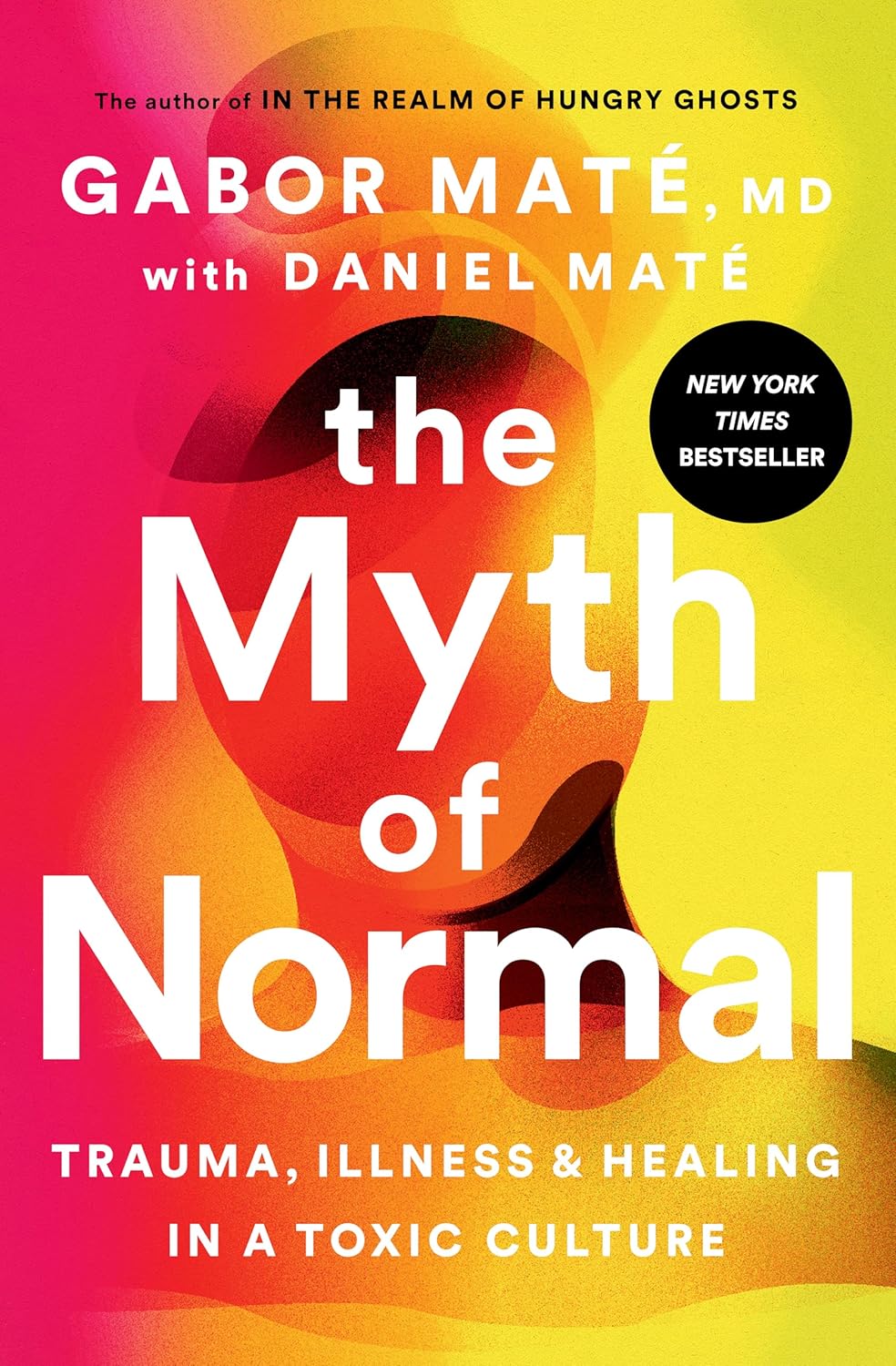
Book overview
The Introduction frames the book's central argument: modern Western societies treat many stress- and trauma-related illnesses as individual pathologies rather than consequences of a toxic culture. It outlines the author's perspective linking childhood adversity, social disconnection, and present-day chronic disease in a concise overview.
This page is built to be a compact learning hub for The Myth of Normal. You can move from the high-level summary into takeaways, quiz prompts, chapter review, and related books without breaking the reading flow.
Best takeaways to keep
Society normalizes patterns of stress and emotional suppression that contribute to illness.
Medical and psychological systems often separate mind and body, obscuring root causes.
Early relational wounds have lifelong effects on physiology and behavior.
Start assessing health problems with attention to life history, relationships, and social context.
The introduction situates the reader to view illness through a biopsychosocial lens, emphasizing cultural drivers of disease that are relevant to clinicians, patients, and policymakers. It reframes personal suffering as often socially mediated rather than purely individual.
The Introduction frames the book's central argument: modern Western societies treat many stress- and trauma-related illnesses as individual pathologies rather than consequences of a toxic culture. It outlines the author's perspective linking childhood adversity, social disconnection, and present-day chronic disease in a concise overview.
Retrieval practice
What is the main focus of 'The Myth of Normal'?
How does childhood trauma affect adult health according to the book?
What role does nutrition play in health as discussed in the book?
What is emphasized as essential for recovery in the book?
Quiz preview
What is the main focus of 'The Myth of Normal'?
- Cultural norms and health
- Historical perspectives on illness
- Personal anecdotes
How does childhood trauma affect adult health according to the book?
- It has no effect
- It can lead to chronic health issues
- It only affects mental health
What role does nutrition play in health as discussed in the book?
- It is irrelevant
- It only affects physical health
- It influences both physical and mental well-being
What is emphasized as essential for recovery in the book?
- Continuous work
- Rest and recovery
- Social isolation
Chapter map
Introduction
The Introduction frames the book's central argument: modern Western societies treat many stress- and trauma-related illnesses as individual pathologies rather than consequences of a toxic culture. It outlines the author's perspective linking childhood adversity, social disconnection, and present-day chronic disease in a concise overview.
Chapter 1: The Myth of Normal
This chapter defines the "myth of normal" as the assumption that current social norms and lifestyles are healthy or inevitable. It argues that what is treated as normal often hides widespread dysfunction stemming from disconnection, inequality, and chronic stress.
Chapter 2: The Impact of Trauma
Chapter 2 explores how trauma—broadly defined to include neglect and relational wounding—reshapes brain, immune, and stress-response systems across the lifespan. It emphasizes that trauma's effects are physiological as well as psychological and often underlie chronic illness.
Chapter 3: The Role of Stress
Chapter 3 examines how chronic stress, especially when experienced without sufficient support, drives disease processes. It distinguishes adaptive short-term stress responses from damaging prolonged activation of the stress system.
Chapter 4: The Body Keeps the Score
This chapter argues that the body retains imprints of traumatic and stressful experiences, manifesting as somatic symptoms and chronic illness. It underscores how memory, emotion, and physiology are entwined rather than separate domains.
Next best step
Move next into the questions page if you want better retention, or into the takeaways page if you want the shortest useful review loop for this book.