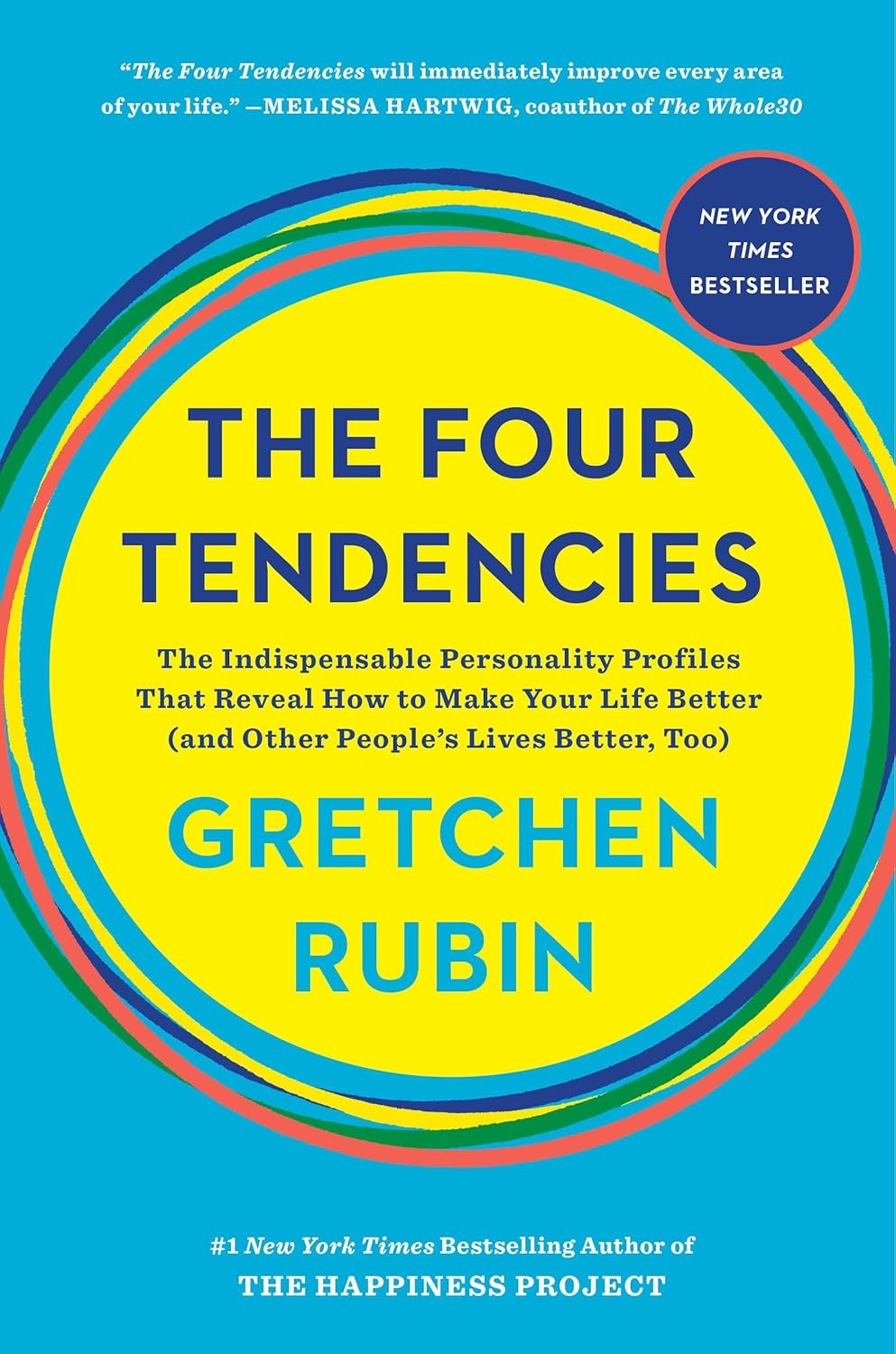
The Four Tendencies: ReadSprint summary highlights
ReadSprint paraphrases for review. These highlights are not verbatim quotations from the book or its author. Check the original edition for exact wording and context.
The Four Tendencies
by Gretchen Rubin
The Four Tendencies framework explains how people respond to inner and outer expectations, organizing behavior into four profiles that predict motivation and habits.
ReadSprint paraphrase · Not a quotation from the author.
The Four Tendencies framework explains how people respond to inner and outer expectations, organizing behavior into four profiles that predict motivation and habits.
The framework divides people into Upholders, Questioners, Obligers, and Rebels based on responses to expectations.
Share with the ReadSprint source so others can read the context.
The Four Tendencies
by Gretchen Rubin
Understanding these tendencies helps improve communication, productivity, relationships, and self-understanding.
ReadSprint paraphrase · Not a quotation from the author.
Understanding these tendencies helps improve communication, productivity, relationships, and self-understanding.
Tendencies predict how people form habits and respond to rules, requests, and deadlines.
Share with the ReadSprint source so others can read the context.
The Four Tendencies
by Gretchen Rubin
This chapter presents questions and scenarios to help readers identify which of the Four Tendencies they are, emphasizing patterns in responding to outer versus inner expectations.
ReadSprint paraphrase · Not a quotation from the author.
This chapter presents questions and scenarios to help readers identify which of the Four Tendencies they are, emphasizing patterns in responding to outer versus inner expectations.
Knowing tendencies helps tailor strategies for motivation, scheduling, and accountability.
Share with the ReadSprint source so others can read the context.
The Four Tendencies
by Gretchen Rubin
It offers practical examples, quizzes, and reflections to distinguish similar tendencies.
ReadSprint paraphrase · Not a quotation from the author.
It offers practical examples, quizzes, and reflections to distinguish similar tendencies.
The framework is descriptive and pragmatic rather than moralizing.
Share with the ReadSprint source so others can read the context.
The Four Tendencies
by Gretchen Rubin
Upholders meet both outer and inner expectations readily, valuing rules, plans, and personal standards.
ReadSprint paraphrase · Not a quotation from the author.
Upholders meet both outer and inner expectations readily, valuing rules, plans, and personal standards.
Use the Four Tendencies as a simple diagnostic to tailor requests and routines to someone’s motivational profile.
Share with the ReadSprint source so others can read the context.
The Four Tendencies
by Gretchen Rubin
The chapter explores strengths (reliability, discipline) and pitfalls (rigidity, overcommitment), and suggests how upholders can balance flexibility and self-care.
ReadSprint paraphrase · Not a quotation from the author.
The chapter explores strengths (reliability, discipline) and pitfalls (rigidity, overcommitment), and suggests how upholders can balance flexibility and self-care.
Recognizing differing motivational dynamics reveals why the same approach works for some people and fails for others, making it useful in homes, workplaces, and personal planning. The concept reframes common conflicts as mismatches of expectation response rather than willful flaws.
Share with the ReadSprint source so others can read the context.
The Four Tendencies
by Gretchen Rubin
Questioners meet expectations only if they make sense to them; they turn outer expectations into inner ones by demanding justification.
ReadSprint paraphrase · Not a quotation from the author.
Questioners meet expectations only if they make sense to them; they turn outer expectations into inner ones by demanding justification.
The Four Tendencies framework explains how people respond to inner and outer expectations, organizing behavior into four profiles that predict motivation and habits. Understanding these tendencies helps improve communication, productivity, relationships, and self-understanding.
Share with the ReadSprint source so others can read the context.
The Four Tendencies
by Gretchen Rubin
The chapter details how their need for reason leads to efficiency and skepticism, but can also cause analysis paralysis and strained relationships.
ReadSprint paraphrase · Not a quotation from the author.
The chapter details how their need for reason leads to efficiency and skepticism, but can also cause analysis paralysis and strained relationships.
Ask whether you readily meet outer expectations, inner expectations, both, or neither to locate your tendency.
Share with the ReadSprint source so others can read the context.
The Four Tendencies
by Gretchen Rubin
Obligers readily meet outer expectations but struggle to meet inner expectations, thriving with external accountability yet often neglecting their own priorities.
ReadSprint paraphrase · Not a quotation from the author.
Obligers readily meet outer expectations but struggle to meet inner expectations, thriving with external accountability yet often neglecting their own priorities.
Situational examples (deadlines, New Year’s resolutions, requests from others) clarify differences between tendencies.
Share with the ReadSprint source so others can read the context.
The Four Tendencies
by Gretchen Rubin
The chapter examines how obligers can harness accountability and protect against resentment and burnout.
ReadSprint paraphrase · Not a quotation from the author.
The chapter examines how obligers can harness accountability and protect against resentment and burnout.
Short quizzes and diagnostic questions are provided to increase certainty about your tendency.
Share with the ReadSprint source so others can read the context.