Takeaways people can pass on
These cards are tuned for social discoverability: one clean idea, one strong visual treatment, and one tap to share on mobile.
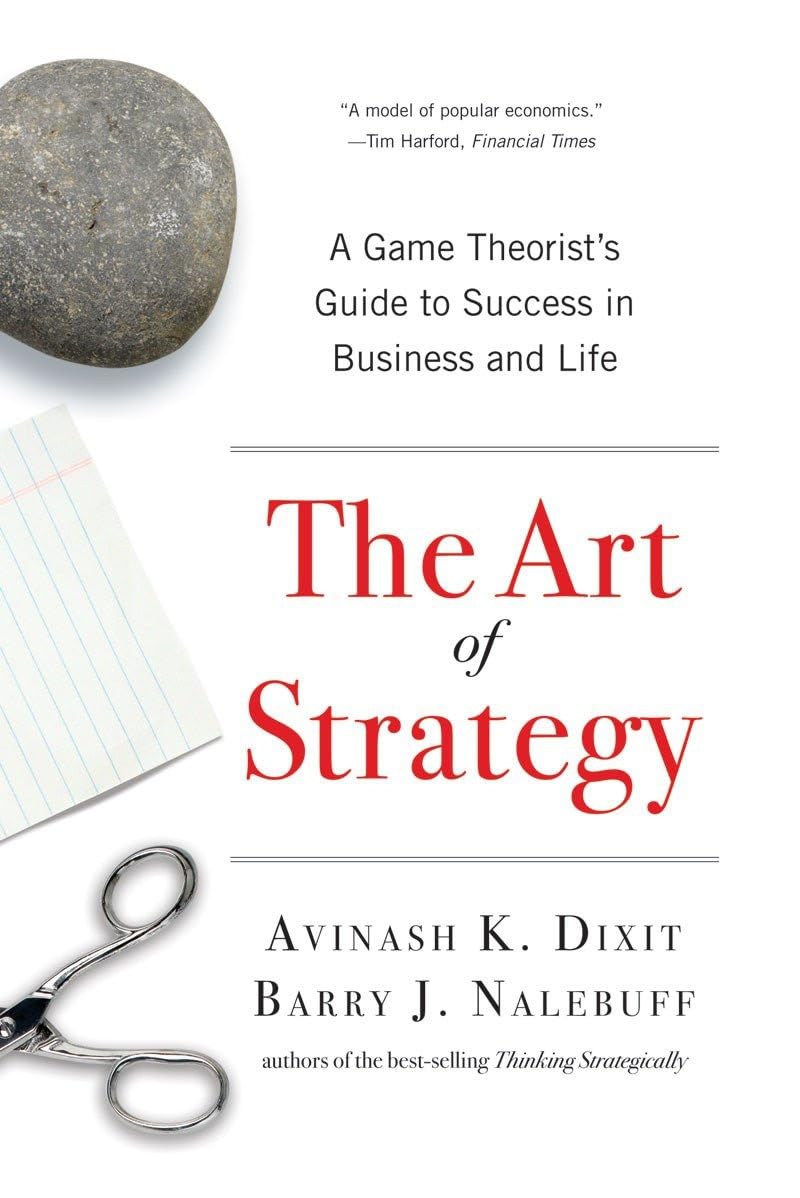
The Art of Strategy: A Game Theorist's Guide to Success in Business and Life
by Avinash K. Dixit and Barry J. Nalebuff
Strategy depends on interdependent choices, not just individual payoffs.
Turn the useful part of the book into something worth passing on.
Strategy depends on interdependent choices, not just individual payoffs.
Share with the ReadSprint source so others can read the context.
The Art of Strategy: A Game Theorist's Guide to Success in Business and Life
by Avinash K. Dixit and Barry J. Nalebuff
Predicting others' responses is essential to choosing effective actions.
Turn the useful part of the book into something worth passing on.
Predicting others' responses is essential to choosing effective actions.
Share with the ReadSprint source so others can read the context.
The Art of Strategy: A Game Theorist's Guide to Success in Business and Life
by Avinash K. Dixit and Barry J. Nalebuff
Games provide models to formalize conflicts and cooperation.
Turn the useful part of the book into something worth passing on.
Games provide models to formalize conflicts and cooperation.
Share with the ReadSprint source so others can read the context.
The Art of Strategy: A Game Theorist's Guide to Success in Business and Life
by Avinash K. Dixit and Barry J. Nalebuff
Simple examples illustrate common strategic patterns (dominance, coordination, conflict).
Turn the useful part of the book into something worth passing on.
Simple examples illustrate common strategic patterns (dominance, coordination, conflict).
Share with the ReadSprint source so others can read the context.
The Art of Strategy: A Game Theorist's Guide to Success in Business and Life
by Avinash K. Dixit and Barry J. Nalebuff
Begin by identifying the other players, their incentives, and how your actions will change their choices.
Turn the useful part of the book into something worth passing on.
Begin by identifying the other players, their incentives, and how your actions will change their choices.
Share with the ReadSprint source so others can read the context.
The Art of Strategy: A Game Theorist's Guide to Success in Business and Life
by Avinash K. Dixit and Barry J. Nalebuff
The introduction frames game theory as a practical lens for everyday strategic problems from markets to negotiations. It stresses intuition and structured reasoning rather than complex math.
Turn the useful part of the book into something worth passing on.
The introduction frames game theory as a practical lens for everyday strategic problems from markets to negotiations. It stresses intuition and structured reasoning rather than complex math.
Share with the ReadSprint source so others can read the context.
The Art of Strategy: A Game Theorist's Guide to Success in Business and Life
by Avinash K. Dixit and Barry J. Nalebuff
Thinking strategically means anticipating others' decisions and incorporating their incentives into your planning. It introduces game theory as a toolkit to analyze interactive decision problems in business and life, emphasizing strategic…
Turn the useful part of the book into something worth passing on.
Thinking strategically means anticipating others' decisions and incorporating their incentives into your planning. It introduces game theory as a toolkit to analyze interactive decision problems in business and life, emphasizing strategic thinking over solitary optimization.
Share with the ReadSprint source so others can read the context.
The Art of Strategy: A Game Theorist's Guide to Success in Business and Life
by Avinash K. Dixit and Barry J. Nalebuff
A game is specified by players, strategy sets, and payoff functions.
Turn the useful part of the book into something worth passing on.
A game is specified by players, strategy sets, and payoff functions.
Share with the ReadSprint source so others can read the context.
The Art of Strategy: A Game Theorist's Guide to Success in Business and Life
by Avinash K. Dixit and Barry J. Nalebuff
Dominant strategies win regardless of opponents' moves; dominated strategies can be discarded.
Turn the useful part of the book into something worth passing on.
Dominant strategies win regardless of opponents' moves; dominated strategies can be discarded.
Share with the ReadSprint source so others can read the context.
The Art of Strategy: A Game Theorist's Guide to Success in Business and Life
by Avinash K. Dixit and Barry J. Nalebuff
Normal
Turn the useful part of the book into something worth passing on.
The Art of Strategy: A Game Theorist's Guide to Success in Business and Life
by Avinash K. Dixit and Barry J. Nalebuff
form (matrix) and extensive-form (tree) representations suit different problems.
Turn the useful part of the book into something worth passing on.
form (matrix) and extensive-form (tree) representations suit different problems.
Share with the ReadSprint source so others can read the context.
The Art of Strategy: A Game Theorist's Guide to Success in Business and Life
by Avinash K. Dixit and Barry J. Nalebuff
Payoffs capture rankings of outcomes and guide strategic choice.
Turn the useful part of the book into something worth passing on.
Payoffs capture rankings of outcomes and guide strategic choice.
Share with the ReadSprint source so others can read the context.