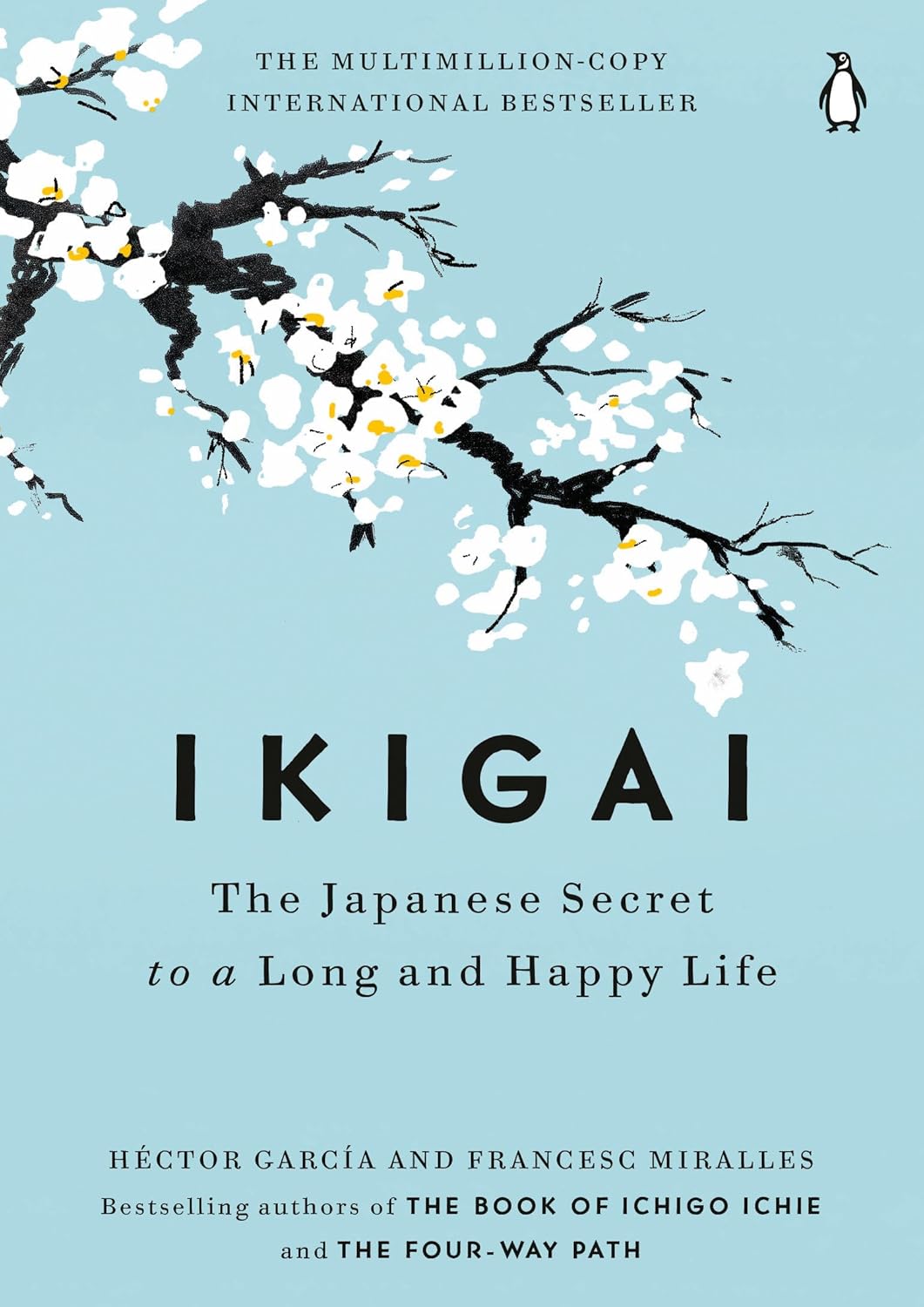
Book overview
Ikigai introduces the central Japanese concept of ikigai — a reason for being that blends passion, mission, vocation, and profession — and frames it as a driver of longevity and life satisfaction. The authors outline their exploration of Okinawa and conversations with centenarians and experts to uncover practical principles that support long, meaningful lives.
This page is built to be a compact learning hub for Ikigai: The Japanese Secret to a Long and Happy Life. You can move from the high-level summary into takeaways, quiz prompts, chapter review, and related books without breaking the reading flow.
Best takeaways to keep
Ikigai is the intersection of what you love, what you are good at, what the world needs, and what you can be paid for.
The book draws on Okinawan longevity, interviews with elders, and psychological research to link purpose with well-being.
Small daily habits, community ties, and a calm, purposeful lifestyle contribute to life satisfaction and longevity.
Begin reflecting on what gives your life meaning and notice small habits you can adopt to align daily life with that purpose.
The introduction sets the stage by connecting ancient cultural wisdom with modern psychology to show how purpose and lifestyle shape health and happiness. It positions ikigai as both an individual pursuit and a social practice relevant to readers seeking practical ways to improve life quality.
Ikigai introduces the central Japanese concept of ikigai — a reason for being that blends passion, mission, vocation, and profession — and frames it as a driver of longevity and life satisfaction. The authors outline their exploration of Okinawa and conversations with centenarians and experts to uncover practical principles that support long, meaningful lives.
Retrieval practice
What does Ikigai translate to in English?
Which of the following is NOT one of the four elements of Ikigai?
What is a key benefit of community according to the book?
What practice is emphasized for enhancing mental clarity?
Quiz preview
What does Ikigai translate to in English?
- A reason for being
- A way of life
- A form of meditation
Which of the following is NOT one of the four elements of Ikigai?
- What you love
- What you are good at
- What you can be paid for
What is a key benefit of community according to the book?
- Increased wealth
- Better health
- Stronger relationships
What practice is emphasized for enhancing mental clarity?
- Yoga
- Mindfulness
- Exercise
Chapter map
Introduction
Ikigai introduces the central Japanese concept of ikigai — a reason for being that blends passion, mission, vocation, and profession — and frames it as a driver of longevity and life satisfaction. The authors outline their exploration of Okinawa and conversations with centenarians and experts to uncover practical principles that support long, meaningful lives.
Chapter 1: What is Ikigai?
This chapter defines ikigai more precisely and distinguishes it from simpler notions like happiness or career success, emphasizing a lifelong, evolving sense of purpose. It explains ikigai as an enduring motivation that can sustain effort, resilience, and joy across life stages.
Chapter 2: The Art of Staying Young While Growing Old
This chapter explores attitudes and practices that help people maintain vitality and curiosity into old age, drawing on examples from Okinawan elders who stay active and engaged. It emphasizes continual learning, adaptable routines, and positive outlooks as keys to psychological and sometimes physical youthfulness.
Chapter 3: The Importance of Community
Community and strong social bonds are presented as central pillars of long, happy lives in Okinawa and elsewhere; the chapter highlights the role of mutual support and shared rituals. The authors show how belonging, interdependence, and active participation in community life provide emotional resources and a practical safety net.
Chapter 4: How to Find Your Ikigai
This chapter offers practical exercises and reflective questions to help readers identify their own ikigai, recommending small experiments rather than dramatic life overhauls. It encourages combining self-knowledge with action: trying activities, observing what energizes you, and refining your focus over time.
Next best step
Move next into the questions page if you want better retention, or into the takeaways page if you want the shortest useful review loop for this book.