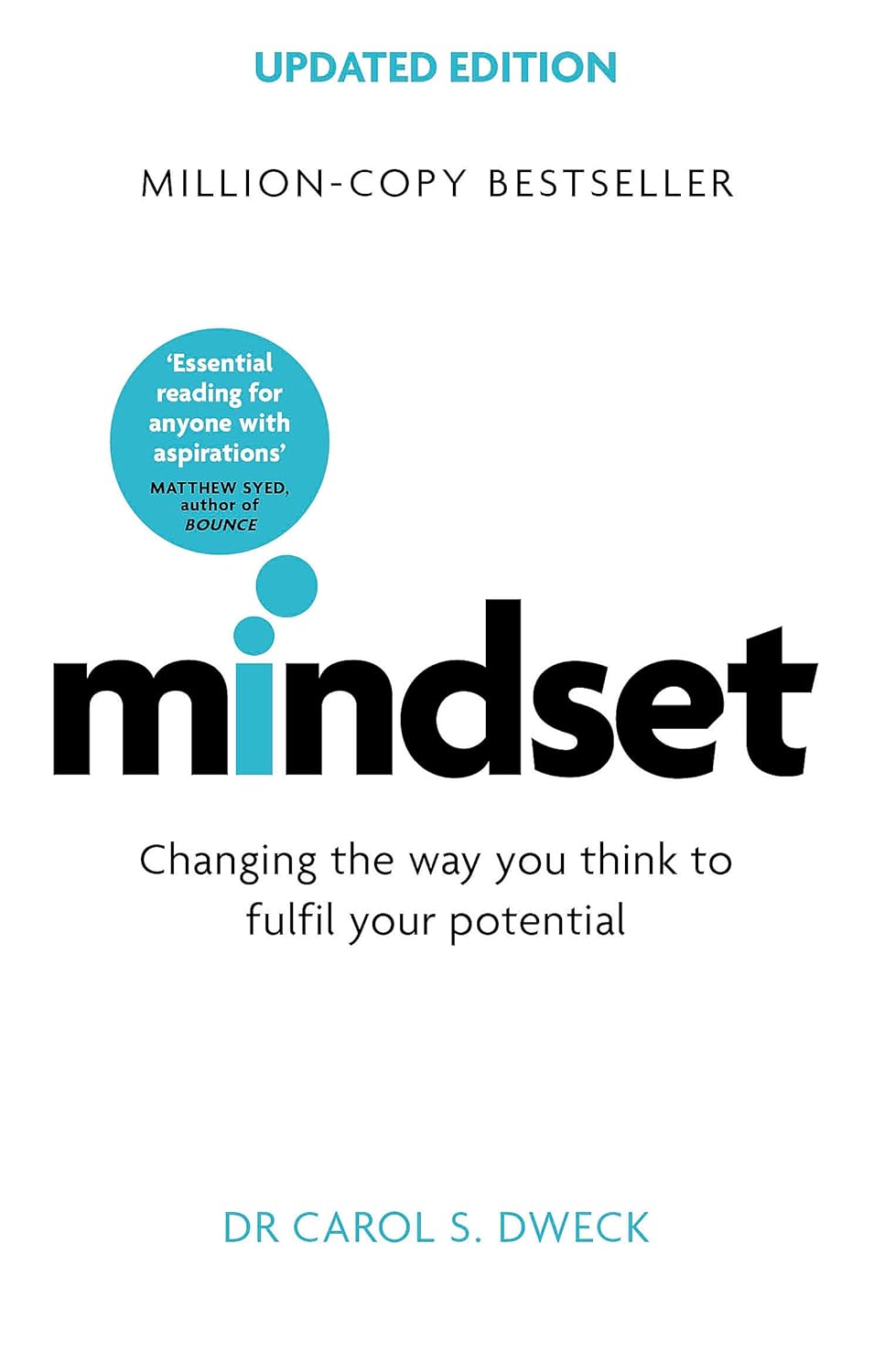
The Mindset
Summary:
Carol Dweck introduces two fundamental mindsets people hold about abilities: the fixed mindset (the belief that traits like intelligence are static) and the growth mindset (the belief that abilities can be developed through effort and strategy). She shows how these implicit theories shape reactions to challenges, effort, setbacks, and success across life domains.
Key points:
- Fixed mindset: people avoid challenges, give up easily, and see effort as pointless.
- Growth mindset: people embrace challenges, persist after setbacks, and view effort as a path to mastery.
- Mindsets influence goals (prove vs. improve), responses to feedback, and ultimately achievement.
- Early messages and environments shape which mindset predominates.
Themes & relevance:
This chapter sets the conceptual framework linking beliefs about ability to behavior and outcomes, making it relevant to education, work, sports, and relationships. Understanding the two mindsets explains many everyday differences in resilience and learning.
Takeaway / How to use:
Notice whether you seek to prove yourself or to learn, and consciously adopt a learning orientation.
Key points
- Fixed mindset: people avoid challenges, give up easily, and see effort as pointless.
- Growth mindset: people embrace challenges, persist after setbacks, and view effort as a path to mastery.
- Mindsets influence goals (prove vs. improve), responses to feedback, and ultimately achievement.
- Early messages and environments shape which mindset predominates.
Inside the Mindsets
Summary:
Dweck examines how fixed and growth mindsets operate internally: how people interpret effort, failure, praise, and criticism. She explores the mental habits, goals, and self-talk that maintain each mindset and how they produce very different patterns of behavior.
Key points:
- Goals differ: fixed
- minded people pursue performance goals; growth-minded people pursue learning goals.
- Interpretation of setbacks is key: fixed mindset treats failure as a statement of ability; growth mindset treats it as information for improvement.
- Praise and feedback are filtered through mindset, changing motivation and subsequent choices.
- Mindsets affect persistence, creativity, and willingness to take risks.
Themes & relevance:
This chapter clarifies the psychological mechanisms by which beliefs shape action, making it directly applicable for self-reflection and behavior change. Recognizing these internal patterns helps target interventions.
Takeaway / How to use:
When you encounter a setback, label it as a learning opportunity and ask what strategy you can change.
Key points
- Goals differ: fixed
- minded people pursue performance goals; growth-minded people pursue learning goals.
- Interpretation of setbacks is key: fixed mindset treats failure as a statement of ability; growth mindset treats it as information for improvement.
- Praise and feedback are filtered through mindset, changing motivation and subsequent choices.
- Mindsets affect persistence, creativity, and willingness to take risks.
The Truth About Ability and Accomplishment
Summary:
Dweck challenges common myths about natural talent versus practice and presents evidence that effort, strategy, and persistence drive high achievement. She describes research and anecdotes showing that abilities can be developed and that mindset strongly predicts long-term accomplishment.
Key points:
- Effort multiplies ability; hard work and the right strategies produce expertise.
- Praising innate talent can undermine motivation and resilience, while praising process strengthens them.
- High achievers often attribute success to effort and deliberate practice rather than innate gifts.
- Mindset shapes the kinds of risks people take and how they recover from failure.
Themes & relevance:
The chapter reframes notions of giftedness and success, emphasizing controllable factors (effort, strategy) over fixed traits, which matters for education, talent development, and personal growth. It supports practices that foster persistence and intentional practice.
Takeaway / How to use:
Shift praise and self-talk toward effort, strategies, and progress rather than innate ability.
Key points
- Effort multiplies ability; hard work and the right strategies produce expertise.
- Praising innate talent can undermine motivation and resilience, while praising process strengthens them.
- High achievers often attribute success to effort and deliberate practice rather than innate gifts.
- Mindset shapes the kinds of risks people take and how they recover from failure.
Sports: The Mindset of a Champion
Summary:
Using sports as an illustration, Dweck shows how athletes and coaches with growth mindsets create cultures of improvement, learn from mistakes, and sustain peak performance. She contrasts competitors who crumble under pressure or avoid challenges with those who use setbacks to refine skills.
Key points:
- Growth
- minded athletes focus on training, feedback, and continuous improvement rather than status or fixed talent.
- Coaches’ expectations and reactions shape athletes’ responses to failure and effort.
- Mental resilience, adaptability, and a focus on process distinguish champions.
- Sports provide clear, repeatable feedback that rewards a growth approach.
Themes & relevance:
Sports provide vivid, practical examples of mindset effects under pressure, illustrating how mindset influences learning, performance, and team culture. Lessons translate to any performance domain that demands practice and resilience.
Takeaway / How to use:
Cultivate a practice-focused routine: treat setbacks as data to adjust training and strategy.
Key points
- Growth
- minded athletes focus on training, feedback, and continuous improvement rather than status or fixed talent.
- Coaches’ expectations and reactions shape athletes’ responses to failure and effort.
- Mental resilience, adaptability, and a focus on process distinguish champions.
- Sports provide clear, repeatable feedback that rewards a growth approach.
Business: Mindset and Leadership
Summary:
Dweck applies mindset theory to organizations and leadership, showing that leaders who model growth mindsets create cultures of learning, innovation, and adaptability. Conversely, fixed-mindset leadership fosters fear of failure, defensive behaviors, and short
- term success at the expense of long-term growth.
Key points:
- Leaders set the tone: their beliefs about talent shape hiring, feedback, and risk
- taking.
- Growth
- oriented organizations encourage experimentation, learning from failure, and employee development.
- Fixed
- mindset cultures penalize mistakes and promote image protection, limiting innovation.
- Mindset influences decision
- making, talent development, and organizational resilience.
Themes & relevance:
This chapter ties individual mindset to systemic performance, making it relevant to anyone in a leadership or managerial role seeking sustainable improvement and innovation. Changing organizational norms requires consistent modeling and structures that reward growth.
Takeaway / How to use:
Model learning publicly and reward effort, experimentation, and skill development in your team.
Key points
- Leaders set the tone: their beliefs about talent shape hiring, feedback, and risk
- taking.
- Growth
- oriented organizations encourage experimentation, learning from failure, and employee development.
- Fixed
- mindset cultures penalize mistakes and promote image protection, limiting innovation.
- Mindset influences decision
- making, talent development, and organizational resilience.
Relationships: Mindsets in Love
Summary:
Dweck explores how fixed and growth mindsets affect romantic and close relationships: fixed mindset partners view traits as immutable and blame or withdraw, while growth mindset partners work on problems, assume partners can change, and invest in relationship development. She shows that mindset influences conflict resolution, forgiveness, and expectations.
Key points:
- Fixed mindset in relationships leads to judgments like "you are this way," which reduce constructive problem
- solving.
- Growth mindset fosters mutual effort, constructive feedback, and belief in improvement.
- How partners interpret each other’s actions (malicious vs. mistaken) depends on mindset.
- Relationship success is linked to an orientation toward learning about and with each other.
Themes & relevance:
This chapter highlights that beliefs about personal change shape intimacy and conflict outcomes, relevant to couples, friendships, and family dynamics. A growth approach promotes repair and lasting connection.
Takeaway / How to use:
Approach relationship problems as solvable challenges you can work on together.
Key points
- Fixed mindset in relationships leads to judgments like "you are this way," which reduce constructive problem
- solving.
- Growth mindset fosters mutual effort, constructive feedback, and belief in improvement.
- How partners interpret each other’s actions (malicious vs. mistaken) depends on mindset.
- Relationship success is linked to an orientation toward learning about and with each other.
Parents, Teachers, and Coaches: Where Do Mindsets Come From?
Summary:
Dweck examines how adults transmit mindsets to children through praise, expectations, and instructional styles, and how small differences in feedback can produce very different motivational patterns. She offers guidance on fostering growth mindsets in educational and developmental settings.
Key points:
- Praise for intelligence encourages a fixed mindset; praise for effort and strategy encourages growth.
- Specific, process
- oriented feedback helps learners persist and experiment with new strategies.
- Role modeling, expectations, and the structure of challenges shape children’s beliefs about learning.
- Interventions and teacher practices can shift students toward a growth orientation.
Themes & relevance:
The chapter underscores the profound influence caregivers and educators have on developing mindsets, making it essential for anyone who teaches or mentors children and adults. Small changes in language and practice can produce big differences in motivation.
Takeaway / How to use:
Give specific, effort- and strategy
- focused feedback instead of labeling ability.
Key points
- Praise for intelligence encourages a fixed mindset; praise for effort and strategy encourages growth.
- Specific, process
- oriented feedback helps learners persist and experiment with new strategies.
- Role modeling, expectations, and the structure of challenges shape children’s beliefs about learning.
- Interventions and teacher practices can shift students toward a growth orientation.
Changing Mindsets
Summary:
Dweck lays out how people and organizations can shift from a fixed to a growth mindset through awareness, targeted interventions, and practice that changes reactions to challenges. She stresses that change is a process involving new habits, reframed self-talk, and structural supports.
Key points:
- Awareness of fixed
- mindset thoughts is the first step toward change.
- Teaching about brain plasticity and the malleability of intelligence supports mindset shifts.
- Concrete practices—reframing failure, setting learning goals, and praising process—reinforce growth habits.
- Organizational change requires aligned policies, role models, and reward systems.
Themes & relevance:
This chapter is a practical blueprint for personal and institutional transformation, showing that mindsets are not destiny but skills to be developed. It emphasizes sustained practice over one-time interventions.
Takeaway / How to use:
When you catch a fixed-mindset thought, reframe it into a growth
- oriented question about what you can learn.
Key points
- Awareness of fixed
- mindset thoughts is the first step toward change.
- Teaching about brain plasticity and the malleability of intelligence supports mindset shifts.
- Concrete practices—reframing failure, setting learning goals, and praising process—reinforce growth habits.
- Organizational change requires aligned policies, role models, and reward systems.