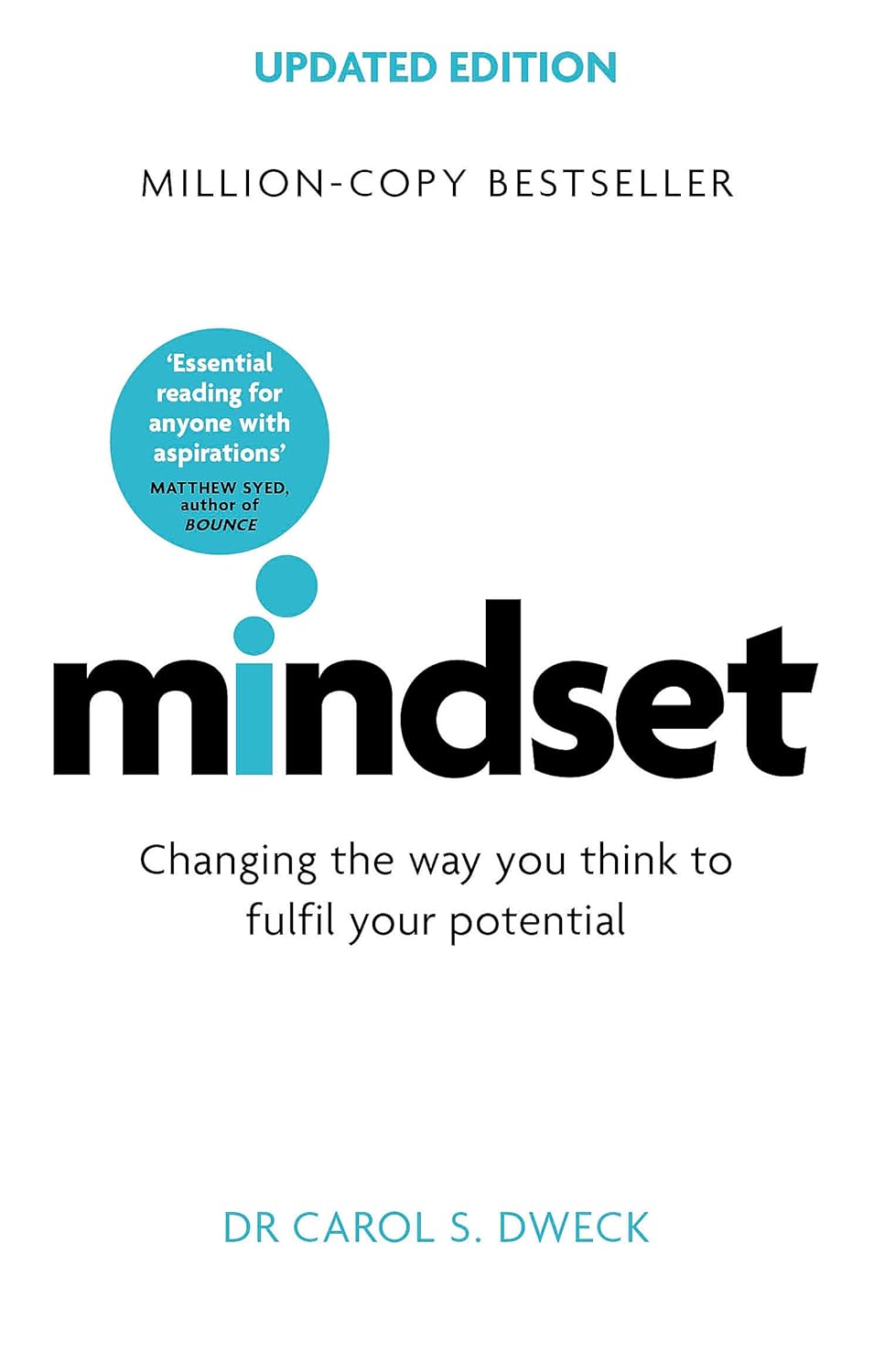
Book overview
Carol Dweck introduces two fundamental mindsets people hold about abilities: the fixed mindset (the belief that traits like intelligence are static) and the growth mindset (the belief that abilities can be developed through effort and strategy). She shows how these implicit theories shape reactions to challenges, effort, setbacks, and success across life domains.
This page is built to be a compact learning hub for Mindset. You can move from the high-level summary into takeaways, quiz prompts, chapter review, and related books without breaking the reading flow.
Best takeaways to keep
Fixed mindset: people avoid challenges, give up easily, and see effort as pointless.
Growth mindset: people embrace challenges, persist after setbacks, and view effort as a path to mastery.
Mindsets influence goals (prove vs. improve), responses to feedback, and ultimately achievement.
Early messages and environments shape which mindset predominates.
Notice whether you seek to prove yourself or to learn, and consciously adopt a learning orientation.
This chapter sets the conceptual framework linking beliefs about ability to behavior and outcomes, making it relevant to education, work, sports, and relationships. Understanding the two mindsets explains many everyday differences in resilience and learning.
Retrieval practice
What best describes the difference between a fixed mindset and a growth mindset?
According to Mindset, how do people with a fixed mindset typically interpret effort and failure?
Which type of praise is most likely to encourage a growth mindset in children?
How does a leader with a growth mindset typically affect an organization?
Quiz preview
What best describes the difference between a fixed mindset and a growth mindset?
- Fixed mindset: abilities are changeable; Growth mindset: abilities are predetermined.
- Fixed mindset: abilities are static and unchangeable; Growth mindset: abilities can be developed through effort and strategy.
- Fixed mindset: focuses on effort over results; Growth mindset: focuses on innate talent and outcomes.
According to Mindset, how do people with a fixed mindset typically interpret effort and failure?
- They see effort as the path to mastery and failure as useful feedback.
- They view effort as a sign of low ability and failure as evidence they lack talent.
- They believe effort is irrelevant and success depends only on luck.
Which type of praise is most likely to encourage a growth mindset in children?
- Praising a child’s intelligence with statements like 'You’re so smart.'
- Praising outcome only, such as 'You got an A, you’re the best.'
- Praising the child’s effort and strategies, such as 'You worked really hard and tried different methods.'
How does a leader with a growth mindset typically affect an organization?
- They create a culture of fear where mistakes are punished to maintain standards.
- They focus solely on hiring 'natural' talent and avoid training programs.
- They model learning, encourage experimentation, and build cultures of improvement and adaptability.
Chapter map
The Mindset
Carol Dweck introduces two fundamental mindsets people hold about abilities: the fixed mindset (the belief that traits like intelligence are static) and the growth mindset (the belief that abilities can be developed through effort and strategy). She shows how these implicit theories shape reactions to challenges, effort, setbacks, and success across life domains.
Inside the Mindsets
Dweck examines how fixed and growth mindsets operate internally: how people interpret effort, failure, praise, and criticism. She explores the mental habits, goals, and self-talk that maintain each mindset and how they produce very different patterns of behavior.
The Truth About Ability and Accomplishment
Dweck challenges common myths about natural talent versus practice and presents evidence that effort, strategy, and persistence drive high achievement. She describes research and anecdotes showing that abilities can be developed and that mindset strongly predicts long-term accomplishment.
Sports: The Mindset of a Champion
Using sports as an illustration, Dweck shows how athletes and coaches with growth mindsets create cultures of improvement, learn from mistakes, and sustain peak performance. She contrasts competitors who crumble under pressure or avoid challenges with those who use setbacks to refine skills.
Business: Mindset and Leadership
Dweck applies mindset theory to organizations and leadership, showing that leaders who model growth mindsets create cultures of learning, innovation, and adaptability. Conversely, fixed-mindset leadership fosters fear of failure, defensive behaviors, and short term success at the expense of long-term growth.
Next best step
Move next into the questions page if you want better retention, or into the takeaways page if you want the shortest useful review loop for this book.