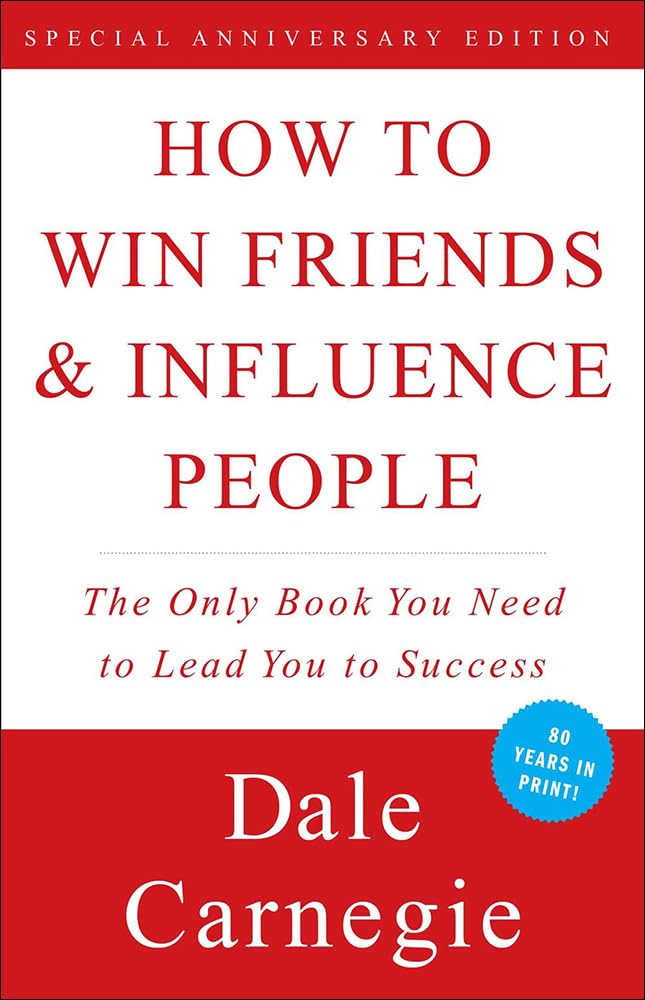
How to Win Friends and Influence People: ReadSprint summary highlights
ReadSprint paraphrases for review. These highlights are not verbatim quotations from the book or its author. Check the original edition for exact wording and context.
How to Win Friends and Influence People
by Dale Carnegie
Dale Carnegie presents three core principles for dealing with people effectively: avoid criticism, give sincere appreciation, and arouse an eager want in others.
ReadSprint paraphrase · Not a quotation from the author.
Dale Carnegie presents three core principles for dealing with people effectively: avoid criticism, give sincere appreciation, and arouse an eager want in others.
Show appreciation.
Share with the ReadSprint source so others can read the context.
How to Win Friends and Influence People
by Dale Carnegie
These fundamentals shift relationships from adversarial to cooperative by focusing on respect and motivating others toward mutual goals.
ReadSprint paraphrase · Not a quotation from the author.
These fundamentals shift relationships from adversarial to cooperative by focusing on respect and motivating others toward mutual goals.
Smile genuinely.
Share with the ReadSprint source so others can read the context.
How to Win Friends and Influence People
by Dale Carnegie
Show appreciation.
ReadSprint paraphrase · Not a quotation from the author.
Show appreciation.
Respect their opinions.
Share with the ReadSprint source so others can read the context.
How to Win Friends and Influence People
by Dale Carnegie
Smile genuinely.
ReadSprint paraphrase · Not a quotation from the author.
Smile genuinely.
With praise first.
Share with the ReadSprint source so others can read the context.
How to Win Friends and Influence People
by Dale Carnegie
Respect their opinions.
ReadSprint paraphrase · Not a quotation from the author.
Respect their opinions.
Personalize your message.
Share with the ReadSprint source so others can read the context.
How to Win Friends and Influence People
by Dale Carnegie
With praise first.
ReadSprint paraphrase · Not a quotation from the author.
With praise first.
Dale Carnegie presents three core principles for dealing with people effectively: avoid criticism, give sincere appreciation, and arouse an eager want in others. These fundamentals shift relationships from adversarial to cooperative by focusing on respect and motivating others toward mutual goals.
Share with the ReadSprint source so others can read the context.
Use these highlights to review the book
Which highlight from How to Win Friends and Influence People changes how you would explain the book to someone else?
Which lesson here is worth testing in a real decision this week?
Which highlight feels memorable but less actionable once you slow down and examine it?