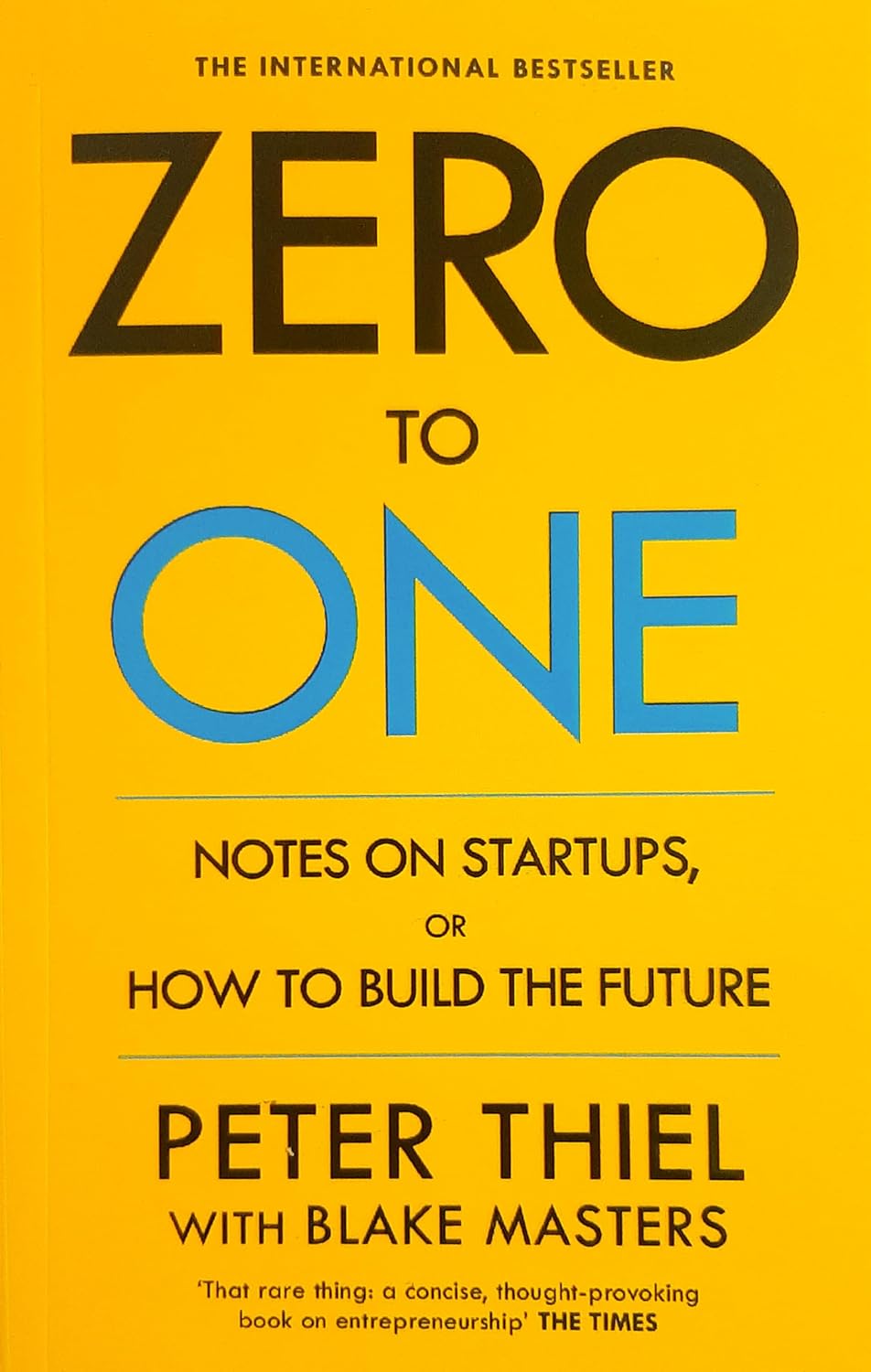
Zero to One: ReadSprint summary highlights
ReadSprint paraphrases for review. These highlights are not verbatim quotations from the book or its author. Check the original edition for exact wording and context.
Zero to One
by Peter Thiel with Blake Masters
Peter Thiel argues that the future is not inevitable and must be actively created; progress comes from technology that takes us from "zero to one" rather than incremental "one to n" improvements.
ReadSprint paraphrase · Not a quotation from the author.
Peter Thiel argues that the future is not inevitable and must be actively created; progress comes from technology that takes us from "zero to one" rather than incremental "one to n" improvements.
Innovation over imitation.
Share with the ReadSprint source so others can read the context.
Zero to One
by Peter Thiel with Blake Masters
He emphasizes that doing new things requires bold, contrarian thinking and deliberate planning to build lasting value.
ReadSprint paraphrase · Not a quotation from the author.
He emphasizes that doing new things requires bold, contrarian thinking and deliberate planning to build lasting value.
They can drive progress.
Share with the ReadSprint source so others can read the context.
Zero to One
by Peter Thiel with Blake Masters
Innovation over imitation.
ReadSprint paraphrase · Not a quotation from the author.
Innovation over imitation.
Learning from early entrants.
Share with the ReadSprint source so others can read the context.
Zero to One
by Peter Thiel with Blake Masters
They can drive progress.
ReadSprint paraphrase · Not a quotation from the author.
They can drive progress.
It can enhance performance.
Share with the ReadSprint source so others can read the context.
Zero to One
by Peter Thiel with Blake Masters
Learning from early entrants.
ReadSprint paraphrase · Not a quotation from the author.
Learning from early entrants.
Action is necessary for change.
Share with the ReadSprint source so others can read the context.
Zero to One
by Peter Thiel with Blake Masters
It can enhance performance.
ReadSprint paraphrase · Not a quotation from the author.
It can enhance performance.
Peter Thiel argues that the future is not inevitable and must be actively created; progress comes from technology that takes us from "zero to one" rather than incremental "one to n" improvements. He emphasizes that doing new things requires bold, contrarian thinking and deliberate planning to build lasting value.
Share with the ReadSprint source so others can read the context.
Use these highlights to review the book
Which highlight from Zero to One changes how you would explain the book to someone else?
Which lesson here is worth testing in a real decision this week?
Which highlight feels memorable but less actionable once you slow down and examine it?