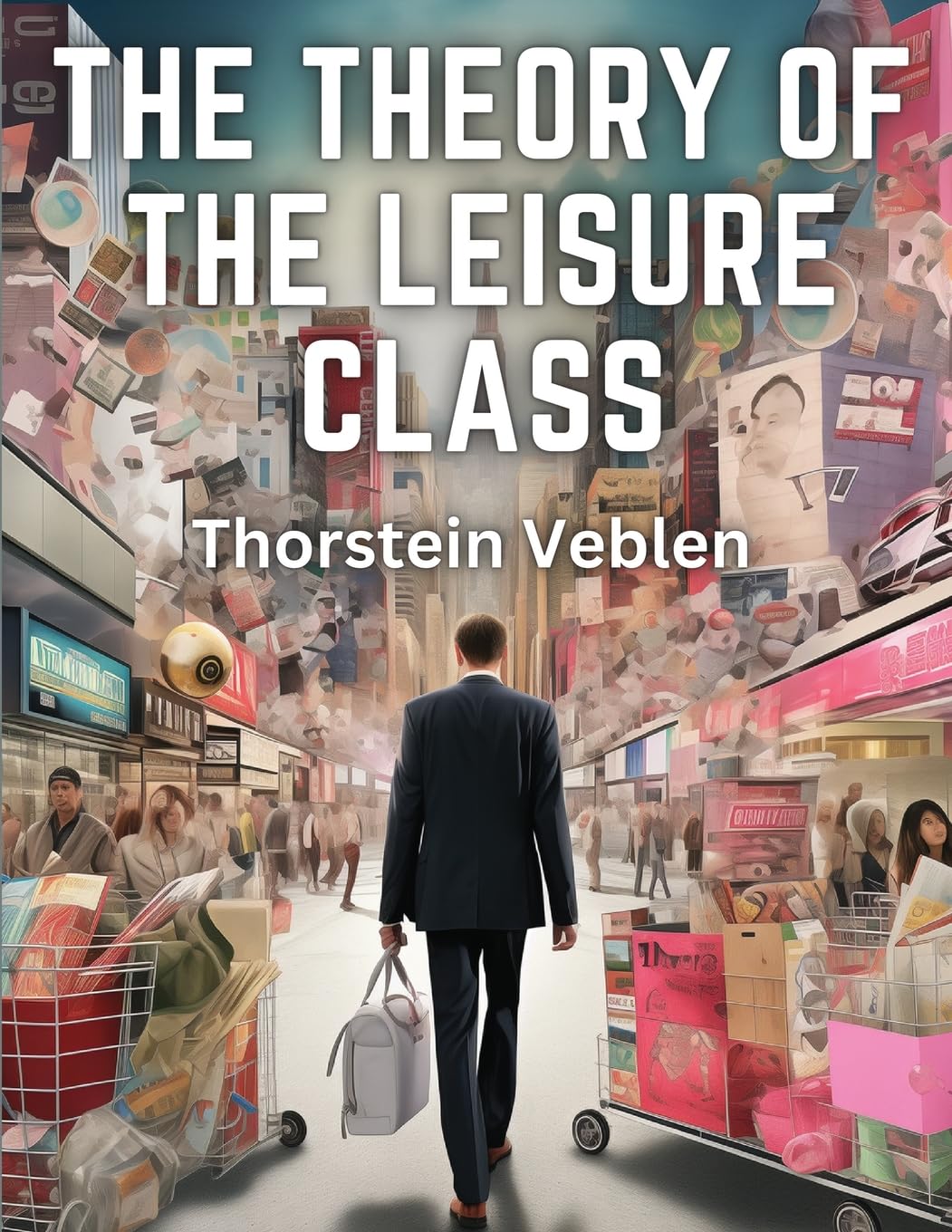
The Theory of the Leisure Class: ReadSprint summary highlights
ReadSprint paraphrases for review. These highlights are not verbatim quotations from the book or its author. Check the original edition for exact wording and context.
The Theory of the Leisure Class
by Thorstein Veblen
The introductory chapter lays out Veblen's central thesis that modern society is structured around a 'leisure class' whose status is maintained through nonproductive pecuniary behaviors.
ReadSprint paraphrase · Not a quotation from the author.
The introductory chapter lays out Veblen's central thesis that modern society is structured around a 'leisure class' whose status is maintained through nonproductive pecuniary behaviors.
Introduces the concept of the leisure class as a social layer devoted to status rather than productive labor.
Share with the ReadSprint source so others can read the context.
The Theory of the Leisure Class
by Thorstein Veblen
He frames his study as an evolutionary-sociological critique of institutions that prioritize pecuniary esteem over industrial efficiency.
ReadSprint paraphrase · Not a quotation from the author.
He frames his study as an evolutionary-sociological critique of institutions that prioritize pecuniary esteem over industrial efficiency.
Argues that social institutions and customs evolve to serve and perpetuate pecuniary esteem.
Share with the ReadSprint source so others can read the context.
The Theory of the Leisure Class
by Thorstein Veblen
This chapter traces the origins of the leisure class to tribal and early agrarian societies where capture of surplus and the practice of nonproductive ceremonial functions signaled social distinction.
ReadSprint paraphrase · Not a quotation from the author.
This chapter traces the origins of the leisure class to tribal and early agrarian societies where capture of surplus and the practice of nonproductive ceremonial functions signaled social distinction.
Presents the methodology: a critical, evolutionary approach to economic and social habits.
Share with the ReadSprint source so others can read the context.
The Theory of the Leisure Class
by Thorstein Veblen
Veblen explains how ownership, inheritance, and the ability to refrain from productive work established a hereditary class of leisure.
ReadSprint paraphrase · Not a quotation from the author.
Veblen explains how ownership, inheritance, and the ability to refrain from productive work established a hereditary class of leisure.
Use the lens of status and nonproductive behavior to interpret economic and cultural institutions.
Share with the ReadSprint source so others can read the context.
The Theory of the Leisure Class
by Thorstein Veblen
Veblen describes pecuniary emulation as the mechanism by which lower strata imitate the leisure class, driving conspicuous consumption as a public display of wealth.
ReadSprint paraphrase · Not a quotation from the author.
Veblen describes pecuniary emulation as the mechanism by which lower strata imitate the leisure class, driving conspicuous consumption as a public display of wealth.
Veblen connects cultural practices to economic motives, showing how status-seeking shapes institutions and consumption; this remains relevant for analyzing modern status driven markets. The chapter sets the analytical frame used throughout the book.
Share with the ReadSprint source so others can read the context.
The Theory of the Leisure Class
by Thorstein Veblen
Conspicuous consumption functions primarily to signal social standing rather than to satisfy material needs.
ReadSprint paraphrase · Not a quotation from the author.
Conspicuous consumption functions primarily to signal social standing rather than to satisfy material needs.
The introductory chapter lays out Veblen's central thesis that modern society is structured around a 'leisure class' whose status is maintained through nonproductive pecuniary behaviors. He frames his study as an evolutionary-sociological critique of institutions that prioritize pecuniary esteem over industrial efficiency.
Share with the ReadSprint source so others can read the context.
The Theory of the Leisure Class
by Thorstein Veblen
Veblen examines accumulation of wealth as an end in itself: pecuniary success and the hoarding of resources serve to enhance reputation and social power.
ReadSprint paraphrase · Not a quotation from the author.
Veblen examines accumulation of wealth as an end in itself: pecuniary success and the hoarding of resources serve to enhance reputation and social power.
Social distinctions began with control over means of life and the ability to abstain from productive labor.
Share with the ReadSprint source so others can read the context.
The Theory of the Leisure Class
by Thorstein Veblen
He contrasts pecuniary motives with industrial ones, suggesting accumulation often undermines productive enterprise.
ReadSprint paraphrase · Not a quotation from the author.
He contrasts pecuniary motives with industrial ones, suggesting accumulation often undermines productive enterprise.
War, theft, and expropriation contributed to the formation of property
Share with the ReadSprint source so others can read the context.
The Theory of the Leisure Class
by Thorstein Veblen
Veblen analyzes conspicuous waste as deliberate destruction or nonproductive use of resources to display power and exemption from economic necessity.
ReadSprint paraphrase · Not a quotation from the author.
Veblen analyzes conspicuous waste as deliberate destruction or nonproductive use of resources to display power and exemption from economic necessity.
holding elites.
Share with the ReadSprint source so others can read the context.
The Theory of the Leisure Class
by Thorstein Veblen
Such wasteful practices, including lavish feasts and idle consumption, validate social prestige by showing mastery over means of life.
ReadSprint paraphrase · Not a quotation from the author.
Such wasteful practices, including lavish feasts and idle consumption, validate social prestige by showing mastery over means of life.
Ceremonial duties and public ostentation institutionalized leisure as a marker of status.
Share with the ReadSprint source so others can read the context.