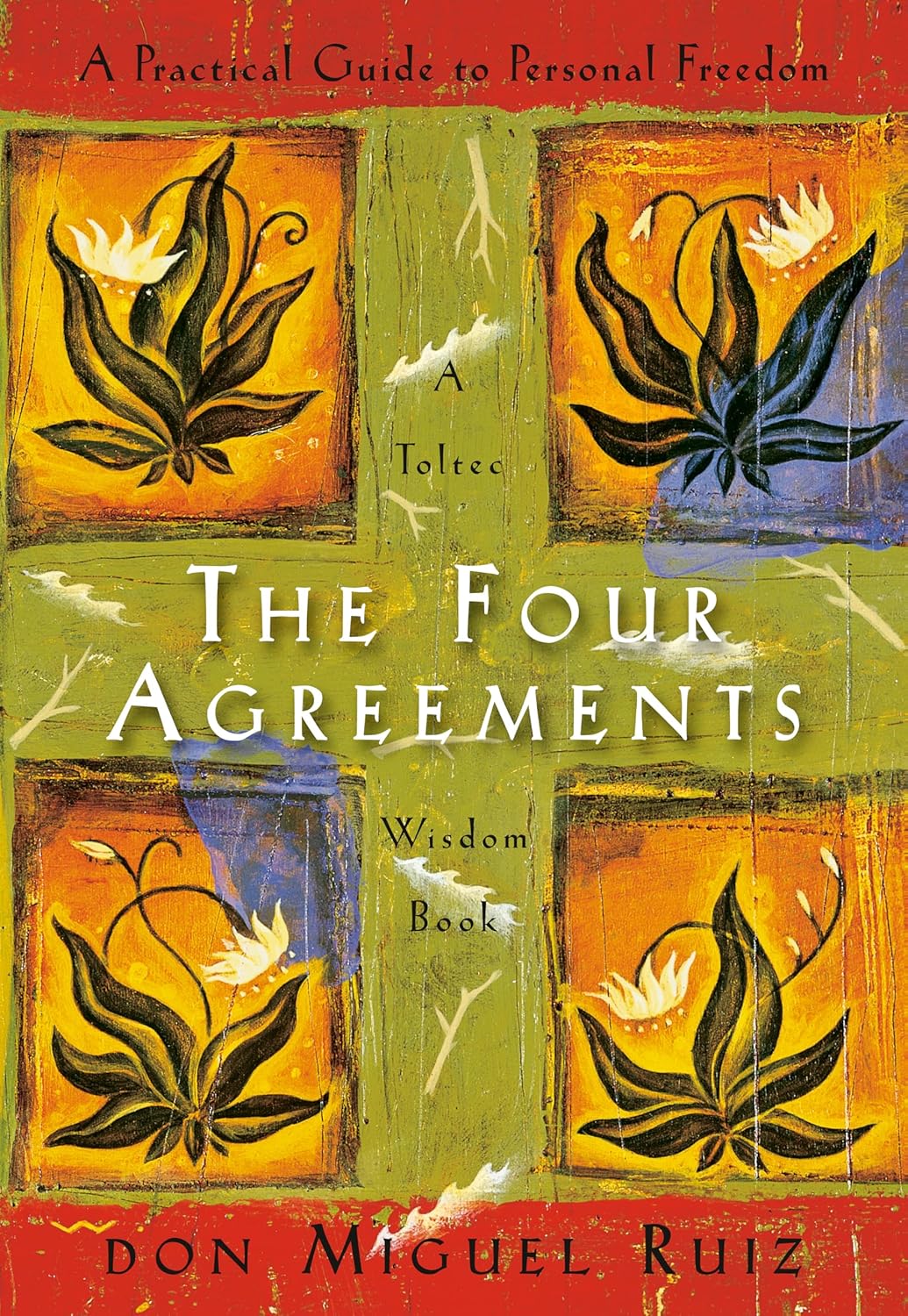
The Four Agreements: ReadSprint summary highlights
ReadSprint paraphrases for review. These highlights are not verbatim quotations from the book or its author. Check the original edition for exact wording and context.
The Four Agreements
by Don Miguel Ruiz
Don Miguel Ruiz describes how human beings are "domesticated"—conditioned by parents, teachers, and society—to adopt a collective set of beliefs and rules he calls the "dream of the planet." This conditioning creates agreements that define…
ReadSprint paraphrase · Not a quotation from the author.
Don Miguel Ruiz describes how human beings are "domesticated"—conditioned by parents, teachers, and society—to adopt a collective set of beliefs and rules he calls the "dream of the planet." This conditioning creates agreements that define identity, limit freedom, and produce fear and suffering.
Domestication begins in childhood through praise, punishment, and imitation.
Share with the ReadSprint source so others can read the context.
The Four Agreements
by Don Miguel Ruiz
The first agreement teaches that the word is powerful and should be used with integrity: speak truthfully and with love, avoiding gossip and self-criticism.
ReadSprint paraphrase · Not a quotation from the author.
The first agreement teaches that the word is powerful and should be used with integrity: speak truthfully and with love, avoiding gossip and self-criticism.
The "dream of the planet" is the shared cultural story that shapes perceptions and behavior.
Share with the ReadSprint source so others can read the context.
The Four Agreements
by Don Miguel Ruiz
Being impeccable with your word transforms how you relate to others and to yourself by aligning language with truth and constructive intent.
ReadSprint paraphrase · Not a quotation from the author.
Being impeccable with your word transforms how you relate to others and to yourself by aligning language with truth and constructive intent.
Individuals internalize agreements that become their personal identity and truth.
Share with the ReadSprint source so others can read the context.
The Four Agreements
by Don Miguel Ruiz
This agreement explains that what others say and do is a projection of their own reality and has little to do with you, so taking things personally only causes needless suffering.
ReadSprint paraphrase · Not a quotation from the author.
This agreement explains that what others say and do is a projection of their own reality and has little to do with you, so taking things personally only causes needless suffering.
These agreements often produce fear, self
Share with the ReadSprint source so others can read the context.
The Four Agreements
by Don Miguel Ruiz
By recognizing that opinions and actions stem from others' beliefs and wounds, you can remain emotionally independent and resilient.
ReadSprint paraphrase · Not a quotation from the author.
By recognizing that opinions and actions stem from others' beliefs and wounds, you can remain emotionally independent and resilient.
judgment, and a false sense of self.
Share with the ReadSprint source so others can read the context.
The Four Agreements
by Don Miguel Ruiz
Ruiz argues that making assumptions creates misunderstandings and unnecessary conflict; instead, we should ask questions and communicate clearly.
ReadSprint paraphrase · Not a quotation from the author.
Ruiz argues that making assumptions creates misunderstandings and unnecessary conflict; instead, we should ask questions and communicate clearly.
Awareness of this conditioning is the first step toward change.
Share with the ReadSprint source so others can read the context.
The Four Agreements
by Don Miguel Ruiz
Replacing assumptions with honest inquiry prevents the stories we invent from controlling our relationships and emotions.
ReadSprint paraphrase · Not a quotation from the author.
Replacing assumptions with honest inquiry prevents the stories we invent from controlling our relationships and emotions.
Begin observing the agreements you've inherited and note how they influence your thoughts and actions.
Share with the ReadSprint source so others can read the context.
The Four Agreements
by Don Miguel Ruiz
The fourth agreement advises committing to do your best in every moment, recognizing that your best will vary with circumstances and energy levels.
ReadSprint paraphrase · Not a quotation from the author.
The fourth agreement advises committing to do your best in every moment, recognizing that your best will vary with circumstances and energy levels.
The chapter highlights how social conditioning determines much of our mental and emotional life, making the work of personal freedom a deliberate, conscious effort. Understanding domestication is relevant to anyone seeking to change ingrained habits and beliefs.
Share with the ReadSprint source so others can read the context.
The Four Agreements
by Don Miguel Ruiz
Consistently doing your best prevents self-judgment, regret, and the paralysis of perfectionism while integrating the other agreements into daily practice.
ReadSprint paraphrase · Not a quotation from the author.
Consistently doing your best prevents self-judgment, regret, and the paralysis of perfectionism while integrating the other agreements into daily practice.
Don Miguel Ruiz describes how human beings are "domesticated"—conditioned by parents, teachers, and society—to adopt a collective set of beliefs and rules he calls the "dream of the planet." This conditioning creates agreements that define identity, limit freedom, and produce fear and suffering.
Share with the ReadSprint source so others can read the context.
The Four Agreements
by Don Miguel Ruiz
This chapter outlines the process of identifying and dismantling the limiting agreements formed by domestication, emphasizing awareness, forgiveness, and repetitive practice of new agreements.
ReadSprint paraphrase · Not a quotation from the author.
This chapter outlines the process of identifying and dismantling the limiting agreements formed by domestication, emphasizing awareness, forgiveness, and repetitive practice of new agreements.
Words create reality; they can build or destroy.
Share with the ReadSprint source so others can read the context.