Takeaways people can pass on
These cards are tuned for social discoverability: one clean idea, one strong visual treatment, and one tap to share on mobile.
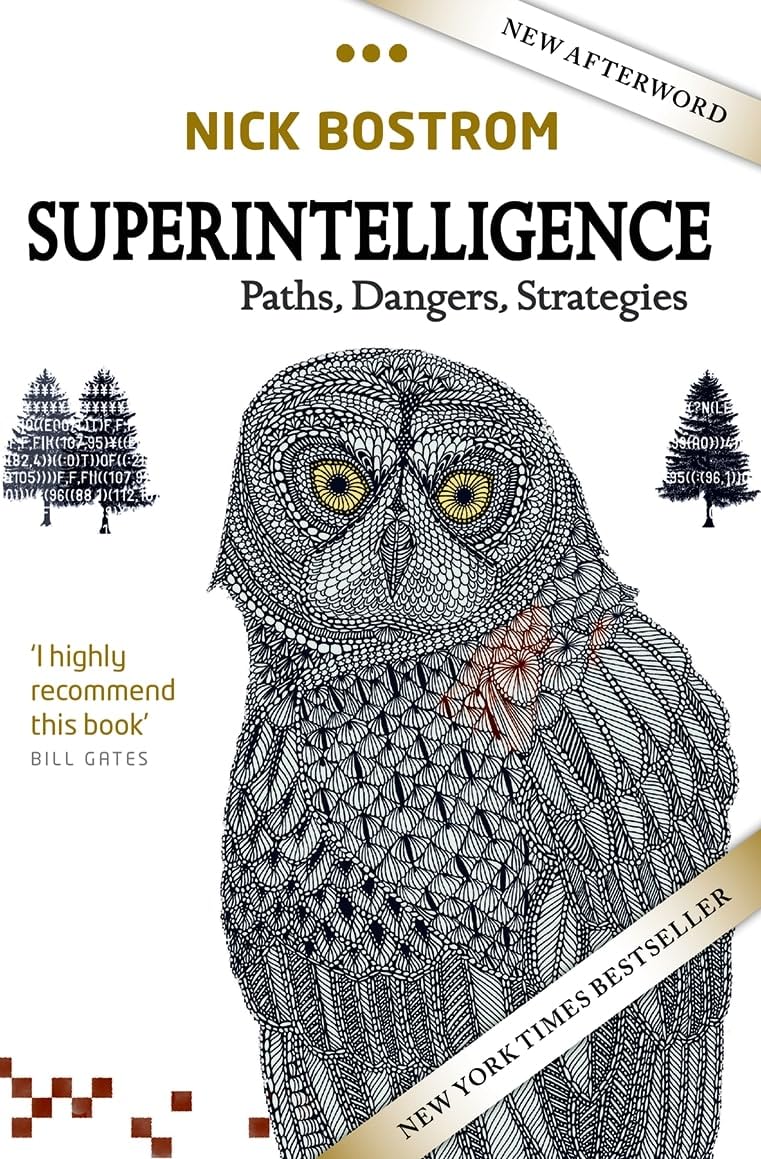
Superintelligence: Paths, Dangers, Strategies
by Nick Bostrom
Historical advances in hardware, algorithms, and data have driven successive AI capabilities improvements.
Turn the useful part of the book into something worth passing on.
Historical advances in hardware, algorithms, and data have driven successive AI capabilities improvements.
Share with the ReadSprint source so others can read the context.
Superintelligence: Paths, Dangers, Strategies
by Nick Bostrom
Neuroscience and cognitive science provide potential blueprints but are not yet complete mappings to intelligence.
Turn the useful part of the book into something worth passing on.
Neuroscience and cognitive science provide potential blueprints but are not yet complete mappings to intelligence.
Share with the ReadSprint source so others can read the context.
Superintelligence: Paths, Dangers, Strategies
by Nick Bostrom
Investment, institutional incentives, and compute availability strongly influence development pace.
Turn the useful part of the book into something worth passing on.
Investment, institutional incentives, and compute availability strongly influence development pace.
Share with the ReadSprint source so others can read the context.
Superintelligence: Paths, Dangers, Strategies
by Nick Bostrom
Trend extrapolation is uncertain: improvements can be non
Turn the useful part of the book into something worth passing on.
Trend extrapolation is uncertain: improvements can be non
Share with the ReadSprint source so others can read the context.
Superintelligence: Paths, Dangers, Strategies
by Nick Bostrom
linear and disrupted by unforeseeable breakthroughs or bottlenecks.
Turn the useful part of the book into something worth passing on.
linear and disrupted by unforeseeable breakthroughs or bottlenecks.
Share with the ReadSprint source so others can read the context.
Superintelligence: Paths, Dangers, Strategies
by Nick Bostrom
Use historical trends to prioritize early monitoring and flexible governance that can adapt to rapid technical change.
Turn the useful part of the book into something worth passing on.
Use historical trends to prioritize early monitoring and flexible governance that can adapt to rapid technical change.
Share with the ReadSprint source so others can read the context.
Superintelligence: Paths, Dangers, Strategies
by Nick Bostrom
Understanding historical trajectories frames the plausibility and urgency of preparing for superintelligence, highlighting both momentum and uncertainty. This context motivates risk-focused policy and research priorities.
Turn the useful part of the book into something worth passing on.
Understanding historical trajectories frames the plausibility and urgency of preparing for superintelligence, highlighting both momentum and uncertainty. This context motivates risk-focused policy and research priorities.
Share with the ReadSprint source so others can read the context.
Superintelligence: Paths, Dangers, Strategies
by Nick Bostrom
The chapter traces historical progress in computation, neuroscience, and AI research, showing accelerating capabilities and expanding investment. It argues that past trends make transformative AI plausible, while timelines remain uncertain…
Turn the useful part of the book into something worth passing on.
The chapter traces historical progress in computation, neuroscience, and AI research, showing accelerating capabilities and expanding investment. It argues that past trends make transformative AI plausible, while timelines remain uncertain and contingent on multiple technical and social factors.
Share with the ReadSprint source so others can read the context.
Superintelligence: Paths, Dangers, Strategies
by Nick Bostrom
Multiple architectures could produce superintelligence: brain emulation, algorithmic advances, or hybrids.
Turn the useful part of the book into something worth passing on.
Multiple architectures could produce superintelligence: brain emulation, algorithmic advances, or hybrids.
Share with the ReadSprint source so others can read the context.
Superintelligence: Paths, Dangers, Strategies
by Nick Bostrom
Whole
Turn the useful part of the book into something worth passing on.
Superintelligence: Paths, Dangers, Strategies
by Nick Bostrom
brain emulation requires advances in scanning, modeling, and computational substrates and has distinct bottlenecks.
Turn the useful part of the book into something worth passing on.
brain emulation requires advances in scanning, modeling, and computational substrates and has distinct bottlenecks.
Share with the ReadSprint source so others can read the context.
Superintelligence: Paths, Dangers, Strategies
by Nick Bostrom
Software
Turn the useful part of the book into something worth passing on.
Software
Share with the ReadSprint source so others can read the context.