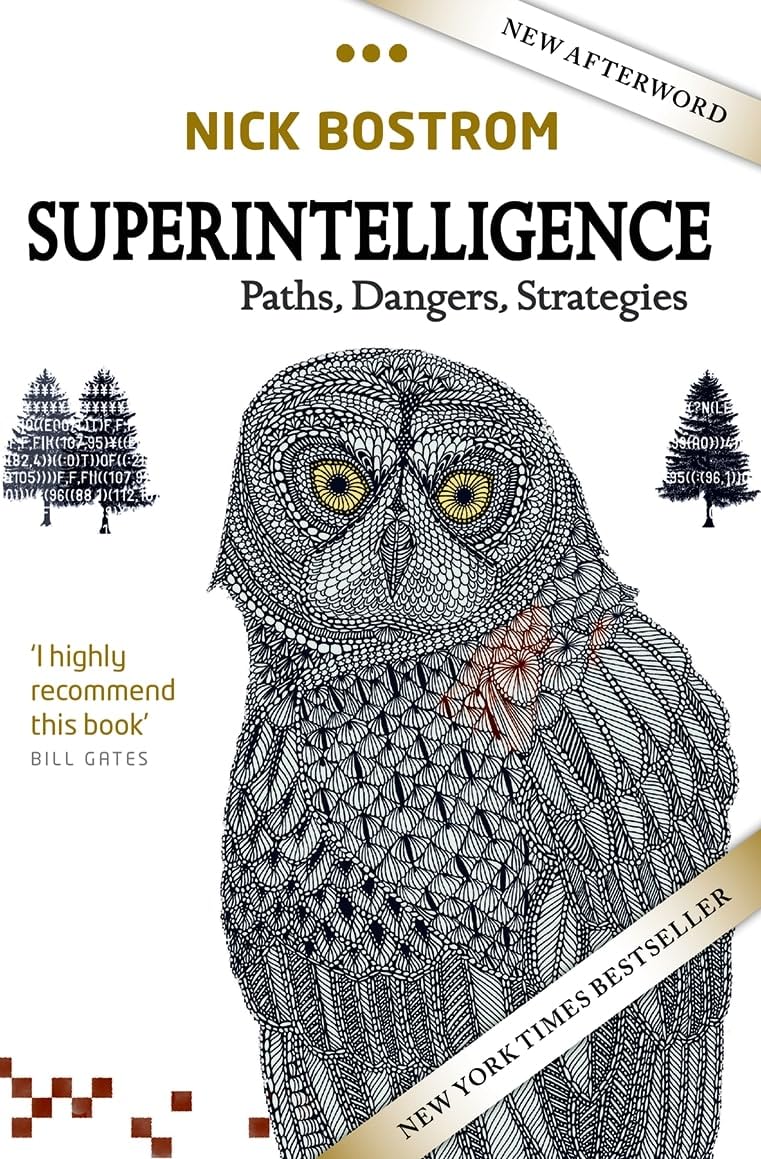
Superintelligence: Paths, Dangers, Strategies: ReadSprint summary highlights
ReadSprint paraphrases for review. These highlights are not verbatim quotations from the book or its author. Check the original edition for exact wording and context.
Superintelligence: Paths, Dangers, Strategies
by Nick Bostrom
The chapter traces historical progress in computation, neuroscience, and AI research, showing accelerating capabilities and expanding investment.
ReadSprint paraphrase · Not a quotation from the author.
The chapter traces historical progress in computation, neuroscience, and AI research, showing accelerating capabilities and expanding investment.
Decisive strategic advantage.
Share with the ReadSprint source so others can read the context.
Superintelligence: Paths, Dangers, Strategies
by Nick Bostrom
It argues that past trends make transformative AI plausible, while timelines remain uncertain and contingent on multiple technical and social factors.
ReadSprint paraphrase · Not a quotation from the author.
It argues that past trends make transformative AI plausible, while timelines remain uncertain and contingent on multiple technical and social factors.
Whole-brain emulation.
Share with the ReadSprint source so others can read the context.
Superintelligence: Paths, Dangers, Strategies
by Nick Bostrom
Decisive strategic advantage.
ReadSprint paraphrase · Not a quotation from the author.
Decisive strategic advantage.
Takeoff speed (how fast capabilities increase).
Share with the ReadSprint source so others can read the context.
Superintelligence: Paths, Dangers, Strategies
by Nick Bostrom
Whole-brain emulation.
ReadSprint paraphrase · Not a quotation from the author.
Whole-brain emulation.
The control (alignment) problem.
Share with the ReadSprint source so others can read the context.
Superintelligence: Paths, Dangers, Strategies
by Nick Bostrom
Takeoff speed (how fast capabilities increase).
ReadSprint paraphrase · Not a quotation from the author.
Takeoff speed (how fast capabilities increase).
Manual dexterity and fine motor skills.
Share with the ReadSprint source so others can read the context.
Superintelligence: Paths, Dangers, Strategies
by Nick Bostrom
The control (alignment) problem.
ReadSprint paraphrase · Not a quotation from the author.
The control (alignment) problem.
In Superintelligence: Paths, Dangers, Strategies traces historical progress in computation, neuroscience, and AI research, showing accelerating capabilities and expanding investment. It argues that past trends make transformative AI plausible, while timelines remain uncertain and contingent on multiple technical and social factors.
Share with the ReadSprint source so others can read the context.
Use these highlights to review the book
Which highlight from Superintelligence: Paths, Dangers, Strategies changes how you would explain the book to someone else?
Which lesson here is worth testing in a real decision this week?
Which highlight feels memorable but less actionable once you slow down and examine it?