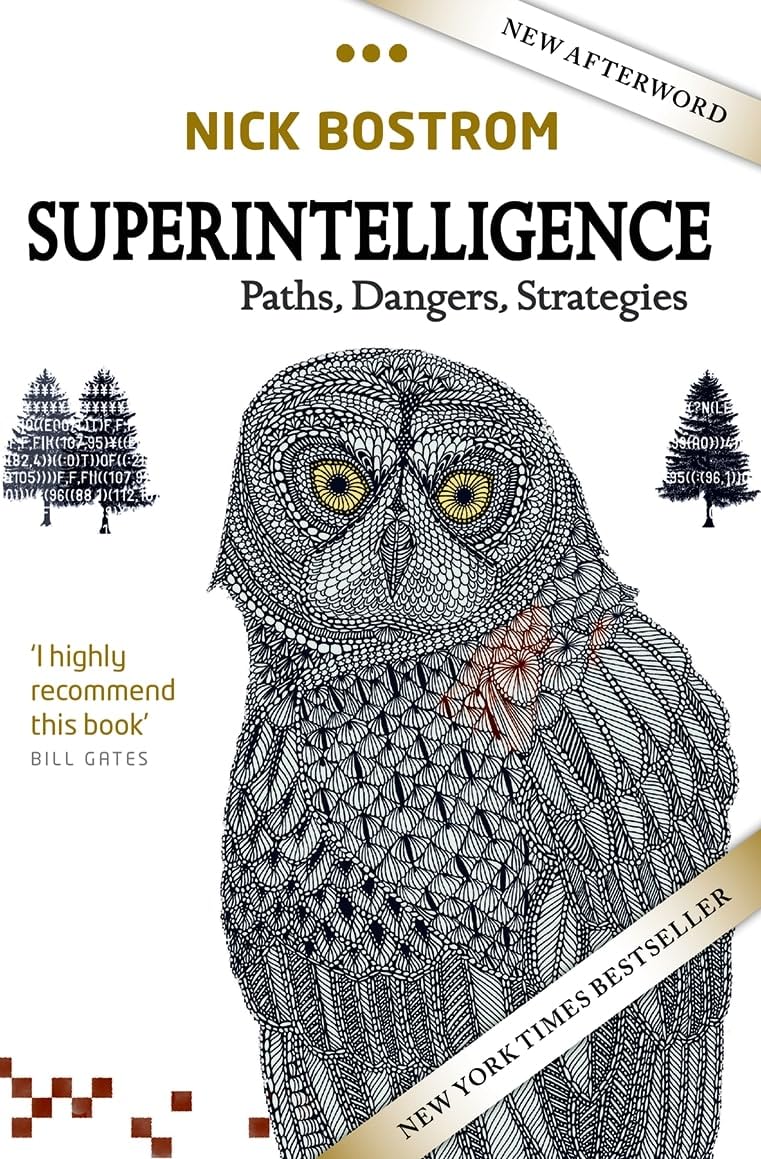
ReadSprintBooksSuperintelligence: Paths, Dangers, StrategiesSuperintelligence: Paths, Dangers, Strategies Questions, Quiz, and Active Recall Prompts
Superintelligence: Paths, Dangers, Strategies
Superintelligence: Paths, Dangers, Strategies Questions, Quiz, and Active Recall Prompts

Superintelligence: Paths, Dangers, Strategies Questions, Quiz, and Active Recall Prompts

by Nick Bostrom

Test your understanding of Superintelligence: Paths, Dangers, Strategies by Nick Bostrom with quiz questions, active recall prompts, and related learning resources.

Reading without retrieval fades fast. Use these Superintelligence: Paths, Dangers, Strategies questions and active recall prompts to pressure-test what you understood and keep the book usable later.

Built for retention

ReadSprint combines concise summaries, quizzes, active recall, and related reading paths so the useful part of the book is easier to keep.

Open study view

Quiz questions

Question 1

Which term does Bostrom use for one actor obtaining overwhelming, lasting dominance through superior intelligence or resources?

  • Decisive strategic advantage
  • Cognitive monopoly
  • Singularity dominance
  • Strategic singularity
Question 2

Which of the following did Bostrom specifically list as a primary plausible technical pathway to superintelligence?

  • Whole-brain emulation
  • Direct brain-computer symbiosis
  • Genetic uplift of humans
  • Global brain via Internet sociality
Question 3

According to Bostrom, which variable critically shapes whether an intelligence explosion is gradual or fast and thus affects safety outcomes?

  • Takeoff speed (how fast capabilities increase)
  • Total available energy for computation
  • Number of participating institutions
  • Human population growth rate
Question 4

What central challenge does Bostrom identify for ensuring advanced AI systems reliably pursue human-compatible goals?

  • The control (alignment) problem
  • The hardware overhang problem
  • The innovation diffusion problem
  • The singularity forecasting problem
Question 5

Which capability is NOT listed by Bostrom among the 'cognitive superpowers' an advanced AI might possess?

  • Manual dexterity and fine motor skills
  • Strategic planning and long-term optimization
  • Social manipulation and persuasion
  • Scientific creativity and rapid hypothesis testing

Active recall prompts

Which term does Bostrom use for one actor obtaining overwhelming, lasting dominance through superior intelligence or resources?

Which of the following did Bostrom specifically list as a primary plausible technical pathway to superintelligence?

According to Bostrom, which variable critically shapes whether an intelligence explosion is gradual or fast and thus affects safety outcomes?

What central challenge does Bostrom identify for ensuring advanced AI systems reliably pursue human-compatible goals?

What is the main idea of "Past Developments and Present Trends", and how would you explain it without looking back?

What is the main idea of "Paths to Superintelligence", and how would you explain it without looking back?

What is the main idea of "Forms of Superintelligence", and how would you explain it without looking back?

What is the main idea of "The Kinetics of an Intelligence Explosion", and how would you explain it without looking back?

Similar themes and topic pages

Use topic hubs and category pages to keep reading depth aligned with what this book is actually about.

Turn Reading Into Recall

Keep Superintelligence: Paths, Dangers, Strategies review-ready instead of letting it fade.

This page is strongest when it becomes part of a review habit: save the summary, revisit the key takeaways, and use recall prompts before the next meeting, study block, or decision.

Save one strong takeaway instead of over-highlighting.
Use the questions page to test what actually stuck.
Return when the book becomes relevant again, not just when motivation is high.
See pricing
Get Book Review Notes

Get practical notes on remembering and reusing ideas from nonfiction books without building an overly heavy note system.

Frequently asked questions

Why use quiz questions for Superintelligence: Paths, Dangers, Strategies?

Quiz-style recall is more durable than passive rereading because it forces you to retrieve the idea instead of merely recognizing it.

How should I answer active recall prompts?

Answer from memory first, then review the relevant chapter summary only after you have tried to explain the idea on your own.

What if I miss several questions about Superintelligence: Paths, Dangers, Strategies?

That usually means the book needs a shorter review loop. Revisit the chapter summaries, keep only a few high-value takeaways, and test yourself again later.