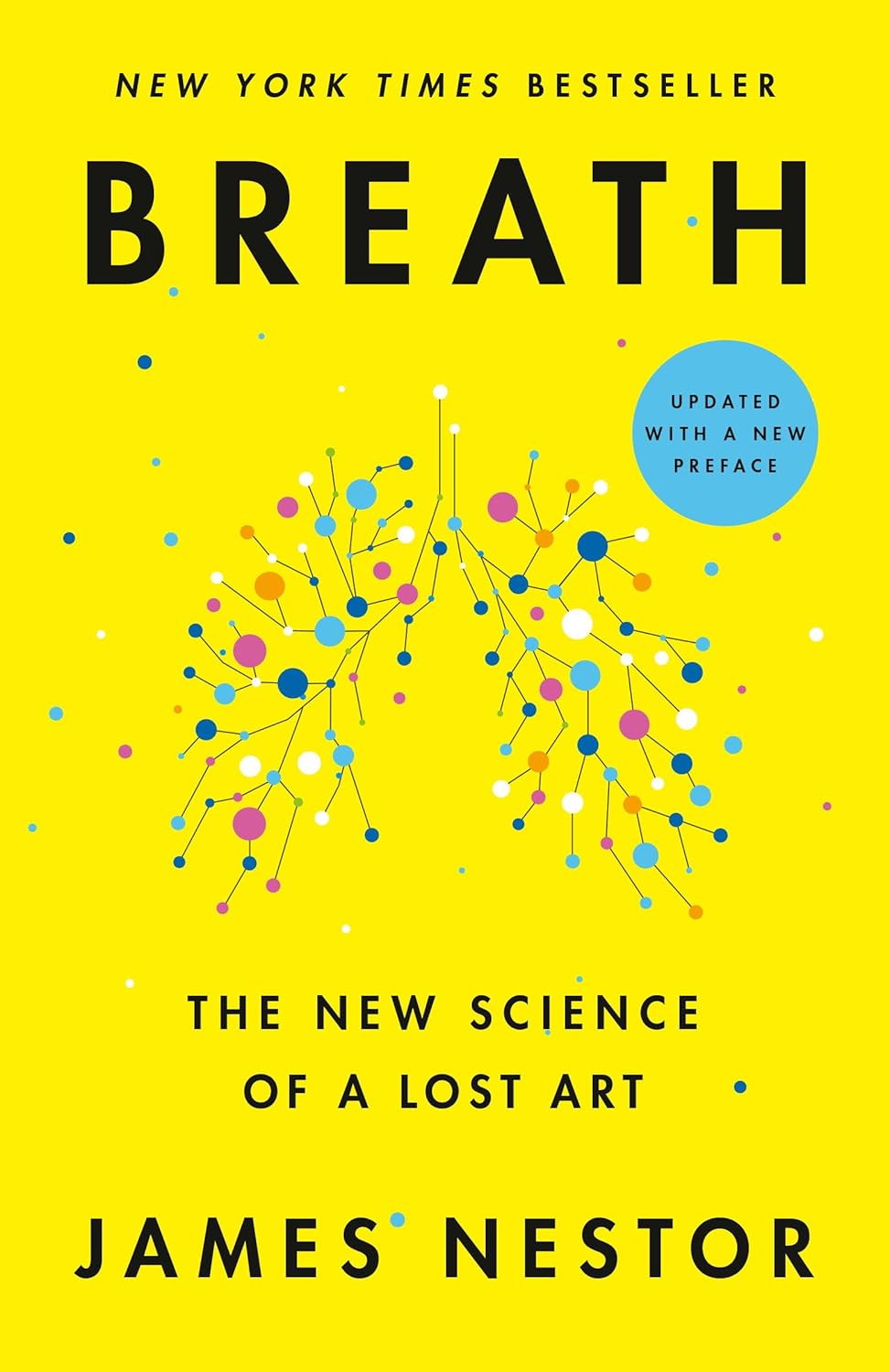
Breath: The New Science of a Lost Art: ReadSprint summary highlights
ReadSprint paraphrases for review. These highlights are not verbatim quotations from the book or its author. Check the original edition for exact wording and context.
Breath: The New Science of a Lost Art
by James Nestor
James Nestor introduces the idea that modern humans have largely forgotten how to breathe correctly, linking poor breathing habits to a wide range of chronic health problems.
ReadSprint paraphrase · Not a quotation from the author.
James Nestor introduces the idea that modern humans have largely forgotten how to breathe correctly, linking poor breathing habits to a wide range of chronic health problems.
Modern habits (mouth
Share with the ReadSprint source so others can read the context.
Breath: The New Science of a Lost Art
by James Nestor
He describes his personal experiments and journeys to meet researchers and practitioners who reclaim and study traditional breathing techniques.
ReadSprint paraphrase · Not a quotation from the author.
He describes his personal experiments and journeys to meet researchers and practitioners who reclaim and study traditional breathing techniques.
breathing, shallow rapid breaths) contrast with how humans evolved to breathe.
Share with the ReadSprint source so others can read the context.
Breath: The New Science of a Lost Art
by James Nestor
This chapter explains the physiological advantages of nasal breathing: filtration, humidification, temperature regulation and production of nitric oxide which aids oxygen uptake.
ReadSprint paraphrase · Not a quotation from the author.
This chapter explains the physiological advantages of nasal breathing: filtration, humidification, temperature regulation and production of nitric oxide which aids oxygen uptake.
Poor breathing contributes to problems like sleep disturbances, reduced athletic performance, and chronic respiratory issues.
Share with the ReadSprint source so others can read the context.
Breath: The New Science of a Lost Art
by James Nestor
Nestor shows how nasal breathing naturally slows and regulates respiration, improving oxygenation and protecting airways.
ReadSprint paraphrase · Not a quotation from the author.
Nestor shows how nasal breathing naturally slows and regulates respiration, improving oxygenation and protecting airways.
The book sets up an exploration combining history, science, and hands
Share with the ReadSprint source so others can read the context.
Breath: The New Science of a Lost Art
by James Nestor
Nestor documents how mouth-breathing has become common and explains the downstream consequences: altered facial development in children, dental problems, increased snoring and sleep apnea, and poorer overall respiratory efficiency.
ReadSprint paraphrase · Not a quotation from the author.
Nestor documents how mouth-breathing has become common and explains the downstream consequences: altered facial development in children, dental problems, increased snoring and sleep apnea, and poorer overall respiratory efficiency.
on testing of varied breathing methods.
Share with the ReadSprint source so others can read the context.
Breath: The New Science of a Lost Art
by James Nestor
He explores environmental and cultural factors that may have driven the shift toward habitual mouth breathing.
ReadSprint paraphrase · Not a quotation from the author.
He explores environmental and cultural factors that may have driven the shift toward habitual mouth breathing.
Begin paying conscious attention to your breath and whether you breathe through your nose or mouth.
Share with the ReadSprint source so others can read the context.
Breath: The New Science of a Lost Art
by James Nestor
Nestor reframes carbon dioxide from a mere waste product to a crucial regulator of respiration and oxygen delivery, explaining how CO2 levels influence the body’s release of oxygen to tissues (Bohr effect).
ReadSprint paraphrase · Not a quotation from the author.
Nestor reframes carbon dioxide from a mere waste product to a crucial regulator of respiration and oxygen delivery, explaining how CO2 levels influence the body’s release of oxygen to tissues (Bohr effect).
Breathing is presented as a foundational, often overlooked determinant of health; reconnecting with proper breathing has broad relevance to modern lifestyle illnesses. This chapter frames the rest of the book by arguing that simple changes to breath can yield measurable benefits.
Share with the ReadSprint source so others can read the context.
Breath: The New Science of a Lost Art
by James Nestor
He discusses how over-breathing lowers CO2 and can reduce oxygen availability despite high blood oxygen saturation.
ReadSprint paraphrase · Not a quotation from the author.
He discusses how over-breathing lowers CO2 and can reduce oxygen availability despite high blood oxygen saturation.
James Nestor introduces the idea that modern humans have largely forgotten how to breathe correctly, linking poor breathing habits to a wide range of chronic health problems. He describes his personal experiments and journeys to meet researchers and practitioners who reclaim and study traditional breathing techniques.
Share with the ReadSprint source so others can read the context.
Breath: The New Science of a Lost Art
by James Nestor
This chapter examines the global rise in asthma and allergies, arguing that changes in breathing patterns, environmental factors, and medical approaches have contributed to a respiratory crisis.
ReadSprint paraphrase · Not a quotation from the author.
This chapter examines the global rise in asthma and allergies, arguing that changes in breathing patterns, environmental factors, and medical approaches have contributed to a respiratory crisis.
The nose filters particulates and humidifies/warms air, protecting lungs and sinus health.
Share with the ReadSprint source so others can read the context.
Breath: The New Science of a Lost Art
by James Nestor
Nestor discusses evidence that breathing retraining can reduce symptoms and medication use in many patients.
ReadSprint paraphrase · Not a quotation from the author.
Nestor discusses evidence that breathing retraining can reduce symptoms and medication use in many patients.
Nasal breathing generates nitric oxide, which helps dilate blood vessels and improves oxygen transfer in the lungs.
Share with the ReadSprint source so others can read the context.