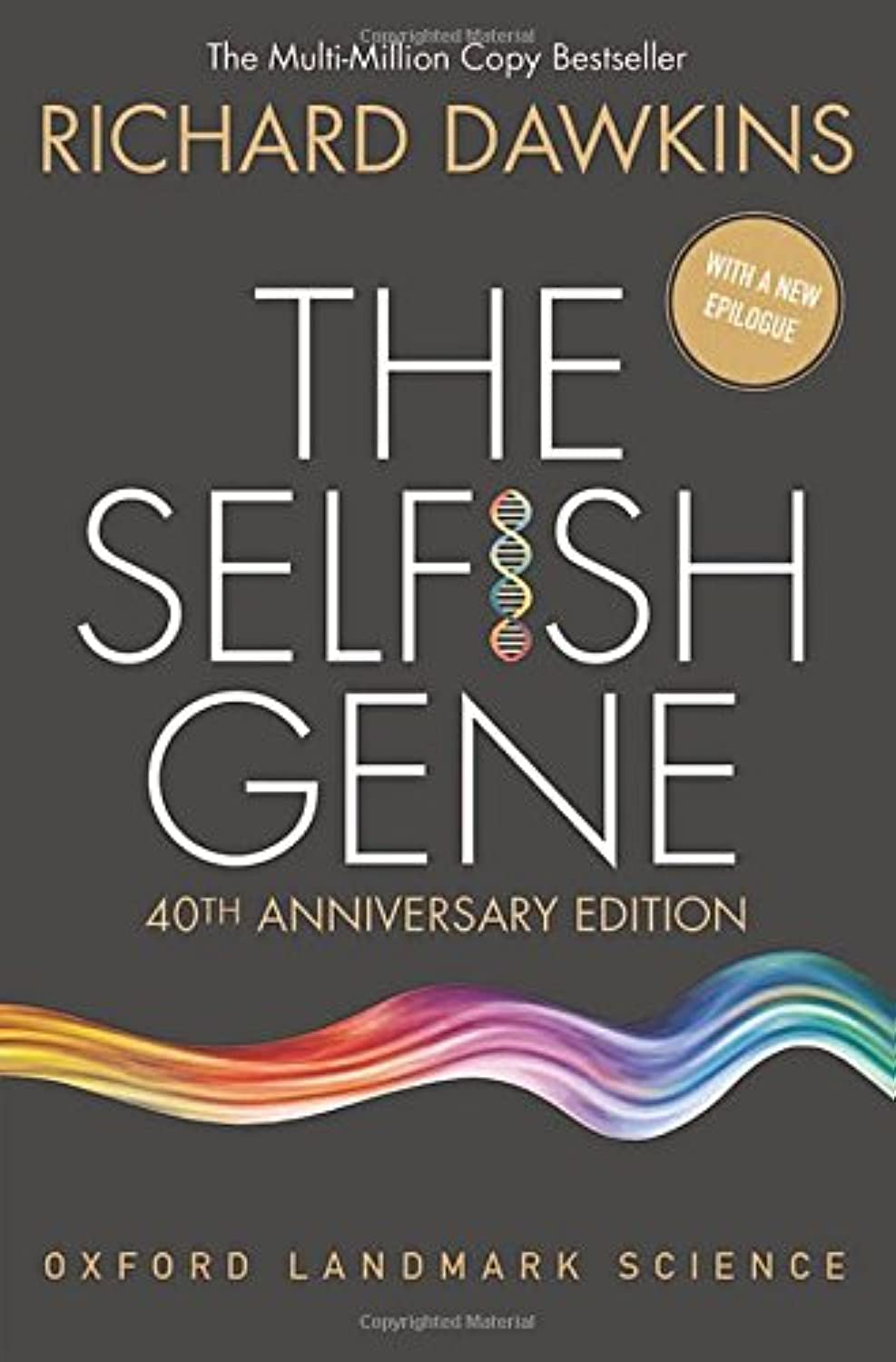
Why Are People?
Summary:
Richard Dawkins introduces the central puzzle of biology: why organisms, including people, appear designed for particular purposes. He frames natural selection as the explanation for apparent design and motivates a gene-centered perspective as the clearest explanatory level.
Key points:
- Natural selection creates the appearance of design without foresight.
- The gene
- centered view treats genes as the fundamental units on which selection acts.
- Traits and behaviours are best explained by their consequences for gene replication.
Themes & relevance:
This chapter sets up the shift from thinking about organisms as the primary unit of selection to genes as replicators that explain adaptation and behaviour. Understanding this framing is essential for interpreting later arguments about cooperation, conflict, and strategy.
Takeaway / How to use:
Use the gene-centered perspective to ask how traits influence the replication success of genes.
Key points
- Natural selection creates the appearance of design without foresight.
- The gene
- centered view treats genes as the fundamental units on which selection acts.
- Traits and behaviours are best explained by their consequences for gene replication.
The Replicators
Summary:
Dawkins describes the origin and nature of replicators — entities that copy themselves — and argues that evolution arises from differential survival of replicators. He explains how high-fidelity copying plus occasional variation leads to cumulative selection and the emergence of complex adaptations.
Key points:
- Replicators are entities that make copies of themselves; genes are modern replicators.
- Fidelity of replication and occasional mutation enable cumulative natural selection.
- Selection among replicators produces survival machines (organisms) to protect and propagate them.
Themes & relevance:
Emphasizing replicators clarifies why Darwinian processes produce complex design-like features and why genes, not organisms, are central to long
- term evolutionary dynamics. This concept underpins explanations of behaviour and life history covered later.
Takeaway / How to use:
Think of genes as replicators that build bodies to increase their own copying success.
Key points
- Replicators are entities that make copies of themselves; genes are modern replicators.
- Fidelity of replication and occasional mutation enable cumulative natural selection.
- Selection among replicators produces survival machines (organisms) to protect and propagate them.
The Gene Machine
Summary:
This chapter argues that organisms are 'machines' constructed by genes to promote gene replication; development and behaviour are interpretable as vehicles for gene success. Dawkins highlights how gene action can explain altruism and other behaviours when viewed from the gene's point of view.
Key points:
- Genes build and program bodies (survival machines) to further their replication.
- Behaviour and morphology are best understood as gene
- driven adaptations.
- Apparent altruism can be reconciled with selfish gene interests when considering genetic consequences.
Themes & relevance:
Framing organisms as gene-built machines shifts explanations of behaviour from individual motives to consequences for gene frequencies, a perspective valuable for studying social behaviour and adaptation.
Takeaway / How to use:
Interpret traits and behaviours by asking how they contribute to the survival and replication of the genes that produce them.
Key points
- Genes build and program bodies (survival machines) to further their replication.
- Behaviour and morphology are best understood as gene
- driven adaptations.
- Apparent altruism can be reconciled with selfish gene interests when considering genetic consequences.
Replicators and Vehicles
Summary:
Dawkins clarifies the distinction between replicators (genes) and vehicles (organisms) and explains how selection acts on genes through the successes and failures of their vehicles. He discusses cooperation among genes within genomes and the potential for conflict between different genetic interests.
Key points:
- Replicators are genes; vehicles are the bodies that carry them.
- Selection acts on replicators via the differential success of vehicles.
- Genes within a genome generally cooperate but can sometimes conflict, producing phenomena like selfish genetic elements.
Themes & relevance:
Recognizing multiple levels (genes vs vehicles) helps explain intragenomic conflict, selfish genetic elements, and why organisms can behave in ways that seem to pit different interests against one another. This distinction is foundational for understanding evolutionary explanations of behaviour.
Takeaway / How to use:
When analyzing a trait, distinguish whether its adaptive explanation refers to gene-level benefits or vehicle
- level consequences.
Key points
- Replicators are genes; vehicles are the bodies that carry them.
- Selection acts on replicators via the differential success of vehicles.
- Genes within a genome generally cooperate but can sometimes conflict, producing phenomena like selfish genetic elements.
Aggression: Stability and the Selfish Herd
Summary:
Dawkins applies game-theory ideas (evolutionarily stable strategies) to explain aggression and conflict, and he presents the 'selfish herd' concept to show how individual safety
- seeking can produce aggregations. He illustrates how simple strategic rules can produce stable mixtures of behaviours in populations.
Key points:
- Evolutionarily stable strategies (ESS) explain how behavioural strategies can resist invasion by alternatives.
- Simple games (e.g., hawk
- dove) show how costs and benefits determine levels of aggression.
- The selfish herd model explains aggregation as individuals reduce personal predation risk by repositioning relative to others.
Themes & relevance:
Game theory links individual behavioural strategies to population-level outcomes and shows how selfish incentives produce social patterns without group
- level planning. These models remain useful for analyzing conflict and cooperation in animals and humans.
Takeaway / How to use:
Model behavioural interactions by comparing costs and benefits to identify stable strategies that could persist in a population.
Key points
- Evolutionarily stable strategies (ESS) explain how behavioural strategies can resist invasion by alternatives.
- Simple games (e.g., hawk
- dove) show how costs and benefits determine levels of aggression.
- The selfish herd model explains aggregation as individuals reduce personal predation risk by repositioning relative to others.
Genesmanship
Summary:
Dawkins explores the tactics genes use to promote their own transmission, including manipulation, signalling, and strategic investment in offspring and rivals. He discusses how organisms can evolve behaviours that manipulate others' behaviour to the genes' advantage and how signals can be reliable or deceptive.
Key points:
- Genes can produce behaviours that manipulate the actions of other organisms to their benefit.
- Signalling evolves under pressure for reliability, but deception can arise when advantageous.
- Evolution favours strategies that adjust investment and behaviour in response to social and environmental cues.
Themes & relevance:
Understanding 'genesmanship' means recognizing evolved strategies as manipulative and strategic rather than benevolent, which helps explain conflict, communication, and parental investment patterns.
Takeaway / How to use:
Look for how behaviours function as strategies to influence others in ways that increase gene transmission.
Key points
- Genes can produce behaviours that manipulate the actions of other organisms to their benefit.
- Signalling evolves under pressure for reliability, but deception can arise when advantageous.
- Evolution favours strategies that adjust investment and behaviour in response to social and environmental cues.
Family Planning
Summary:
This chapter examines how parents allocate resources among offspring and how natural selection shapes optimal family size and investment patterns. Dawkins considers conflicts between parents and offspring and how kin relationships influence reproductive strategies.
Key points:
- Parents face trade
- offs between number of offspring and investment per offspring.
- Natural selection favours strategies that maximize gene transmission, leading to parental decision rules.
- Parent–offspring conflict and kin selection shape patterns of care and competition within families.
Themes & relevance:
Applying cost–benefit logic to reproduction clarifies why organisms vary in breeding strategies and parental care, with implications for understanding human family behaviour and demographic patterns.
Takeaway / How to use:
When considering reproductive decisions, weigh trade-offs between quantity and quality of offspring in terms of gene propagation.
Key points
- Parents face trade
- offs between number of offspring and investment per offspring.
- Natural selection favours strategies that maximize gene transmission, leading to parental decision rules.
- Parent–offspring conflict and kin selection shape patterns of care and competition within families.
Battle of the Sexes
Summary:
Dawkins analyzes sexual differences in strategy driven by differing reproductive costs and payoffs for males and females, explaining conflicts, mate choice, and sexual selection. He shows how anisogamy and parental investment create divergent incentives that drive mating systems and behaviours.
Key points:
- Differences in gamete size (anisogamy) and parental investment underlie sex
- specific strategies.
- Males and females often have conflicting optimal strategies, leading to sexual selection and mating conflicts.
- Behavioural consequences include mate choice, competition, and evolved strategies like deception or courtship displays.
Themes & relevance:
Framing sexual behavior as a strategic interaction between genes clarifies many patterns of mating systems, mate choice, and sexual conflict seen across species, including humans. This chapter grounds sexual selection in gene-level incentives.
Takeaway / How to use:
Analyze mating behaviour by considering how differing reproductive costs and benefits shape male and female strategies.
Key points
- Differences in gamete size (anisogamy) and parental investment underlie sex
- specific strategies.
- Males and females often have conflicting optimal strategies, leading to sexual selection and mating conflicts.
- Behavioural consequences include mate choice, competition, and evolved strategies like deception or courtship displays.
Battle of the Generations
Summary:
The chapter explains conflicts of interest between parents and their offspring from a gene-centered perspective, showing why what benefits a parent need not benefit each child and vice versa. Dawkins uses examples like weaning, investment, and sibling rivalry to show how genes drive competing strategies across generations.
Key points:
- Parents and offspring have overlapping but not identical genetic interests, producing predictable conflicts over resources and timing of independence.
- Natural selection shapes optimal parental investment and offspring demands by weighing costs and benefits to gene transmission (inclusive fitness considerations).
- Sibling rivalry arises because siblings are not genetically identical and each gains by securing more parental investment at the expense of others.
- Reproductive strategies (e.g., number vs. quality of offspring) reflect trade
- offs that create generational battles over resource allocation.
Themes & relevance:
Family interactions are best understood as negotiations driven by gene-level fitness trade
- offs, illuminating behaviors from weaning protests to parental favoritism. These insights are relevant to biology, ethology, and interpreting social behavior.
Takeaway / How to use:
Consider genetic interests and inclusive fitness when analyzing conflicts within families or groups.
Key points
- Parents and offspring have overlapping but not identical genetic interests, producing predictable conflicts over resources and timing of independence.
- Natural selection shapes optimal parental investment and offspring demands by weighing costs and benefits to gene transmission (inclusive fitness considerations).
- Sibling rivalry arises because siblings are not genetically identical and each gains by securing more parental investment at the expense of others.
- Reproductive strategies (e.g., number vs. quality of offspring) reflect trade
- offs that create generational battles over resource allocation.
The Long Reach of the Gene
Summary:
Dawkins argues that a gene's effects can extend far beyond the body that carries it, influencing other organisms and the environment to further its replication. He illustrates how genes can shape behavior and structures (including host manipulation by parasites), promoting an expanded view of phenotype influence.
Key points:
- Genes can produce effects that extend into the environment and other organisms — an idea that anticipates the extended
- phenotype perspective.
- Parasites and brood parasites (and other manipulators) provide clear examples of genes influencing the behavior or physiology of other organisms to enhance their own transmission.
- Selection acts on replicators whose phenotypic effects may be manifest in distant places or future times, not merely within the individual body.
Themes & relevance:
The chapter broadens the unit of effect for natural selection, emphasizing that gene influence can be spatially and temporally remote, which reshapes how we interpret adaptation. This perspective helps explain complex biological interactions such as parasitism and niche construction.
Takeaway / How to use:
Look beyond the organism when tracing adaptive causes — consider how genes might shape external effects that increase their replication.
Key points
- Genes can produce effects that extend into the environment and other organisms — an idea that anticipates the extended
- phenotype perspective.
- Parasites and brood parasites (and other manipulators) provide clear examples of genes influencing the behavior or physiology of other organisms to enhance their own transmission.
- Selection acts on replicators whose phenotypic effects may be manifest in distant places or future times, not merely within the individual body.
The Selfish and the Altruistic
Summary:
This chapter examines how apparent altruism can evolve by showing that genes promoting seemingly selfless acts can increase their own representation through benefits to related individuals. Dawkins explains kin selection, Hamilton's rule, and mechanisms that make altruism intelligible in a selfish-gene framework.
Key points:
- Altruistic acts can be favored when the cost to the actor is outweighed by the benefit to recipients weighted by relatedness (Hamilton's rule: rB > C).
- Kin selection explains nepotistic behaviors and why organisms behave differently toward relatives versus non
- relatives.
- Apparent group
- beneficial traits can often be reinterpreted as gene-level strategies that increase inclusive fitness.
Themes & relevance:
The tension between selfishness and altruism is resolved by shifting focus to gene interests and relatedness, providing a powerful explanatory tool for social behaviors. This helps interpret cooperation, parental care, and social evolution across species.
Takeaway / How to use:
Apply Hamilton's rule and relatedness calculations to evaluate whether an apparently altruistic behavior can evolve by natural selection.
Key points
- Altruistic acts can be favored when the cost to the actor is outweighed by the benefit to recipients weighted by relatedness (Hamilton's rule: rB > C).
- Kin selection explains nepotistic behaviors and why organisms behave differently toward relatives versus non
- relatives.
- Apparent group
- beneficial traits can often be reinterpreted as gene-level strategies that increase inclusive fitness.
Nice Guys Finish Last
Summary:
Dawkins explores how cooperative strategies can evolve despite the temptations to cheat, using game-theoretic models like the iterated prisoner's dilemma to show conditions under which "nice" strategies succeed. He discusses reciprocity, punishment, and the stability of cooperation among selfish replicators.
Key points:
- Cooperation can be evolutionarily stable when individuals interact repeatedly and can condition behavior on past actions (reciprocal altruism).
- Simple strategies such as tit
- for-tat can promote cooperation by being nice, retaliatory, forgiving, and clear.
- Stability of cooperation depends on population structure, recognition, memory, and the cost/benefit balance that allows reciprocation to pay off.
Themes & relevance:
Cooperation emerges not from moralism but from strategic interactions among self-interested genes or individuals under the right ecological and social conditions. Understanding these dynamics informs studies of sociality, human behavior, and conflict resolution.
Takeaway / How to use:
Foster repeated interactions and clear reciprocity rules to encourage cooperative behavior and deter cheating.
Key points
- Cooperation can be evolutionarily stable when individuals interact repeatedly and can condition behavior on past actions (reciprocal altruism).
- Simple strategies such as tit
- for-tat can promote cooperation by being nice, retaliatory, forgiving, and clear.
- Stability of cooperation depends on population structure, recognition, memory, and the cost/benefit balance that allows reciprocation to pay off.
The Meme Machine
Summary:
Dawkins introduces the concept of the meme — a cultural replicator transmitted by imitation — and argues that ideas, tunes, and practices undergo selection analogous to genes. He traces how memes spread, compete, and coevolve with genes, offering a framework for cultural evolution.
Key points:
- Memes are units of cultural transmission (ideas, tunes, skills) that replicate by imitation and can be subject to variation, selection, and inheritance.
- Memetic success depends on fidelity of transmission, fecundity (spread), and longevity in minds or media, sometimes favoring traits harmful to genetic fitness.
- Gene–meme coevolution can explain human
- specific behaviors and the powerful influence of cultural systems on biology.
Themes & relevance:
Treating culture as a domain of replicators clarifies how ideas propagate and shape human behavior, complementing genetic explanations. The meme concept remains influential for thinking about cultural change, information spread, and social influence.
Takeaway / How to use:
Analyze cultural phenomena as competing replicators — identify how imitation, fidelity, and transmission pathways drive the spread of ideas.
Key points
- Memes are units of cultural transmission (ideas, tunes, skills) that replicate by imitation and can be subject to variation, selection, and inheritance.
- Memetic success depends on fidelity of transmission, fecundity (spread), and longevity in minds or media, sometimes favoring traits harmful to genetic fitness.
- Gene–meme coevolution can explain human
- specific behaviors and the powerful influence of cultural systems on biology.