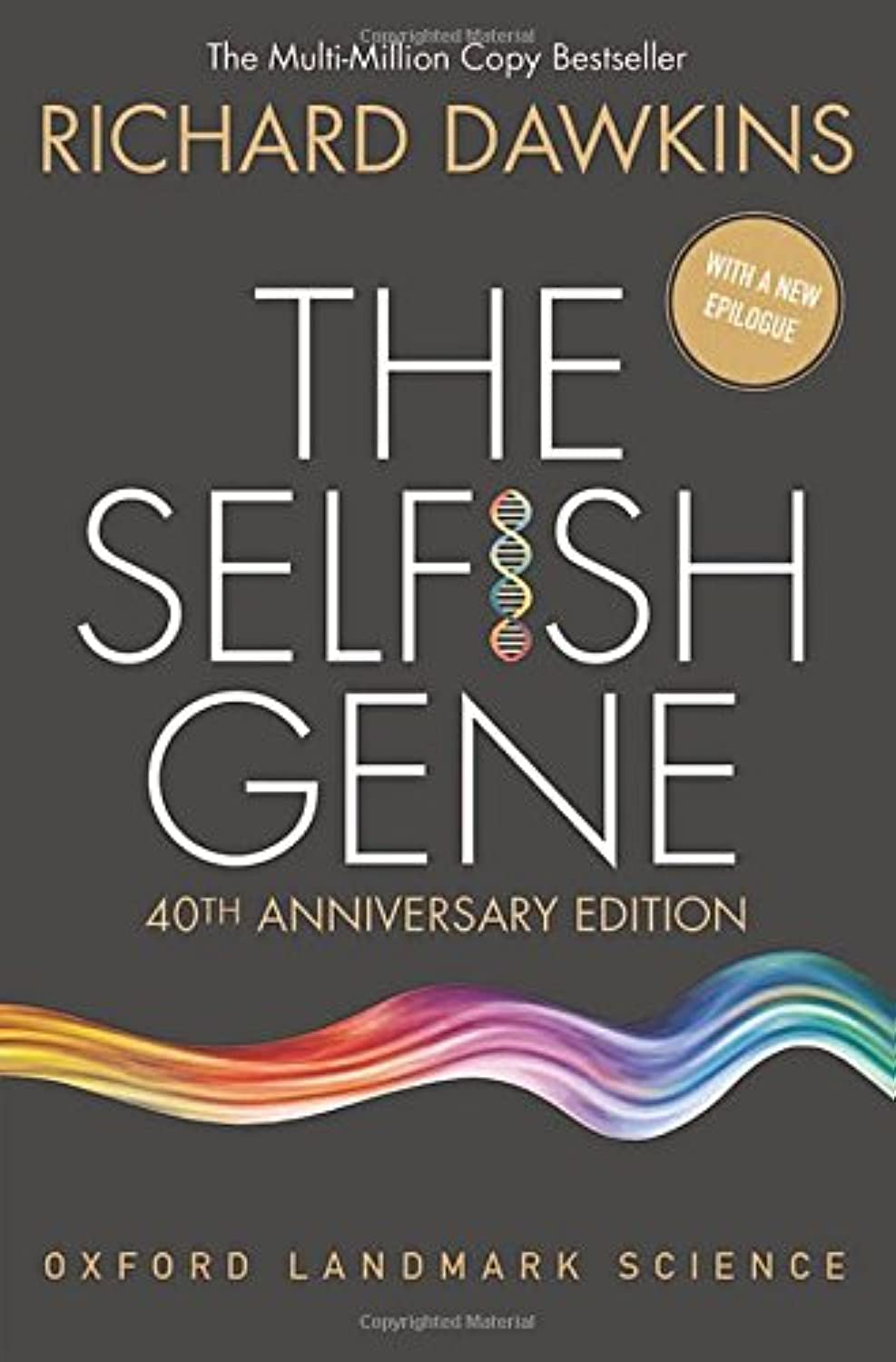
Book overview
Richard Dawkins introduces the central puzzle of biology: why organisms, including people, appear designed for particular purposes. He frames natural selection as the explanation for apparent design and motivates a gene-centered perspective as the clearest explanatory level.
This page is built to be a compact learning hub for The Selfish Gene. You can move from the high-level summary into takeaways, quiz prompts, chapter review, and related books without breaking the reading flow.
Best takeaways to keep
Natural selection creates the appearance of design without foresight.
The gene
centered view treats genes as the fundamental units on which selection acts.
Traits and behaviours are best explained by their consequences for gene replication.
Use the gene-centered perspective to ask how traits influence the replication success of genes.
This chapter sets up the shift from thinking about organisms as the primary unit of selection to genes as replicators that explain adaptation and behaviour. Understanding this framing is essential for interpreting later arguments about cooperation, conflict, and strategy.
Retrieval practice
What is Richard Dawkins' central argument in The Selfish Gene about the primary unit of natural selection?
How does Dawkins distinguish 'replicators' from 'vehicles'?
Which formulation summarizes Hamilton's rule as used to explain kin-selected altruism in the book?
What game-theoretic insight does Dawkins use to explain how cooperation can persist despite temptation to cheat?
Quiz preview
What is Richard Dawkins' central argument in The Selfish Gene about the primary unit of natural selection?
- Genes (replicators) are the primary unit, and organisms are 'vehicles' they build to survive and replicate
- Individual organisms are the primary beneficiaries of selection, so selection favors organism-level traits
- Species are the main units of selection, with traits evolving for the good of the species
How does Dawkins distinguish 'replicators' from 'vehicles'?
- Replicators are genes that are copied; vehicles are organisms that carry and express those genes
- Replicators are organisms that reproduce; vehicles are the physical traits produced by genes
- Replicators are environments that select traits; vehicles are genes that mutate
Which formulation summarizes Hamilton's rule as used to explain kin-selected altruism in the book?
- An altruistic act evolves when the benefit to the actor exceeds the cost to the recipient
- Altruism evolves when individuals share no genetic relatedness
- An altruistic behavior can be favored when c < r × b (cost to actor < relatedness × benefit to recipient)
What game-theoretic insight does Dawkins use to explain how cooperation can persist despite temptation to cheat?
- In one-shot games, cooperation always outcompetes defection
- In iterated interactions, reciprocal strategies such as 'tit-for-tat' can sustain cooperation
- Random behavior produces the stable cooperation observed in nature
Chapter map
Why Are People?
Richard Dawkins introduces the central puzzle of biology: why organisms, including people, appear designed for particular purposes. He frames natural selection as the explanation for apparent design and motivates a gene-centered perspective as the clearest explanatory level.
The Replicators
Dawkins describes the origin and nature of replicators — entities that copy themselves — and argues that evolution arises from differential survival of replicators. He explains how high-fidelity copying plus occasional variation leads to cumulative selection and the emergence of complex adaptations.
The Gene Machine
This chapter argues that organisms are 'machines' constructed by genes to promote gene replication; development and behaviour are interpretable as vehicles for gene success. Dawkins highlights how gene action can explain altruism and other behaviours when viewed from the gene's point of view.
Replicators and Vehicles
Dawkins clarifies the distinction between replicators (genes) and vehicles (organisms) and explains how selection acts on genes through the successes and failures of their vehicles. He discusses cooperation among genes within genomes and the potential for conflict between different genetic interests.
Aggression: Stability and the Selfish Herd
Dawkins applies game-theory ideas (evolutionarily stable strategies) to explain aggression and conflict, and he presents the 'selfish herd' concept to show how individual safety seeking can produce aggregations. He illustrates how simple strategic rules can produce stable mixtures of behaviours in populations.
Next best step
Move next into the questions page if you want better retention, or into the takeaways page if you want the shortest useful review loop for this book.