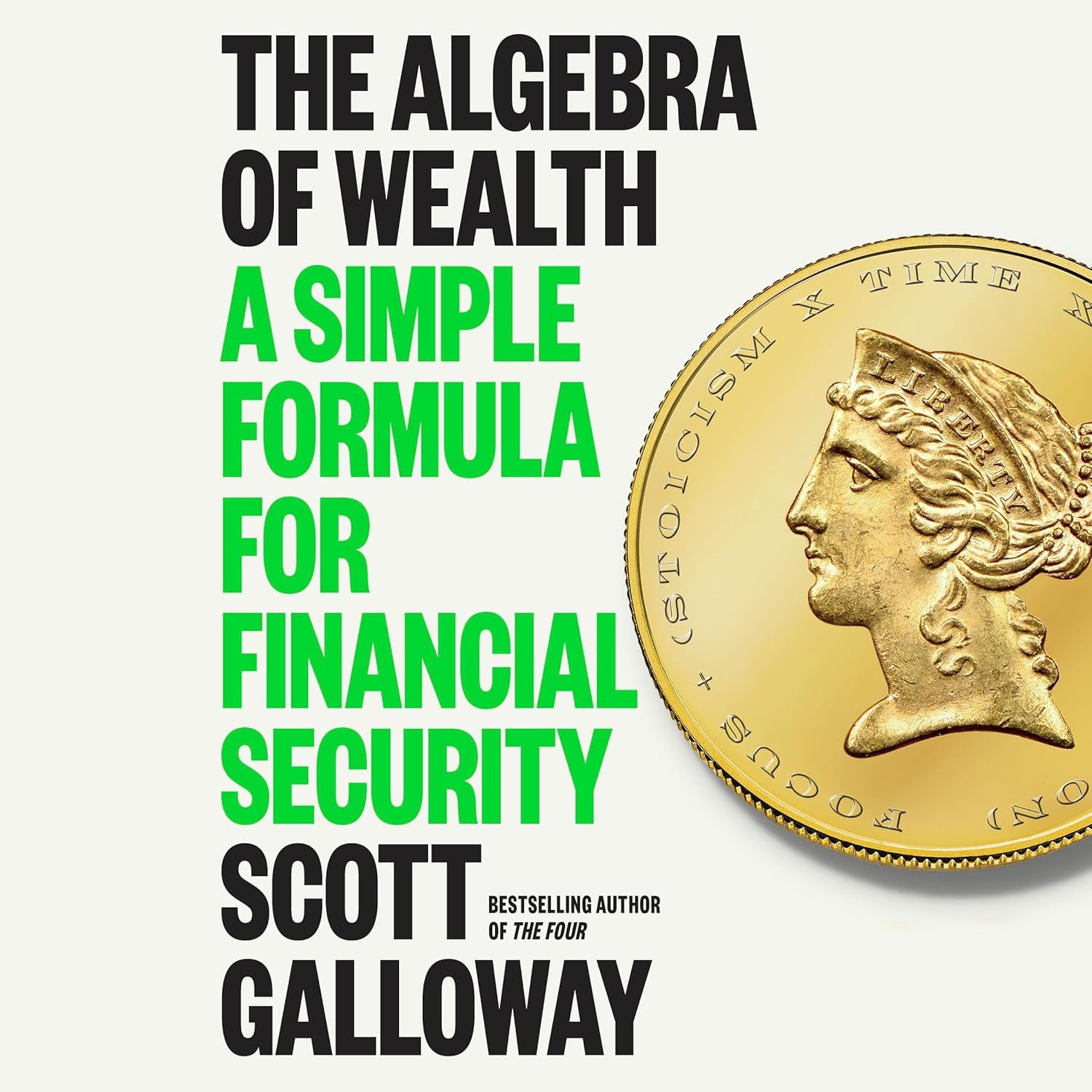
Quiz questions
Chapter list with excerpts: 1. The Equation: A Simple Formula for Financial Security - #### Summary: The chapter introduces a simple algebraic formula that links earning, saving, investing, time, and risk to financial security. It frames wealth-building as a predictable process where modest adjustments in a few variables comp 2. Earning Power: Maximizing Income - #### Summary: This chapter examines income as the primary input to the wealth equation and explores ways to increase earning power through skills, credentials, negotiation, and career design. It emphasizes investing in human capital because 3. Spending and Savings: The Discipline of Wealth - #### Summary: This chapter focuses on the savings rate as the control that converts income into investable capital, discussing budgeting, behavioral traps, and the psychology of consumption. It argues discipline around spending is more powe 4. Compounding: Time, Rate, and the Miracle of Growth - #### Summary: This chapter explains compounding mathematically and intuitively, showing how time and rate of return interact to produce exponential growth. It stresses that starting early and protecting returns are the two most reliable way 5. Risk and Diversification: Protecting Your Base - #### Summary: This chapter addresses risk as the variable that can undo progress and shows how diversification, insurance, and appropriate asset allocation reduce the chance of permanent loss. It teaches practical ways to balance upside pur 6. Investing for Security: Stocks, Bonds, and Index Funds - #### Summary: This chapter covers core investment vehicles—stocks, bonds, and index funds—explaining their roles in a security-focused portfolio and recommending low-cost, diversified approaches. It emphasizes simplicity, cost control, and 7. Real Estate and Alternative Assets - #### Summary: This chapter explores real estate and alternative investments as complements to traditional equities and bonds, discussing liquidity, leverage, cash flow, and diversification benefits. It balances enthusiasm for tangible asset 8. Entrepreneurship and Side Hustles - #### Summary: This chapter treats entrepreneurship and side hustles as powerful ways to increase earning power, diversify income, and accelerate wealth-building, while warning about time, opportunity cost, and failure risk. It outlines step 9. Taxes, Debt, and Leverage - #### Summary: This chapter explains how taxes, borrowing, and leverage interact with an individual’s financial plan and how thoughtful use of each can accelerate or derail wealth building. It emphasizes the difference between des 10. Career Strategy and Human Capital - #### Summary: This chapter treats your skills, reputation, and career choices as core assets—human capital—that should be invested, diversified, and protected. It provides a framework for increasing lifetime earnings through stra 11. Family, Relationships, and Wealth Transmission - #### Summary: This chapter explores how family dynamics, estate planning, and interpersonal choices shape the longevity and social value of wealth. It covers practical tools for transferring assets, aligning incentives across gen 12. Purpose, Giving, and Living a Wealthy Life - #### Summary: The final chapter connects financial security to meaning by arguing that true wealth includes time, relationships, and contribution, not just net worth. It describes frameworks for purposeful giving, time allocation
- Context only - no answer choices provided for this item.
- n/a
- n/a
- n/a
According to the book's central 'simple formula', which set of variables are linked to financial security?
- Income, savings rate, investment returns, time, and risk
- Net worth, luxury spending, debt levels, taxes, and inheritance
- Only high income and luck
- Real estate, entrepreneurship, stock picking, and market timing
Which action does the book identify as the primary 'control' that converts income into investable capital?
- Increasing salary through negotiation
- Raising your savings rate and disciplining spending
- Timing the market for higher returns
- Using leverage and debt to buy assets
When explaining compounding, the book stresses that the two most important interacting factors are:
- Time invested and rate of return
- Tax efficiency and portfolio complexity
- Choice of individual stocks and frequent trading
- Real estate leverage and rental income
To protect progress and reduce the chance of permanent loss, the author most strongly recommends:
- Concentrating investments in a few high‑conviction stocks
- Relying on short‑term trading to avoid downturns
- Using diversification, insurance, and appropriate asset allocation
- Avoiding bonds entirely and holding cash
Active recall prompts
Chapter list with excerpts: 1. The Equation: A Simple Formula for Financial Security - #### Summary: The chapter introduces a simple algebraic formula that links earning, saving, investing, time, and risk to financial security. It frames wealth-building as a predictable process where modest adjustments in a few variables comp 2. Earning Power: Maximizing Income - #### Summary: This chapter examines income as the primary input to the wealth equation and explores ways to increase earning power through skills, credentials, negotiation, and career design. It emphasizes investing in human capital because 3. Spending and Savings: The Discipline of Wealth - #### Summary: This chapter focuses on the savings rate as the control that converts income into investable capital, discussing budgeting, behavioral traps, and the psychology of consumption. It argues discipline around spending is more powe 4. Compounding: Time, Rate, and the Miracle of Growth - #### Summary: This chapter explains compounding mathematically and intuitively, showing how time and rate of return interact to produce exponential growth. It stresses that starting early and protecting returns are the two most reliable way 5. Risk and Diversification: Protecting Your Base - #### Summary: This chapter addresses risk as the variable that can undo progress and shows how diversification, insurance, and appropriate asset allocation reduce the chance of permanent loss. It teaches practical ways to balance upside pur 6. Investing for Security: Stocks, Bonds, and Index Funds - #### Summary: This chapter covers core investment vehicles—stocks, bonds, and index funds—explaining their roles in a security-focused portfolio and recommending low-cost, diversified approaches. It emphasizes simplicity, cost control, and 7. Real Estate and Alternative Assets - #### Summary: This chapter explores real estate and alternative investments as complements to traditional equities and bonds, discussing liquidity, leverage, cash flow, and diversification benefits. It balances enthusiasm for tangible asset 8. Entrepreneurship and Side Hustles - #### Summary: This chapter treats entrepreneurship and side hustles as powerful ways to increase earning power, diversify income, and accelerate wealth-building, while warning about time, opportunity cost, and failure risk. It outlines step 9. Taxes, Debt, and Leverage - #### Summary: This chapter explains how taxes, borrowing, and leverage interact with an individual’s financial plan and how thoughtful use of each can accelerate or derail wealth building. It emphasizes the difference between des 10. Career Strategy and Human Capital - #### Summary: This chapter treats your skills, reputation, and career choices as core assets—human capital—that should be invested, diversified, and protected. It provides a framework for increasing lifetime earnings through stra 11. Family, Relationships, and Wealth Transmission - #### Summary: This chapter explores how family dynamics, estate planning, and interpersonal choices shape the longevity and social value of wealth. It covers practical tools for transferring assets, aligning incentives across gen 12. Purpose, Giving, and Living a Wealthy Life - #### Summary: The final chapter connects financial security to meaning by arguing that true wealth includes time, relationships, and contribution, not just net worth. It describes frameworks for purposeful giving, time allocation
According to the book's central 'simple formula', which set of variables are linked to financial security?
Which action does the book identify as the primary 'control' that converts income into investable capital?
When explaining compounding, the book stresses that the two most important interacting factors are:
What is the main idea of "The Equation: A Simple Formula for Financial Security", and how would you explain it without looking back?
What is the main idea of "Earning Power: Maximizing Income", and how would you explain it without looking back?
What is the main idea of "Spending and Savings: The Discipline of Wealth", and how would you explain it without looking back?
What is the main idea of "Compounding: Time, Rate, and the Miracle of Growth", and how would you explain it without looking back?