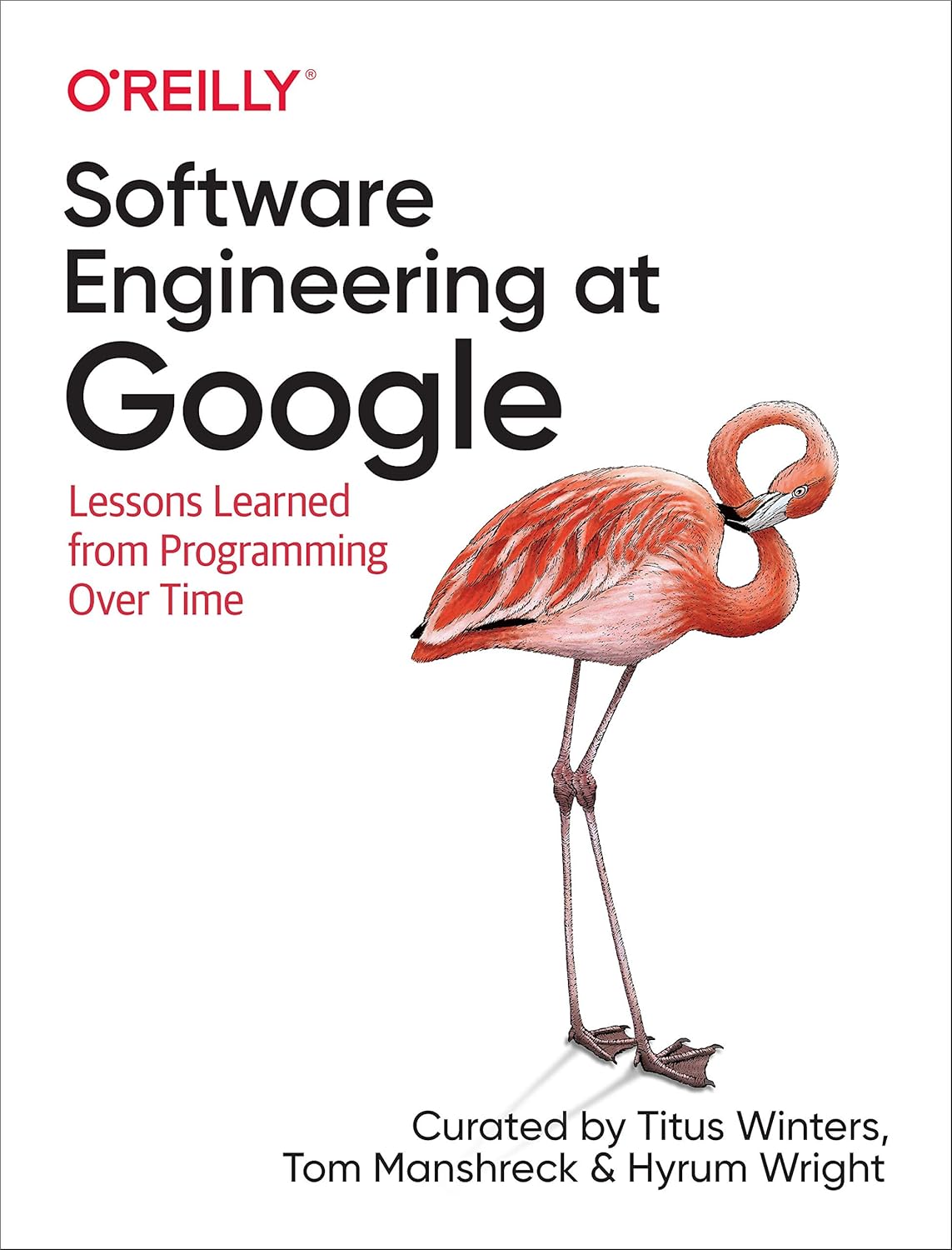
Software Engineering at Google: Lessons Learned from Programming Over Time: ReadSprint summary highlights
ReadSprint paraphrases for review. These highlights are not verbatim quotations from the book or its author. Check the original edition for exact wording and context.
Software Engineering at Google: Lessons Learned from Programming Over Time
by Hyrum Wright, Titus Winters, et al.
Software Engineering at Google introduces the company's approach to building and maintaining large-scale software systems, emphasizing long-term productivity and sustainability.
ReadSprint paraphrase · Not a quotation from the author.
Software Engineering at Google introduces the company's approach to building and maintaining large-scale software systems, emphasizing long-term productivity and sustainability.
Time, scale, trade-offs.
Share with the ReadSprint source so others can read the context.
Software Engineering at Google: Lessons Learned from Programming Over Time
by Hyrum Wright, Titus Winters, et al.
It outlines the book's goals to share practical practices, cultural norms, and engineering principles that support reliable, scalable software development.
ReadSprint paraphrase · Not a quotation from the author.
It outlines the book's goals to share practical practices, cultural norms, and engineering principles that support reliable, scalable software development.
It ensures knowledge continuity.
Share with the ReadSprint source so others can read the context.
Software Engineering at Google: Lessons Learned from Programming Over Time
by Hyrum Wright, Titus Winters, et al.
Time, scale, trade-offs.
ReadSprint paraphrase · Not a quotation from the author.
Time, scale, trade-offs.
Promoting open communication.
Share with the ReadSprint source so others can read the context.
Software Engineering at Google: Lessons Learned from Programming Over Time
by Hyrum Wright, Titus Winters, et al.
It ensures knowledge continuity.
ReadSprint paraphrase · Not a quotation from the author.
It ensures knowledge continuity.
Automated and scalable testing.
Share with the ReadSprint source so others can read the context.
Software Engineering at Google: Lessons Learned from Programming Over Time
by Hyrum Wright, Titus Winters, et al.
Promoting open communication.
ReadSprint paraphrase · Not a quotation from the author.
Promoting open communication.
It influences team dynamics and project success.
Share with the ReadSprint source so others can read the context.
Software Engineering at Google: Lessons Learned from Programming Over Time
by Hyrum Wright, Titus Winters, et al.
Automated and scalable testing.
ReadSprint paraphrase · Not a quotation from the author.
Automated and scalable testing.
Software Engineering at Google introduces the company's approach to building and maintaining large-scale software systems, emphasizing long-term productivity and sustainability. It outlines the book's goals to share practical practices, cultural norms, and engineering principles that support reliable, scalable software development.
Share with the ReadSprint source so others can read the context.
Use these highlights to review the book
Which highlight from Software Engineering at Google: Lessons Learned from Programming Over Time changes how you would explain the book to someone else?
Which lesson here is worth testing in a real decision this week?
Which highlight feels memorable but less actionable once you slow down and examine it?