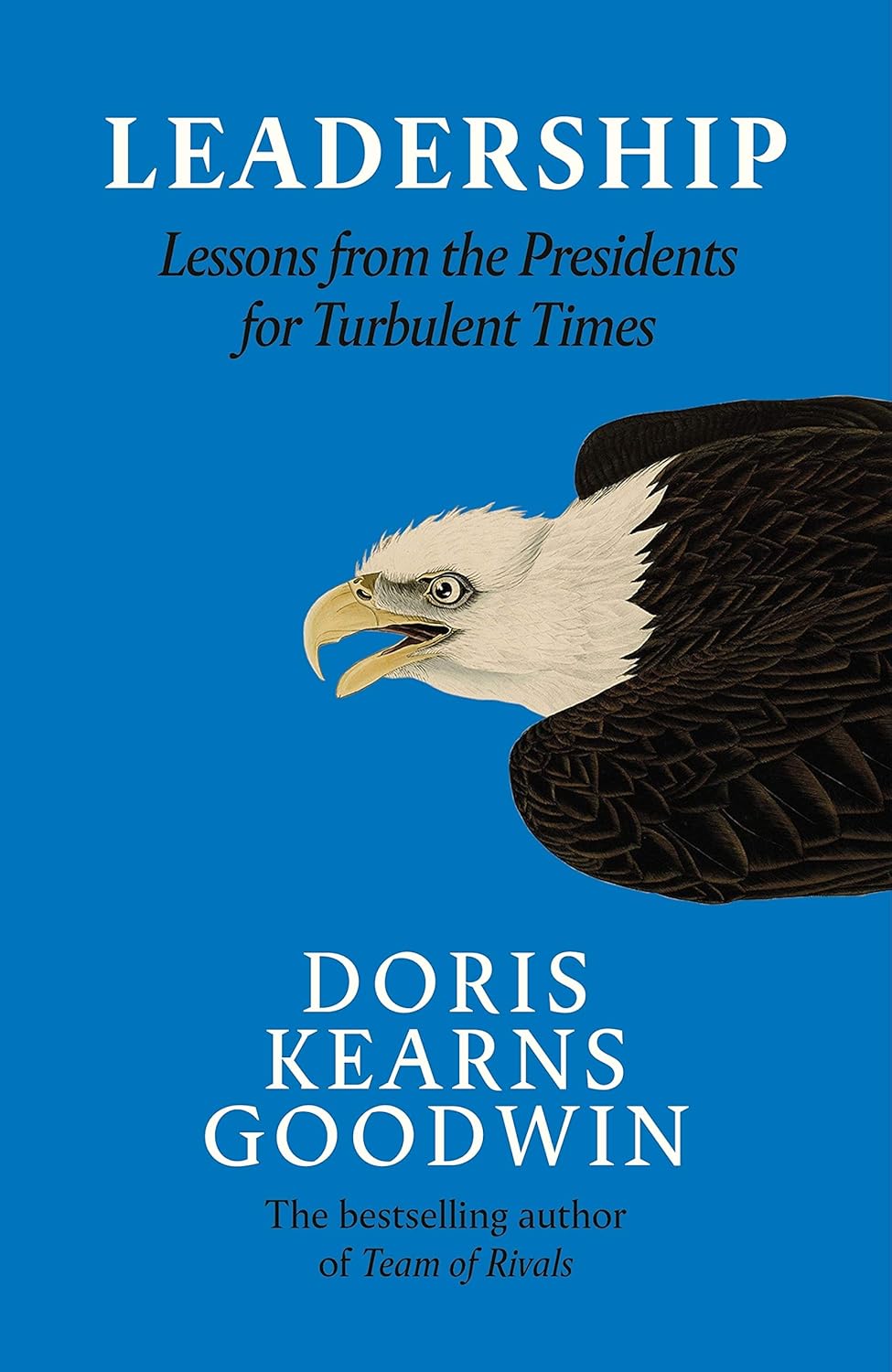
Introduction
Summary:
Doris Kearns Goodwin outlines her method of studying leadership by closely examining four American presidents who navigated major national crises. She introduces core leadership qualities—ambition, empathy, resilience, vision and the ability to build effective teams—and frames the book around how those qualities were developed and exercised in turbulent times.
Key points:
- Leadership is shaped over time by personal experience and crisis.
- Effective leaders combine personal ambition with a sense of moral purpose.
- Empathy and emotional intelligence enable leaders to connect and persuade.
- Building and managing a strong, diverse team is essential in crisis governance.
Themes & relevance:
The introduction sets the analytic framework linking character formation to crisis performance, arguing that historical examples offer actionable lessons for contemporary leaders. These themes remain relevant for anyone facing organizational or national turbulence.
Takeaway / How to use:
Study leaders’ personal development and team choices to inform how you prepare for and respond to crises.
Key points
- Leadership is shaped over time by personal experience and crisis.
- Effective leaders combine personal ambition with a sense of moral purpose.
- Empathy and emotional intelligence enable leaders to connect and persuade.
- Building and managing a strong, diverse team is essential in crisis governance.
Abraham Lincoln: Early Ambition and Breakthroughs
Summary:
This chapter traces Lincoln’s humble origins, self-education, legal career, and early political contests that forged his ambition and public persona. It follows his rise in Illinois and national politics through debates with Stephen Douglas and the 1860 election that made him president.
Key points:
- Lincoln’s formative years emphasized self
- reliance, reading, and moral reflection.
- His law practice and storytelling sharpened skills in argument and persuasion.
- The 1858 debates raised his national profile despite losing the Senate race.
- Lincoln’s ambition was coupled with a principled commitment to the Union and opposition to the expansion of slavery.
Themes & relevance:
The chapter shows how sustained intellectual development and strategic public performance create breakthroughs in leadership trajectory. It highlights the importance of preparation and seizing moments that expand influence.
Takeaway / How to use:
Invest in lifelong learning and cultivate clear public arguments to create opportunities for leadership breakthroughs.
Key points
- Lincoln’s formative years emphasized self
- reliance, reading, and moral reflection.
- His law practice and storytelling sharpened skills in argument and persuasion.
- The 1858 debates raised his national profile despite losing the Senate race.
- Lincoln’s ambition was coupled with a principled commitment to the Union and opposition to the expansion of slavery.
Abraham Lincoln: The Crucible of Civil War
Summary:
Lincoln’s presidency during the Civil War tested his political judgment, moral resolve, and managerial skill as he worked to preserve the Union and end slavery. He balanced legal constraints, military decisions, and public opinion while building an effective cabinet and evolving his policies toward emancipation.
Key points:
- Lincoln managed a fractious cabinet and brought rivals into his team to harness talent.
- He used rhetoric and moral clarity to shape public support for difficult measures like the Emancipation Proclamation.
- Lincoln combined strategic patience with decisive action in military and political matters.
- He continuously adapted tactics in response to battlefield realities and political pressures.
Themes & relevance:
Crisis leadership requires moral conviction, pragmatic flexibility, and the capacity to assemble and manage a diverse team. Lincoln’s example illustrates balancing principle and pragmatism under extreme pressure.
Takeaway / How to use:
Build a team of strong, even disagreeing, advisers and use clear moral framing to rally support in crisis.
Key points
- Lincoln managed a fractious cabinet and brought rivals into his team to harness talent.
- He used rhetoric and moral clarity to shape public support for difficult measures like the Emancipation Proclamation.
- Lincoln combined strategic patience with decisive action in military and political matters.
- He continuously adapted tactics in response to battlefield realities and political pressures.
Theodore Roosevelt: The Making of a Modern President
Summary:
This chapter follows TR’s transformation from a sickly, intellectually curious child into a vigorous public figure shaped by family, education, and formative experiences in the West and in city reform. It traces his ascent through civil service reform, New York politics, and national prominence leading to the presidency.
Key points:
- Childhood illness and rigorous self
- discipline fostered physical and moral vigor.
- Early public service roles (police commissioner, assistant secretary of the navy) honed administrative and reform instincts.
- Rough Riding and the Spanish
- American War propelled his national fame and reputation for action.
- Roosevelt cultivated a public persona that blended reformist energy with assertive leadership.
Themes & relevance:
Personal adversity and diverse experiences created a leadership style centered on energy, reform, and public performance. TR’s development demonstrates how persona and action combine to mobilize public support.
Takeaway / How to use:
Use varied experiences to build a visible leadership identity grounded in action and reform.
Key points
- Childhood illness and rigorous self
- discipline fostered physical and moral vigor.
- Early public service roles (police commissioner, assistant secretary of the navy) honed administrative and reform instincts.
- Rough Riding and the Spanish
- American War propelled his national fame and reputation for action.
- Roosevelt cultivated a public persona that blended reformist energy with assertive leadership.
Theodore Roosevelt: Leadership Through Action
Summary:
As president, Roosevelt translated his convictions into a proactive agenda—trust-busting, regulatory reforms, conservation, and assertive foreign policy—demonstrating leadership through direct intervention and moral persuasion. He expanded the executive role and used public opinion and the press to achieve policy goals.
Key points:
- Roosevelt pursued progressive domestic reforms (trust regulation, consumer protections, conservation).
- He intervened as a mediator in labor disputes to assert federal responsibility for fairness.
- TR used the presidency’s moral authority and the media to mobilize public support for his agenda.
- His ‘‘big stick’’ diplomacy reflected a willingness to use national power decisively.
Themes & relevance:
Decisive, visible action coupled with persuasive rhetoric can shift institutional expectations and accomplish reform. Roosevelt’s model is relevant for leaders seeking to expand organizational capacity and public trust.
Takeaway / How to use:
Act decisively on core priorities and use clear public messaging to build support and legitimacy.
Key points
- Roosevelt pursued progressive domestic reforms (trust regulation, consumer protections, conservation).
- He intervened as a mediator in labor disputes to assert federal responsibility for fairness.
- TR used the presidency’s moral authority and the media to mobilize public support for his agenda.
- His ‘‘big stick’’ diplomacy reflected a willingness to use national power decisively.
Franklin D. Roosevelt: From Personal Adversity to National Renewal
Summary:
FDR’s battle with polio and subsequent rehabilitation reshaped his identity, deepening empathy and determination and informing his political style of optimism and reassurance. His governorship of New York and 1932 presidential campaign set the stage for the New Deal and a novel, activist presidency.
Key points:
- Polio transformed Roosevelt’s sense of vulnerability and steeled his resolve.
- He developed abilities to communicate warmth and confidence, later embodied in his fireside chats.
- FDR built political coalitions and administrative experience as governor that informed national policymaking.
- He framed crises as opportunities for national renewal and collective action.
Themes & relevance:
Personal adversity can become a source of empathetic leadership and rhetorical strength; authenticity and hope are powerful tools in restoring public confidence. FDR’s example is instructive for leaders operating in large, complex systems.
Takeaway / How to use:
Turn personal trials into a source of empathy and use clear, optimistic communication to galvanize action.
Key points
- Polio transformed Roosevelt’s sense of vulnerability and steeled his resolve.
- He developed abilities to communicate warmth and confidence, later embodied in his fireside chats.
- FDR built political coalitions and administrative experience as governor that informed national policymaking.
- He framed crises as opportunities for national renewal and collective action.
Franklin D. Roosevelt: The New Deal and Mobilization for War
Summary:
This chapter covers FDR’s bold experimentation with New Deal policies—relief, recovery, and reform—that expanded federal capacity and reshaped American governance, followed by a shift toward wartime mobilization that further transformed the state and economy. Roosevelt balanced innovation, political coalition-building, and administrative growth to address unprecedented crises.
Key points:
- The New Deal emphasized rapid experimentation, programmatic diversity, and administrative expansion (e.g., CCC, WPA, Social Security, SEC).
- FDR’s coalition
- building united labor, urban voters, and reformers into a durable political base.
- He was pragmatic, willing to try varied solutions and scale those that worked.
- Wartime mobilization required coordinating industry, military planning, and public morale on a massive scale.
Themes & relevance:
Creative policy experimentation and institutional capacity-building are central to responding effectively to economic and security crises. The chapter illustrates how governance reforms enacted in peace can be repurposed for wartime needs.
Takeaway / How to use:
Pilot multiple solutions rapidly, evaluate outcomes, and scale successful programs to meet large-scale challenges.
Key points
- The New Deal emphasized rapid experimentation, programmatic diversity, and administrative expansion (e.g., CCC, WPA, Social Security, SEC).
- FDR’s coalition
- building united labor, urban voters, and reformers into a durable political base.
- He was pragmatic, willing to try varied solutions and scale those that worked.
- Wartime mobilization required coordinating industry, military planning, and public morale on a massive scale.
Franklin D. Roosevelt: Managing Global Conflict
Summary:
FDR led the United States through the global crisis of World War II by forging alliances, setting grand strategy, and managing complicated diplomatic relationships with Churchill and Stalin while maintaining domestic unity. He combined long-range vision with delegated operational authority to military and civilian experts.
Key points:
- Roosevelt prioritized coalition diplomacy and an ‘‘Europe
- first’’ strategic framework.
- He cultivated relationships with allied leaders while managing divergent aims and personalities.
- FDR delegated military operations to skilled commanders while focusing on grand strategy and resource mobilization.
- He balanced harsh trade
- offs between military necessity and moral concerns to sustain the war effort.
Themes & relevance:
Successful management of global conflict depends on coalition-building, strategic clarity, and empowering competent subordinates, even when difficult moral compromises are required. These lessons apply to leaders coordinating large, diverse partnerships today.
Takeaway / How to use:
Forge strong alliances, set clear strategic priorities, and empower capable teams to execute complex, high-stakes plans.
Key points
- Roosevelt prioritized coalition diplomacy and an ‘‘Europe
- first’’ strategic framework.
- He cultivated relationships with allied leaders while managing divergent aims and personalities.
- FDR delegated military operations to skilled commanders while focusing on grand strategy and resource mobilization.
- He balanced harsh trade
- offs between military necessity and moral concerns to sustain the war effort.
Lyndon B. Johnson: The Reckoning of Power
Summary:
Lyndon B. Johnson emerges as a masterful wielder of political power, using personal persuasion, institutional knowledge, and ruthless tactics to pass transformative legislation. The chapter also wrestles with the costs of that power—most notably the escalation of the Vietnam War—which produced a moral and political reckoning that diminished his achievements and legacy.
Key points:
- Johnson perfected the "Johnson treatment": an intense, personal form of persuasion that combined cajoling, threats, and favors to secure votes.
- His legislative skill produced landmark domestic successes, but he often relied on heavy
- handed methods and patronage to build compliance.
- The decision to escalate U.S. involvement in Vietnam reflected strategic miscalculation and an underestimation of political consequences.
- Vietnam diverted resources, attention, and political capital away from domestic programs and eroded public trust.
- The chapter highlights the tension between effectiveness and ethical responsibility when power is exercised without sufficient accountability.
Themes & relevance:
This chapter emphasizes the double-edged nature of political power: its capacity to achieve sweeping change and its potential to produce profound unintended consequences, a lesson relevant to leaders balancing short
- term gains against long-term costs.
Takeaway / How to use:
Exercise authority with humility and accountability to avoid trading lasting good for immediate v...
Key points
- Johnson perfected the "Johnson treatment": an intense, personal form of persuasion that combined cajoling, threats, and favors to secure votes.
- His legislative skill produced landmark domestic successes, but he often relied on heavy
- handed methods and patronage to build compliance.
- The decision to escalate U.S. involvement in Vietnam reflected strategic miscalculation and an underestimation of political consequences.
- Vietnam diverted resources, attention, and political capital away from domestic programs and eroded public trust.
- The chapter highlights the tension between effectiveness and ethical responsibility when power is exercised without sufficient accountability.
Lyndon B. Johnson: The Great Society and Civil Rights
Summary:
Johnson leveraged a combination of political savvy, empathy for the disadvantaged, and timing after JFK's assassination to enact the Great Society agenda and sweeping civil rights legislation. His presidency delivered landmark laws—Civil Rights Act (1964), Voting Rights Act (1965), Medicare, Medicaid, and numerous anti-poverty and education initiatives—though many were later compromised by the drain of the Vietnam War and political backlash.
Key points:
- Johnson used his intimate knowledge of Congress and bipartisan negotiation to shepherd the Civil Rights Act of 1964 and Voting Rights Act of 1965 through a resistant legislature.
- The Great Society included broad programs addressing poverty, healthcare, education, and urban renewal (e.g., Medicare, Medicaid, Head Start, and federal education funding).
- Johnson’s personal commitment to social justice and his ability to translate empathy into policy were central to these achievements.
- Southern opposition and racial tensions required both moral conviction and political strategy to overcome entrenched resistance.
- The escalation of Vietnam consumed attention and funds, undermining the implementation and political sustainability of Great Society reforms.
Themes & relevance:
The chapter demonstrates how visionary policy requires both moral clarity and tactical skill, and how external crises can imperil domestic reform efforts—an enduring lesson for policymakers facing competing priorities.
Take...
Key points
- Johnson used his intimate knowledge of Congress and bipartisan negotiation to shepherd the Civil Rights Act of 1964 and Voting Rights Act of 1965 through a resistant legislature.
- The Great Society included broad programs addressing poverty, healthcare, education, and urban renewal (e.g., Medicare, Medicaid, Head Start, and federal education funding).
- Johnson’s personal commitment to social justice and his ability to translate empathy into policy were central to these achievements.
- Southern opposition and racial tensions required both moral conviction and political strategy to overcome entrenched resistance.
- The escalation of Vietnam consumed attention and funds, undermining the implementation and political sustainability of Great Society reforms.
Conclusion
Summary:
The conclusion synthesizes lessons from the presidencies examined, arguing that transformative leadership combines personal character, resilience in adversity, the ability to build capable teams, and the skillful use of power. It stresses that great leaders must align moral purpose with practical tactics while recognizing the limits and responsibilities that come with authority.
Key points:
- Leadership in turbulent times requires ambition tempered by empathy, an appreciation of timing, and the cultivation of loyal, competent teams.
- Moral clarity and public purpose are necessary but not sufficient; leaders must also navigate institutions and political realities to achieve lasting change.
- The use of power demands constant scrutiny—successes can be negated by overreach or neglect of ethical consequences.
- Historical judgment is complex: achievements and failures coexist, and legacy depends on both results and means.
Themes & relevance:
The conclusion frames leadership as a set of learnable practices shaped by character and circumstance, offering timely guidance for contemporary leaders confronting crises and rapid change.
Takeaway / How to use:
Combine moral purpose with institutional know-how and accountability to lead effectively in turbulent times.
Key points
- Leadership in turbulent times requires ambition tempered by empathy, an appreciation of timing, and the cultivation of loyal, competent teams.
- Moral clarity and public purpose are necessary but not sufficient; leaders must also navigate institutions and political realities to achieve lasting change.
- The use of power demands constant scrutiny—successes can be negated by overreach or neglect of ethical consequences.
- Historical judgment is complex: achievements and failures coexist, and legacy depends on both results and means.